



Colonial Teak Armchairs
Colonial teak armchairs combine solid dense timber with deep seats, offering robust seating built for distant climates and long hours.
Colonial Teak Armchairs
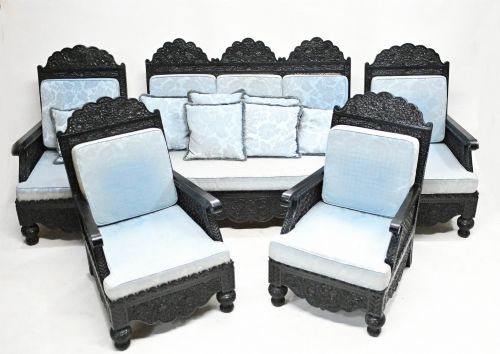
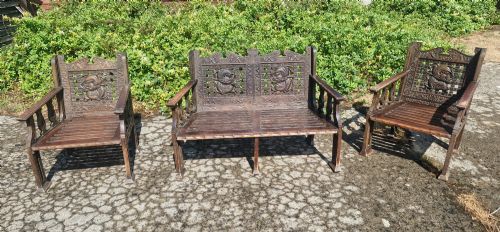
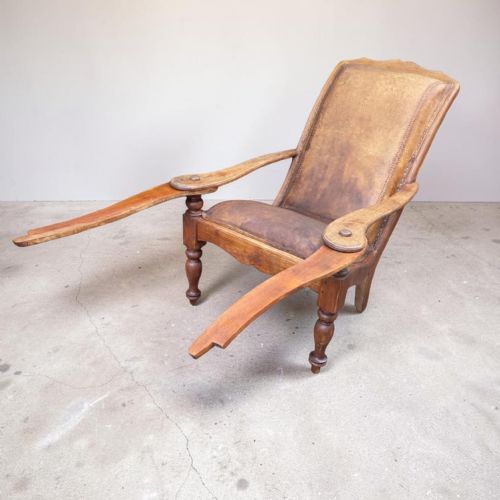
Colonial teak armchairs encompass heavy planter's chairs with extending arms, reclining plantation forms, carved Anglo-Indian elbow seats, and folding campaign pieces. These items originate across the nineteenth and early twentieth centuries, spanning Victorian, Art Deco, and country house conservatory suites.
The versions most frequently met on this page include nineteenth-century plantation chairs featuring extending arms alongside paired Anglo-Indian armchairs carved from teak or hardwood. Buyers also encounter unusual rush-seated chairs, cane seat designs, and larger throne forms or Savonarola chairs.
The category draws heavily upon British Colonial and Anglo-Indian styles, often constructed using dense teak alongside secondary materials like hardwood, cane, leather, and rush. These seating suites and armchairs reflect regional craftsmanship tailored for comfort and durability in tropical and domestic interiors alike.
How they were made
Makers constructed these frames predominantly from solid teak and dense hardwood, selected for strength and resistance to humidity. Artisans joined heavy structural elements using traditional woodworking techniques suited to enduring tropical environments.
Seating surfaces utilised woven cane, rush, or fitted original leather panels stretched across sturdy wooden rails. Decorative elements relied upon intricate hand carving into the timber, occasionally accented with bone inlay or brass fittings.
Colonial Teak Armchairs Retail Price Guide 2026
Typical asking prices for colonial teak armchairs among the pieces listed under this phrase on Sellingantiques today, from the lower quarter to the upper quarter. They describe what is for sale here now, not the wider market.
Several chairs feature extending arms specifically designed for putting your feet up after a long day in the conservatory.
What varies in quality
Quality differentiates by the depth and crispness of the hand carving across the teak frames, where finer pieces display intricate floral or figural motifs with sharp relief. The integrity of the original timber structure and the presence of unaltered components also separate standard examples from finer specimens.
The selection of secondary materials, such as tight cane work, robust woven rush, and genuine original leather upholstery, dictates the refinement of the piece. Matching pairs and complete suites demonstrate greater consistency in design and craftsmanship than isolated individual chairs.
The Colonial Teak Armchairs Glossary
- Teak
- A dense, durable tropical hardwood prized for its natural oils and resistance to environmental wear. It forms the primary structural material for most colonial seating.
- Planter's chair
- A large armchair featuring extended, flat arms designed for resting the legs. This form originated for relaxation on deep verandahs in warm climates.
- Cane
- Woven material made from stripped rattan palms, utilised to create breathable seats and backs. It offers flexibility and cool support in warm interiors.
- Savonarola chair
- A folding armchair constructed from multiple curved wooden slats forming a basket-like frame. The design takes inspiration from Italian Renaissance X-frame seating.
Colonial Teak Armchairs: Frequently Asked Questions
What is a plantation chair?
A plantation chair is a heavy seating form designed with extremely long, extending arms meant for propping up feet. These chairs were built for deep verandahs during the nineteenth century.
The extended arms swing outward or slide forward from the main frame, allowing the sitter to recline fully. They represent a distinct subset of colonial seating focused entirely on domestic comfort.
How do I care for teak furniture?
Teak requires minimal maintenance due to its natural oil content, which protects the dense grain from drying out. Dust the carved wooden surfaces regularly with a dry cloth.
Keep these chairs away from direct heat sources and sudden temperature shifts to prevent the timber from splitting. Treat cane or leather inserts according to their specific material needs.
Are these chairs comfortable for daily use?
These armchairs are built with deep proportions and ergonomic reclining angles intended for prolonged lounging. Many include wide armrests and supportive cane or leather seats.
Their solid construction provides a sturdy sit, though the lack of deep modern upholstery means they offer a firmer, more traditional posture than contemporary armchairs.
How do I date a colonial armchair?
Dating relies on examining the timber species, construction methods, hardware, and stylistic markers such as Victorian influences or Art Deco symmetry. Nineteenth-century examples often display hand-carved details and heavy hardwood frames.
Later pieces from the early twentieth century may incorporate simpler lines or different seating materials like rush and cane. Comparing structural joints and upholstery remnants helps narrow the period of origin.