





Colonial Plantation Furniture
Colonial plantation furniture brings architectural scale and climate-adapted seating into British interiors through substantial timbers and reclining forms.
Colonial Plantation Furniture
Colonial plantation furniture encompasses substantial seating forms designed for tropical heat, utilising extending arms and reclining mechanics. When buyers search for colonial plantation furniture, they encounter pieces originating from nineteenth-century British colonial territories, including India, Burma, and Ceylon.
How they were made
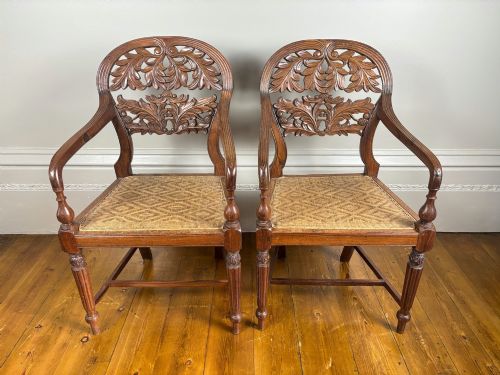
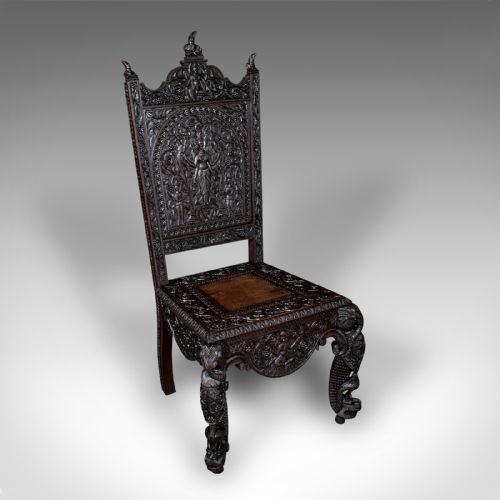
Craftsmen utilised dense tropical hardwoods, notably solid teak, rosewood, and ebony, selected for their stability in humid climates. These heavy timbers supported intricate hand-carved ornamentation seen on veranda chairs and scroll back benches.
Makers integrated woven cane and rattan panels into seats and backs to provide ventilation, often pairing them with leather upholstery or brass fittings. Folding mechanisms in Burmese chairs relied on precise wooden hinges and sturdy joinery.
Structures incorporated extending arms that doubled as leg rests, requiring robust frame construction to bear weight across elongated dimensions. Workshops employed traditional joinery methods alongside carved detailing on backs and rails.
Colonial Plantation Furniture Retail Price Guide 2026
Typical asking prices for colonial plantation furniture among the pieces listed under this phrase on Sellingantiques today, from the lower quarter to the upper quarter. They describe what is for sale here now, not the wider market.
Listings span the Victorian, Regency, and early 20th-century periods, utilising teak, rosewood, ebony, cane, and brass.
What varies in quality
Quality rests upon the selection and density of the primary timber, distinguishing solid ebony and rosewood examples from standard teak constructions. The crispness and depth of hand-carved details across the frame separate ordinary workshop production from finer pieces.
The condition and execution of original cane or rattan weaving influence the structural integrity and visual appeal of the seating. Mechanics within reclining plantation chairs and extending arm components operate with varying degrees of smoothness and original hardware integration.
The Colonial Plantation Furniture Glossary
- Bergere
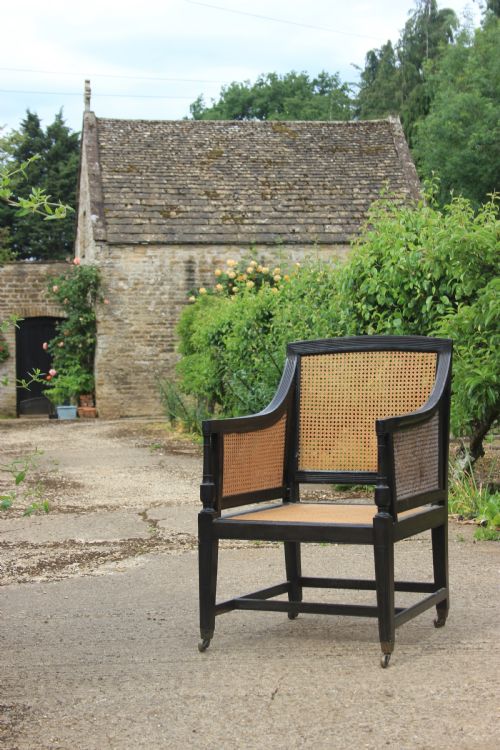
- An upholstered armchair with an enclosed back and sides, often featuring woven cane panels. This form appears in solid ebony from the Regency period.
- Planters chair
- A large armchair featuring long, extending arms designed to support the occupant's legs. These chairs are characteristic of nineteenth-century Anglo-Indian production.
- Chaise longue
- An upholstered couch derived from a chair combined with a long seat, built for reclining. Examples on this page include Victorian plantation style variants.
- Cane
- Strips of rattan peeled and woven into open patterns for seats and backs to allow airflow. It remains a defining material for tropical seating.
- Anglo-Indian
- Pertaining to furniture made in India under British rule, combining European forms with local timber and carving traditions. Styles range from Regency to Victorian.
Colonial Plantation Furniture: Frequently Asked Questions
What is a plantation chair?
A plantation chair is a large timber armchair featuring long, flat extending arms designed to support the legs of the sitter. These chairs were built for verandas in tropical climates to offer maximum recline and ventilation.
They often include woven cane seats and adjustable backs, reflecting nineteenth-century colonial furniture design from regions like India and Ceylon.
How do I use these chairs at home?
These large armchairs and benches work well as statement seating in spacious rooms, studies, or conservatories. Their deep seats and reclining forms invite relaxed reading and lounging.
Pair them with simple surroundings to let the dense timbers and carved details stand out as focal points in the room.
How do I date these pieces?
Dating relies on stylistic markers and timber choices that align with periods such as Regency, Victorian, and early twentieth century. Regency examples often feature solid ebony and classical lines, while Victorian pieces show heavier carving and distinct regional variations.
Construction methods and hardware also provide clues, separating mid-nineteenth-century items from early 1900s productions.
What timbers were used?
Makers utilised dense tropical hardwoods that could withstand humid environments and support intricate hand carving. Solid teak, rosewood, and ebony dominate the regional production.
Secondary materials include rattan and cane for breathable panels, alongside brass fittings and leather upholstery.