




Colonial Inlay Furniture
Colonial inlay furniture brings together intricate regional craftsmanship and dense tropical hardwoods to create striking tables, chests, and seating.
Colonial Inlay Furniture
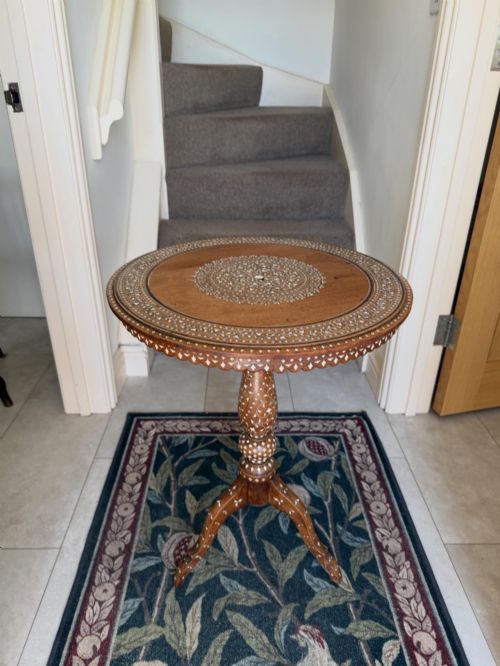
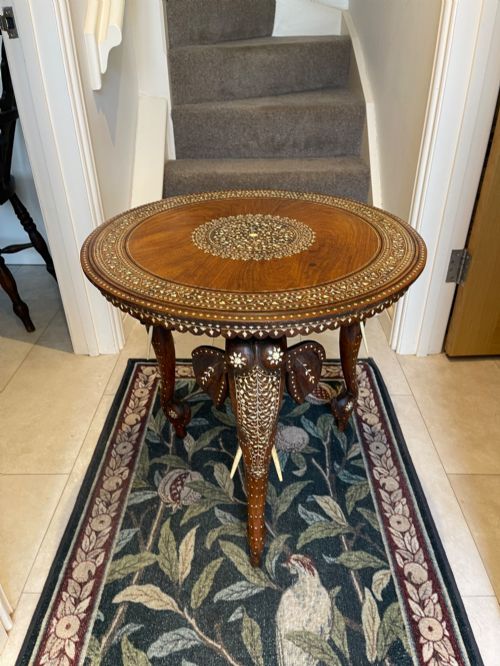
Colonial inlay furniture encompasses a diverse range of tables, chests, and seating produced across various regions under colonial influence. Pieces bearing this description reflect a blending of local woodworking traditions with European forms, spanning the nineteenth century up to the nineteen-thirties.
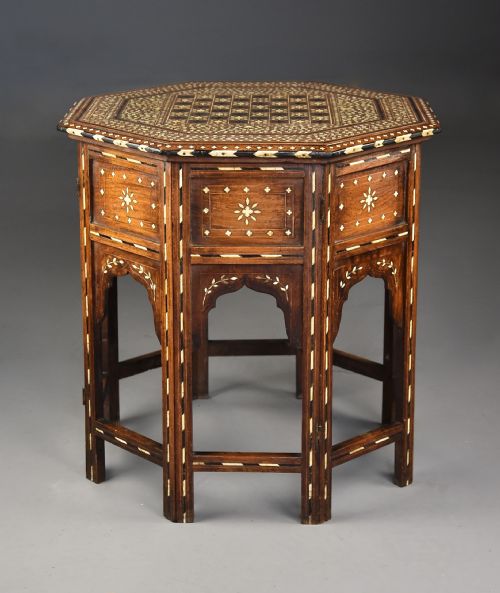
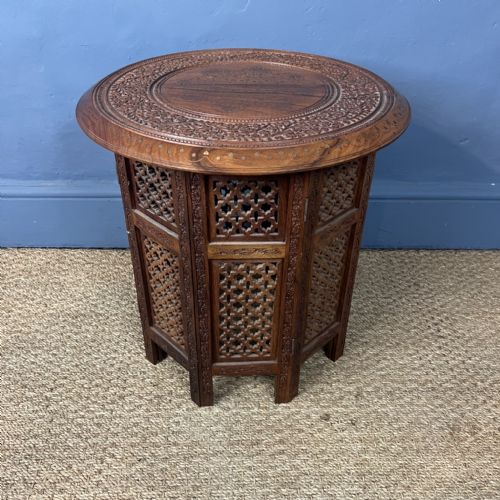
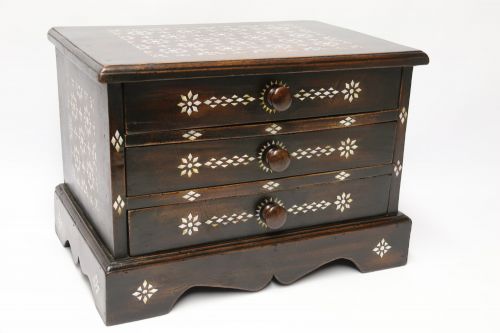
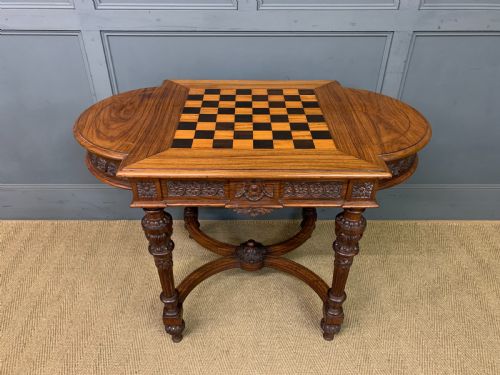
Occasional tables and centre tables dominate the selection, often featuring octagonal or circular tops supported by folding or pedestal bases. Alongside these smaller pieces, buyers encounter collector chests, armchairs, and occasional sofas.
Origins stretch from North India and Hoshiarpur to Ceylon and the West Indies, yielding distinct stylistic variations. Anglo-Indian and Ceylonese examples appear most frequently, displaying characteristic regional motifs and construction methods.
Materials and construction
Workshops utilised dense timbers such as rosewood, teak, ebony, padouk, and satinwood as the structural foundation for these objects. These hardwoods provided a stable base capable of supporting intricate surface decoration without warping.
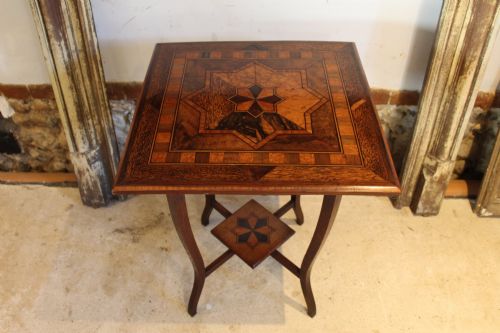
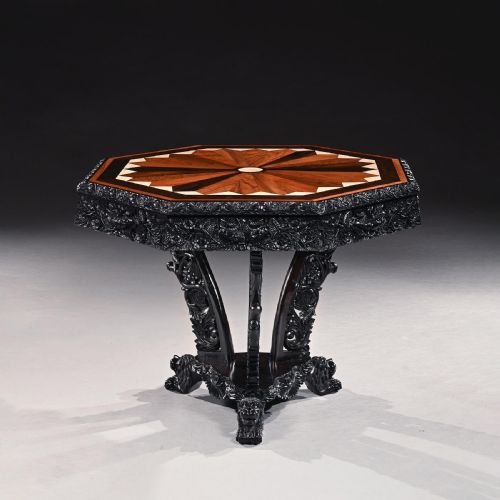
Decoration relied on contrasting materials inserted into the primary wood, including bone, mother of pearl, and brass wire or sheet. Artisans also employed specimen wood marquetry, cutting and fitting varied timbers to form complex geometric patterns.
Carving frequently accompanied the inlay work, creating textured surfaces on table edges, aprons, and supports. Campaign pieces utilised folding mechanisms and durable hardwoods designed for portability.
Listings feature 19th-century pieces alongside items dated up to 1930, utilising teak, rosewood, ebony, and bone inlay.
Standards of execution
The precision and density of the inlaid elements dictate the refinement of a piece. Finer examples display tight, seamless fitting of bone, brass, or contrasting woods into the primary timber, with minimal use of filler.
The choice of primary wood affects the overall impact, with heavily figured specimen woods, ebony, and richly grained rosewood commanding attention. The complexity of the carved details and the structural integrity of the joints further separate standard production from superior craftsmanship.
The Colonial Inlay Furniture Glossary
- Hoshiarpur
- A North Indian city renowned for intricate woodwork involving dense inlay of brass and bone. Pieces from this tradition typically feature dense geometric and floral patterns covering the entire surface.
- Specimen wood
- Furniture constructed from or decorated with a variety of native and exotic timbers. Makers arranged these contrasting woods to display natural variations in tone and grain.
- Campaign furniture
- Portable items designed for military officers or travellers, often featuring folding stands, recessed brass handles, and robust construction. These objects prioritized disassembly and durability.
- Marquetry
- The art of applying thin pieces of veneer to a structure to form decorative patterns or pictures. Craftsmen selected woods of different colours to create pictorial or geometric designs.
- Vargueno
- A traditional Spanish cabinet form featuring a drop-front writing surface concealing numerous small drawers and compartments. These pieces usually rest upon a separate supporting stand.
Colonial Inlay Furniture: Frequently Asked Questions
What is colonial inlay furniture?
It is a category of decorative woodwork created during periods of European expansion, combining local craftsmanship with imported forms. Items range from small occasional tables to large chests and seating.
These pieces showcase regional techniques, utilising native timbers embellished with contrasting materials like bone, brass, and exotic woods.
Where were these pieces made?
Production occurred across several regions influenced by colonial trade and administration, notably India and Ceylon. Specific centres like Hoshiarpur developed distinct styles of dense surface decoration.
Other examples originate from the West Indies or reflect European influences adapted by local artisans in various tropical workshops.
How do I care for inlaid wooden surfaces?
Protect the timber and delicate inlay work by maintaining stable humidity levels and avoiding direct sunlight. Sudden temperature changes can cause wood to shrink and loosen the embedded materials.
Apply a minimal amount of appropriate furniture wax occasionally to nourish the hardwood without disturbing the bone, brass, or veneer elements.
How can I tell the period of a table?
Examine the construction methods, joinery, and materials used within the primary structure. Nineteenth-century examples often display hand-cut elements and specific regional wood choices.
Stylistic shifts, such as Art Deco influences seen in later twentieth-century pieces, provide further clues to dating when combined with an analysis of the hardware.