




Colonial Hardwood Chest
These colonial hardwood chest pieces bring heavy timber, brass mounts, and travel-worn character straight into a room.
Colonial Hardwood Chest
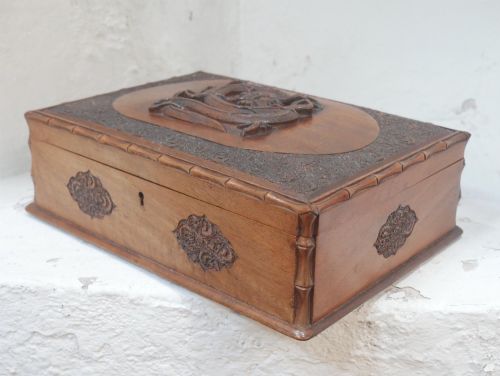
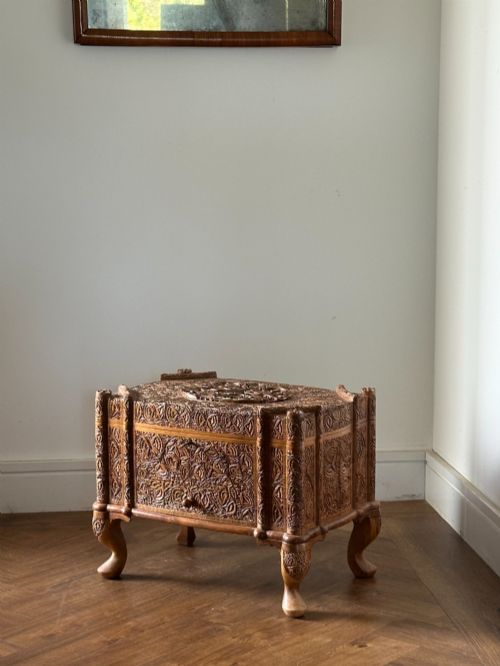
A colonial hardwood chest encompasses practical travel trunks, deed boxes, and jewellery caskets built during the nineteenth and twentieth centuries. These pieces reflect the trade routes and domestic habits of the British Empire and Dutch colonial territories, combining utility with decorative carving.
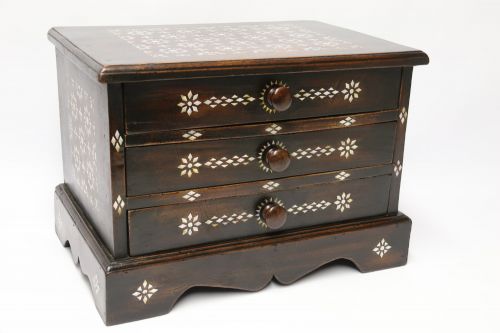
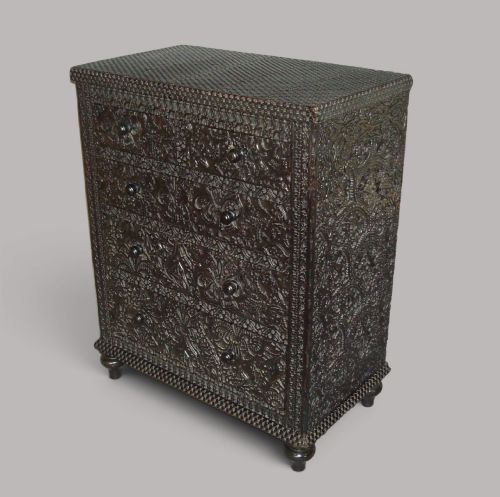
Buyers most frequently encounter Anglo-Indian and Zanzibar forms on this page, dating across the Victorian era into the 1930s and 1950s. They range from small tabletop collector chests of drawers to massive iron-bound trunks intended for long sea voyages.
Makers utilised dense timbers and fitted them with robust handles and locks to withstand tropical climates and rough handling. The resulting objects serve today as coffee tables, blanket stores, or standalone statement storage.
Materials and construction methods
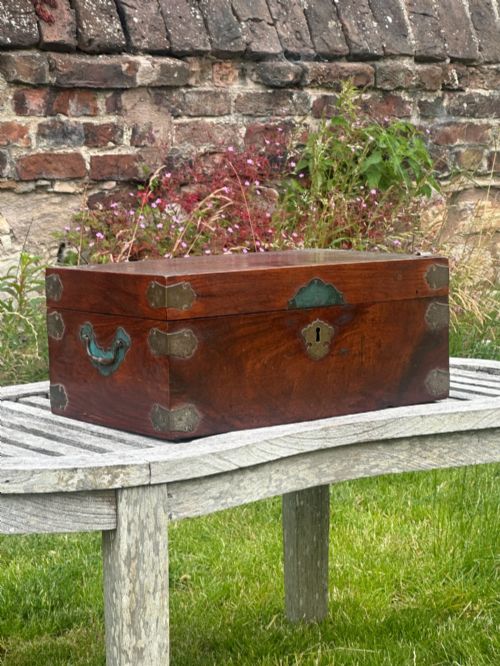
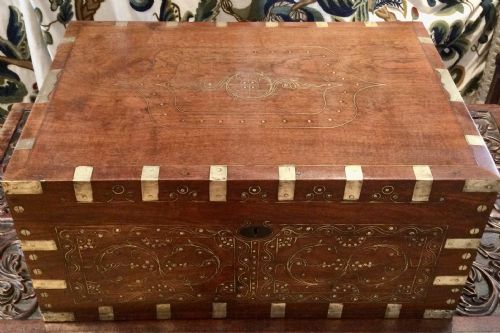
Construction relies heavily on dense tropical hardwoods such as padouk, teak, and sandalwood, chosen for their durability and resistance to humidity. Artisans often reinforced these timber carcases with brass banding, iron straps, and heavy corner plates.
Surface decoration includes intricate regional carving, bone inlay, and ebonised finishes, alongside studded brass patterns on Zanzibar trunks. Internal compartments, secret drawers, and fitted trays reveal careful planning by traditional craftsmen.
Colonial Hardwood Chest Retail Price Guide 2026
Typical asking prices for colonial hardwood chest among the pieces listed under this phrase on Sellingantiques today, from the lower quarter to the upper quarter. They describe what is for sale here now, not the wider market.
Some nineteenth-century traveller trunks still smell faintly of the sandalwood used to deter insects on long steamship voyages.
Judging quality in colonial chests
Quality rests on the integrity of the timber and the crispness of the carving, where deep, detailed relief work distinguishes superior pieces from simpler utilitarian boxes. The weight and gauge of the original brass or iron mounts also indicate the original grade of the trunk.
Proportion and the survival of fitted internal trays or original locking mechanisms separate fine collector pieces from altered items. Pieces retaining their untreated surface patination command greater interest than heavily stripped or modernly varnished examples.
The Colonial Hardwood Chest Glossary
- Anglo-Indian
- A style describing furniture and decorative objects made in India during the British colonial period, often blending local craftsmanship with European forms.
- Zanzibar chest
- A distinct type of heavy trunk featuring elaborate brass studding, strapwork, and a domed or flat lid, associated with East African trade routes.
- Cellarette
- A fitted container originally designed for holding bottles of wine or spirits safely during transport or dining use.
- Padouk
- A heavy, durable reddish-brown tropical hardwood frequently used in fine colonial furniture making.
- Sarcophagus
- A coffin-like shape with a sloped lid, commonly adopted for nineteenth-century tea caddies and jewellery caskets.
Colonial Hardwood Chest: Frequently Asked Questions
How were these chests used?
Colonial chests served primarily for secure transport and storage of personal valuables, uniforms, and documents during long voyages across the British Empire. Smaller caskets held jewellery and letters, while massive iron-bound trunks travelled in the holds of ships.
In modern interiors, their sturdy construction and generous internal capacity make them ideal for storing blankets, board games, or serving as low coffee tables.
How do I date a colonial chest?
Dating relies on examining construction techniques, timber species, and metal mounts, comparing them against documented nineteenth- and twentieth-century cabinet-making styles. Anglo-Indian and Victorian colonial pieces often show hand-cut dovetails and forged ironwork.
Secondary clues include the type of locks used, the wear patterns on the base, and whether the internal lining paper or fabric remnants survive from the period.
Are these chests heavy?
Most of these pieces are exceptionally heavy because they are constructed from dense tropical hardwoods like teak and padouk, combined with thick iron or brass reinforcement. Moving larger trunks often requires two people to avoid damaging the historical mounts.
Smaller tabletop boxes and jewellery caskets remain easily portable, but floor-standing chests are built to stay firmly in one place once positioned.
How do I care for hardwood chests?
Protect the timber by keeping the chest away from direct heat sources and sudden humidity changes that can cause the wood to split. Feeding the dry hardwood with a quality wax maintains the surface sheen without building up sticky residues.
Brass and iron mounts can be left with their natural aged patina or gently dusted, avoiding harsh metal polishes that might stain the surrounding timber.