


Colonial Folk Art
Colonial folk art brings together vernacular objects and devotional pieces shaped by global encounters across centuries.
Colonial Folk Art
Colonial folk art encompasses hand-carved sculptures, household shrines, and utility items originating from diverse geographical regions and traditions. When searching for colonial folk art, buyers encounter items ranging from Spanish home altars to Indian figural woodcarvings and American powder horns.
The objects span multiple centuries, with pieces appearing from the eighteenth, nineteenth, and early twentieth centuries. Forms vary widely from religious statues and devotional objects to armchairs, tables, and decorative vessels.
Regional styles shape the selection, including Spanish colonial work, Anglo-Indian carvings, Spanish folk art, and colonial American pieces. Buyers are most likely to meet nineteenth-century devotional carvings and vernacular household items on this page.
Materials and Construction
Makers utilised various woods and hardwoods as the primary substrate for sculptures, furniture, and decorative vessels. Natural materials such as coconut shell also appear, shaped into intricate carved objects.
Surfaces frequently receive applied decoration through paint, polychrome paint, gesso, and gold leaf. These finishes define devotional figures, home altars, and animal sculptures from Spanish and Indian traditions.
Colonial Folk Art Retail Price Guide 2026
Typical asking prices for colonial folk art among the pieces listed under this phrase on Sellingantiques today, from the lower quarter to the upper quarter. They describe what is for sale here now, not the wider market.
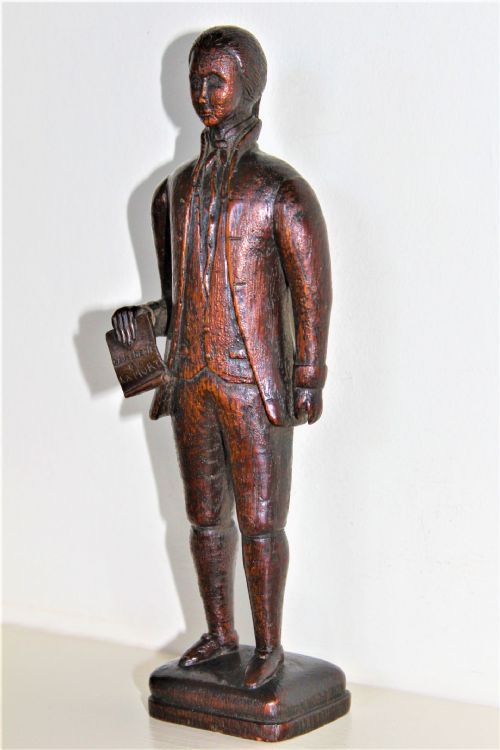
One historical figure carved from wood stands ready to inspire revolution alongside painted wooden horses and coconut shells.
Assessing Quality
Quality rests in the fidelity of the carving and the preservation of original surface treatments. Pieces retaining their early polychrome paint or gold leaf display greater visual integrity than those stripped or heavily restored.
The depth of detail in figural works, such as facial expressions and hand positions on religious statues, distinguishes finer artisan output from simpler vernacular production.
The Colonial Folk Art Glossary
- Polychrome
- Decorated in multiple colours. This term describes painted surfaces found on religious statues and home altars.
- Gesso
- A plaster-like mixture applied to wood surfaces as a base for paint or gold leaf. It creates a smooth ground for detailed ornamentation.
- Devotional objects
- Items created for private or public religious worship. Examples include household shrines, altars, and carved figures of deities.
- Home altar
- A small architectural structure used for domestic religious devotion. These pieces often feature painted panels and niches for figures.
Colonial Folk Art: Frequently Asked Questions
What is colonial folk art?
Colonial folk art comprises handmade objects, sculptures, and devotional items created within colonial territories or under strong cross-cultural influences. These pieces reflect local craftsmanship combined with imported traditions.
The inventory includes Indian figures, Spanish altars, and American powder horns, demonstrating the broad geographical spread of vernacular artistry.
What materials are common?
Wood and hardwood form the structural foundation for the vast majority of sculptures, furniture, and devotional objects. Carvers frequently worked with local timbers to produce figures and vessels.
Surface decoration relies heavily on paint, polychrome pigments, gesso, and gold leaf to add colour and reverence to the finished objects.
How do I identify periods?
Dating relies on stylistic markers, construction methods, and material ageing associated with the eighteenth, nineteenth, and early twentieth centuries. Eighteenth-century items include American powder horns and revolutionary figures.
Nineteenth and early twentieth-century pieces encompass Indian animal sculptures, goddess figures, and Spanish devotional sets reflecting distinct regional aesthetics.
Where do these pieces originate?
The objects originate from various global regions touched by colonial history and cross-cultural exchange. Evidence points to Spanish, Indian, and American provenance.
Styles span Spanish colonial, Anglo-Indian, and colonial American traditions, showing how local makers interpreted broader cultural influences.