







Colonial Dining Furniture
Colonial dining furniture brings together dense exotic timbers and regional carving traditions, offering robust tables and seating built for formal meals.
Colonial Dining Furniture
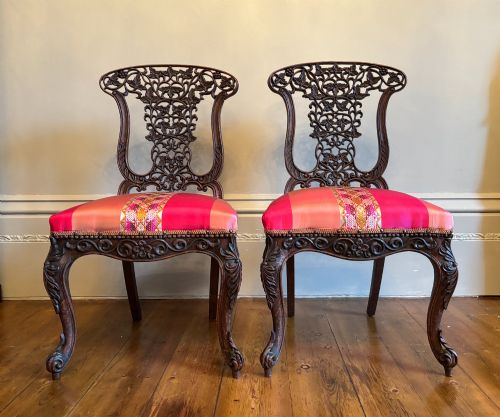
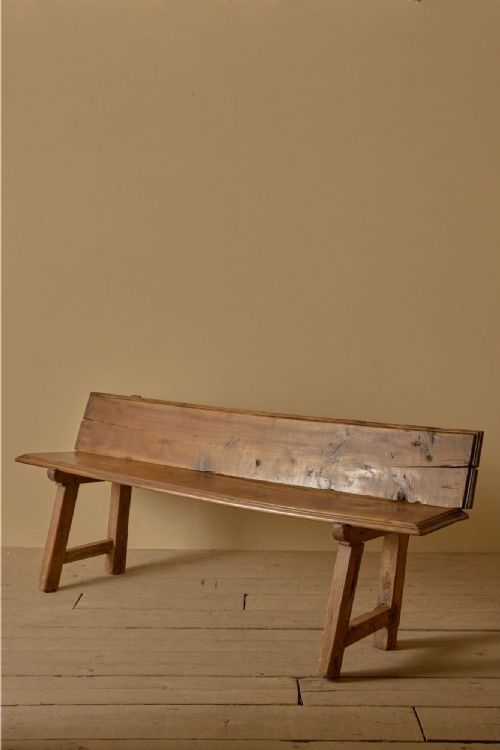
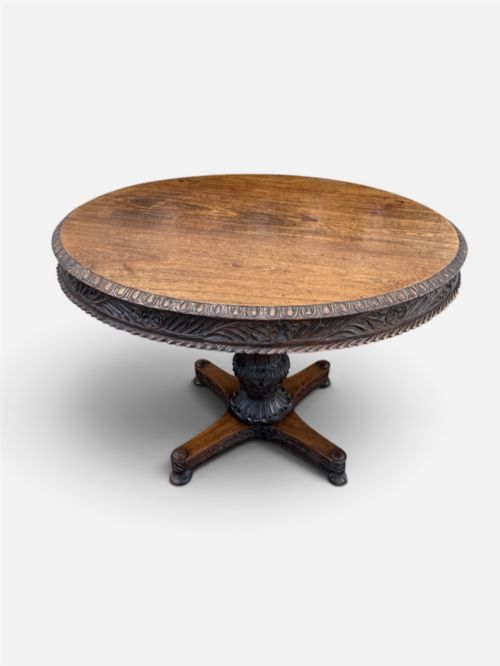
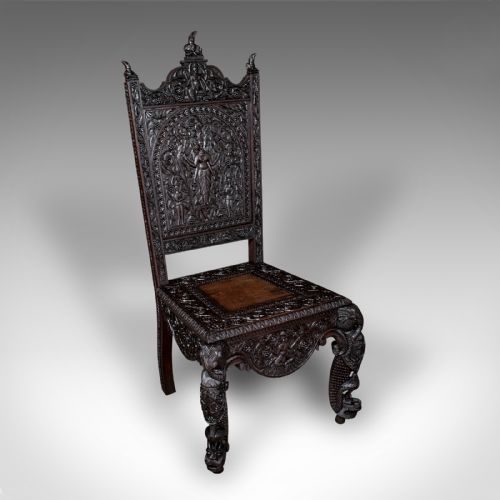
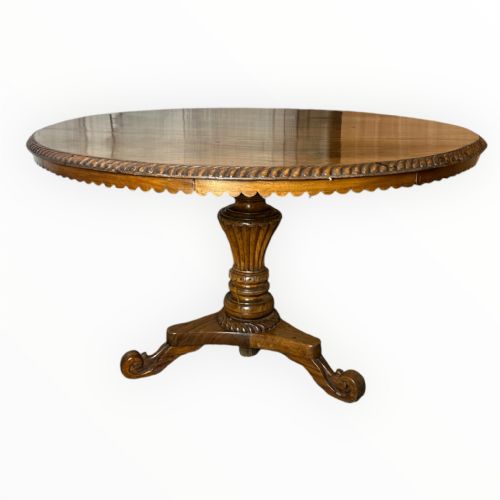
Colonial dining furniture encompasses large tables and matching chairs produced across various global territories during periods of European expansion. Buyers searching for colonial dining furniture encounter diverse regional interpretations, from Anglo-Indian seating to Spanish country benches.
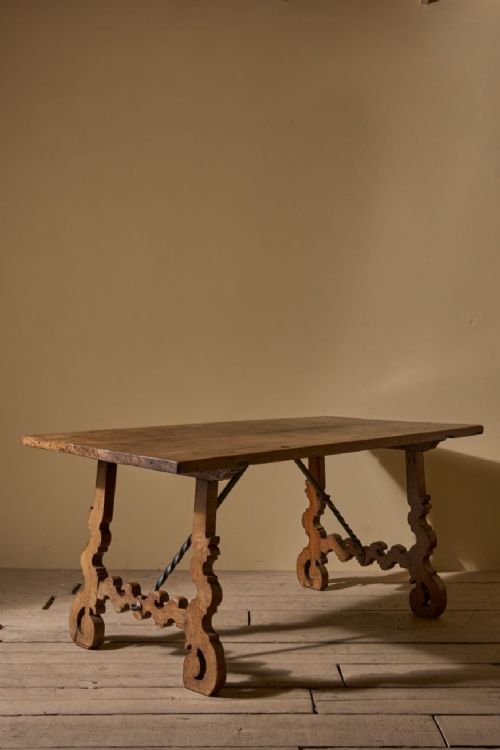
The material record shows a strong presence of substantial tables and carved chairs originating from Indian, Ceylonese, Burmese, and Spanish colonial workshops. Pieces span the eighteenth and nineteenth centuries, incorporating styles such as Anglo-Indian Regency and Spanish Baroque.
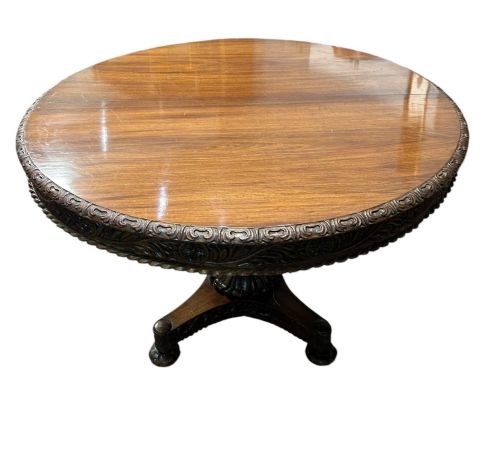
Seating forms range from paired side chairs and armchairs to large dining sets, while tables vary from tilt-top centre pieces to substantial village and dining tables. These items reflect the domestic requirements of colonial households through robust construction and distinctive ornamentation.
How they were made
Makers utilised dense native timbers such as teak, rosewood, padauk, ebony, walnut, and satinwood to construct these substantial pieces. These tropical and European hardwoods provided the structural integrity required for heavy use and intricate carving.
Joinery combined traditional woodworking techniques with regional decorative methods, including deep relief carving and cane insertion for seats. Wrought iron and fruitwood also appear selectively in specific Spanish and regional workshops to reinforce or accent the primary timber.
Colonial Dining Furniture Retail Price Guide 2026
Typical asking prices for colonial dining furniture among the pieces listed under this phrase on Sellingantiques today, from the lower quarter to the upper quarter. They describe what is for sale here now, not the wider market.
Current listings feature eighteenth and nineteenth-century pieces, including Victorian, Regency, and William IV eras, constructed in teak, rosewood, ebony, and walnut.
What varies in quality
The sophistication of the carved ornamentation distinguishes standard utility pieces from exceptional works produced in specialised urban workshops. Crispness in foliage and figural motifs indicates skilled hand-tooling by regional artisans.
The selection and density of the timber influence the overall substance and visual depth of each table or chair. Heavy solid woods and well-matched grain patterns separate finer regional productions from simpler village items.
The Colonial Dining Furniture Glossary
- Tilt-top centre table
- A freestanding table with a mechanism that allows the horizontal surface to pivot vertically when not in use. This form is common in nineteenth-century Anglo-Indian drawing and dining spaces.
- Caned seat
- A seating surface woven from split rattan or cane material, frequently found on tropical chairs to provide ventilation in warm climates. It requires skilled manual labour to thread through frame perforations.
- Padauk wood
- A heavy, durable tropical hardwood with a reddish hue, utilised extensively in nineteenth-century Burmese and Indian furniture production. It accepts fine carving without splintering.
- Spanish Baroque
- A decorative style characterised by bold scrolls, heavy proportions, and dramatic contrast, seen on eighteenth-century walnut tables and benches. It reflects Iberian design imported to colonial outposts.
- Campaign silver table
- A portable or modular furniture form designed for easy transport by military officers or colonial administrators, adapted here for dining use.
Colonial Dining Furniture: Frequently Asked Questions
What defines colonial dining furniture?
These pieces combine European furniture forms with indigenous materials and carving techniques from regions under colonial rule. They reflect the cross-cultural exchange of design during the eighteenth and nineteenth centuries.
Items typically include heavy hardwood dining tables, ornate armchairs, and benches constructed from teak, rosewood, ebony, and walnut.
How do I care for tropical hardwood furniture?
Maintain stable indoor humidity levels to prevent dense timbers like padauk and teak from drying out or splitting. Avoid placing these pieces in direct sunlight to protect the natural grain and polished finish.
Clean surfaces with a dry or slightly damp cloth, using appropriate natural waxes sparingly to preserve the wood.
Were these tables used for daily dining?
These tables served the domestic and formal dining needs of colonial administrators, merchants, and local elites. Their robust construction accommodated large households and frequent entertaining.
From tilt-top centre tables to large extension or village dining tables, they formed the central gathering point for meals.