








Collectors Display Stand
A collectors display stand holds your cabinet treasures and portfolios securely, bringing proper structure to small objects.
Collectors Display Stand
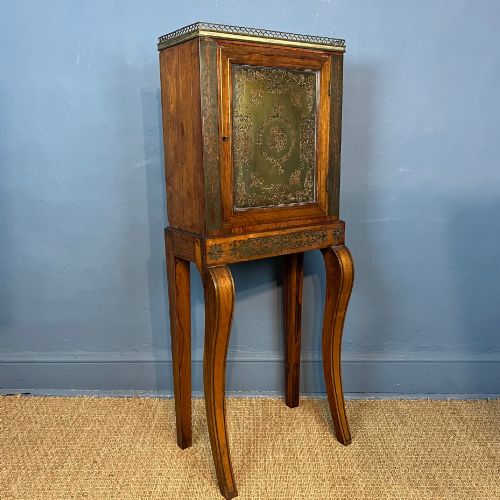
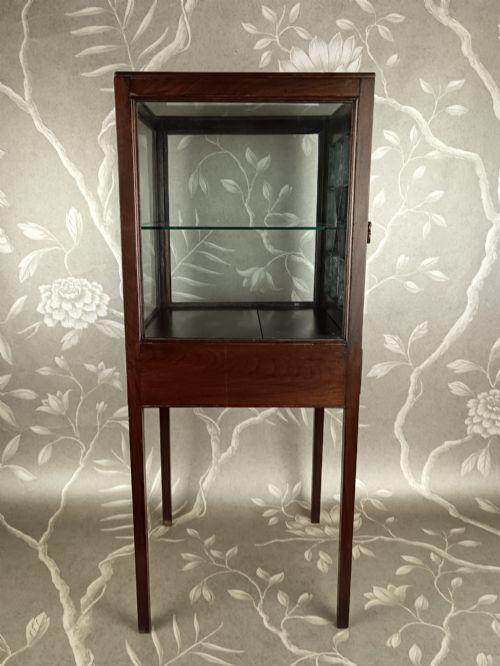
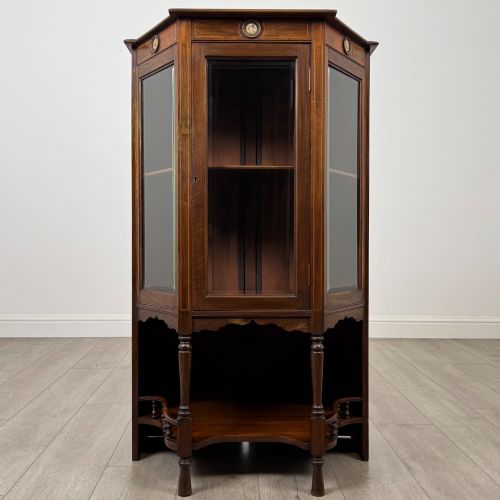
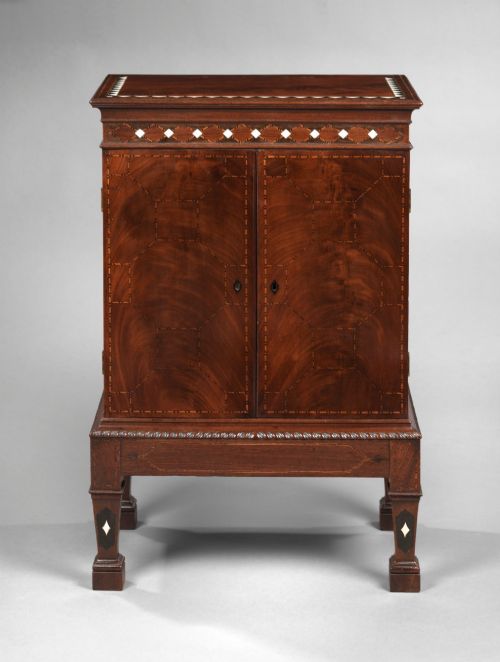
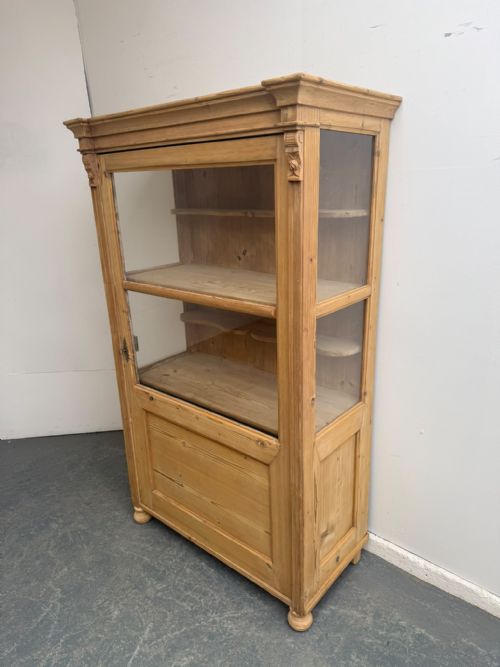
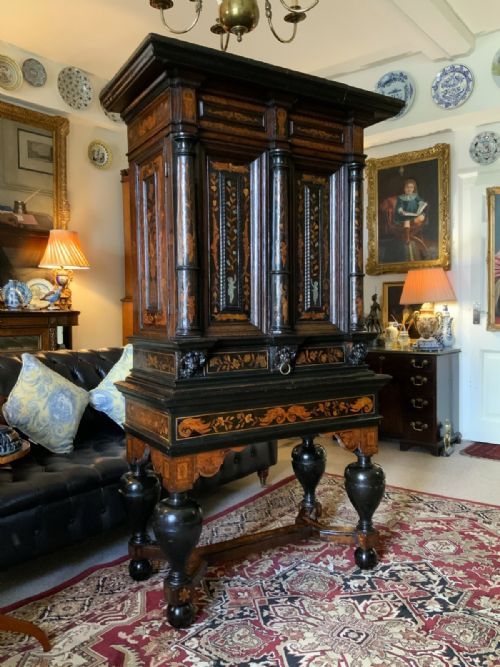
A collectors display stand gathers together display cabinets, cabinets on stand, whatnots, display shelves, and folio stands. These pieces range from Georgian mahogany vitrines to Edwardian walnut cabinets and tall ebonised towers.
You will most frequently meet mahogany and oak furniture spanning the Georgian, Victorian, and Edwardian periods. Pieces often feature glazed doors, glass panels, and dedicated stands designed to elevate items for examination.
The selection includes specialised forms such as bijouterie cabinets, chinoiserie penwork stands, and adjustable artist folio stands. Each provides a distinct method for housing and viewing collections within a room.
How they were made
Cabinet makers utilised solid timbers such as mahogany, oak, walnut, and pine, frequently applying decorative veneers. Marquetry, pewter inlay, and bone inlay appear across specific Dutch Baroque and Regency examples.
Glazing techniques incorporated fitted glass panels within timber frames to protect contents while maintaining visibility. Stands and cabinets relied on traditional joinery methods suited to each period, from Jacobean revival framing to Sheraton style cabinetry.
Collectors Display Stand Retail Price Guide 2026
Typical asking prices for collectors display stand among the pieces listed under this phrase on Sellingantiques today, from the lower quarter to the upper quarter. They describe what is for sale here now, not the wider market.
The listings show materials spanning brass, bone inlay, and ebonised wood across Georgian, Regency, and Edwardian periods.
What varies in quality
The standard of timber selection and complexity of surface decoration largely determine the calibre of a piece. Fine execution is visible in crisp carved details, delicate inlay work, and well-proportioned stands.
Integration of specialised elements such as penwork, ebonised finishes, or adjustable mechanisms indicates superior workshop capability. Simpler pine utility pieces contrast with refined Georgian and Regency cabinet work designed for formal interiors.
The Collectors Display Stand Glossary
- Vitrine
- A glass-fronted display cabinet used for showcasing fine objects and porcelain. This form protects contents from dust while offering all-round visibility.
- Bijouterie cabinet
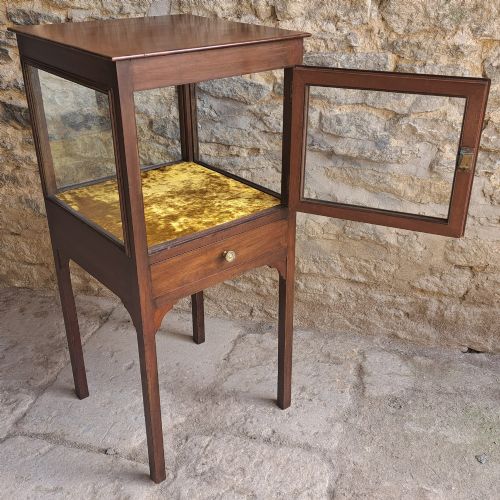
- A low glass-topped table or cabinet designed specifically for displaying small valuable items and jewellery. The glazed top allows overhead viewing of the collection inside.
- Folio stand
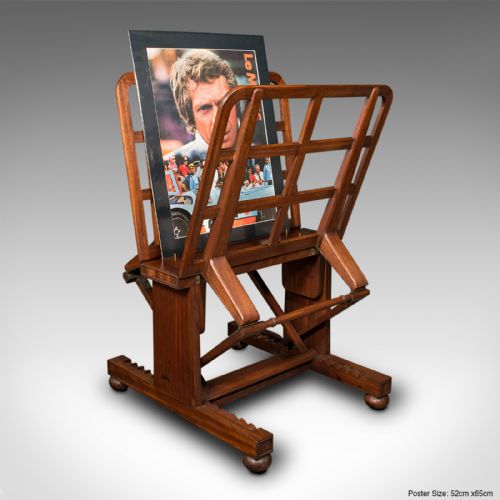
- An adjustable rack designed to hold large art prints, drawings, or folios. These stands feature hinged frames that open to display pages flat.
- Marquetry
- Decorative veneer work formed by fitted pieces of wood and other materials creating pictorial patterns. This technique appears prominently on Dutch Baroque pieces.
- Penwork
- A decorative surface technique using fine ink drawing on wood, often finished with varnish. Regency examples utilise this method for intricate surface designs.
Collectors Display Stand: Frequently Asked Questions
What is a collectors display stand used for?
These pieces serve to organise, elevate, and protect cabinets, folios, and small curated objects. They allow collections to be viewed safely within a domestic space.
Different formats suit different items, from tall tower cabinets for vertical display to adjustable stands for paper folios and prints.
How do I identify a Georgian cabinet?
Georgian pieces typically feature dense mahogany timber, precise cabinet joinery, and classical proportions influenced by contemporary architectural styles. Details often include fine glazing bars and polished brass fittings.
Construction methods reflect eighteenth-century workshop traditions, predating the heavier revival styles of the Victorian era.
Where should I place a folio stand?
A folio stand requires a stable floor space with sufficient clearance around the hinged rack for turning pages. Placing the stand away from direct sunlight protects paper items from fading.
These adjustable stands function well in studies, libraries, or living rooms where large prints and drawings are actively handled.
What distinguishes a bijouterie cabinet?
A bijouterie cabinet incorporates a glazed top surface that permits downward viewing of small items kept within a shallow drawer or well. This design differs from tall vertical vitrines by focusing on items meant to be inspected closely from above.
Such cabinets often stand on slender legs and date frequently from the late nineteenth or early twentieth century.