

Collectors Cabinet Wood
When you search for collectors cabinet wood, you find timber-built repositories designed to organise specimens, trinkets and curiosities.
Collectors Cabinet Wood
A collectors cabinet wood search uncovers a diverse range of wooden repositories built to house small objects, specimens and miniatures. These pieces span centuries, encompassing Georgian craftsmanship, Victorian refinement and Edwardian utility.
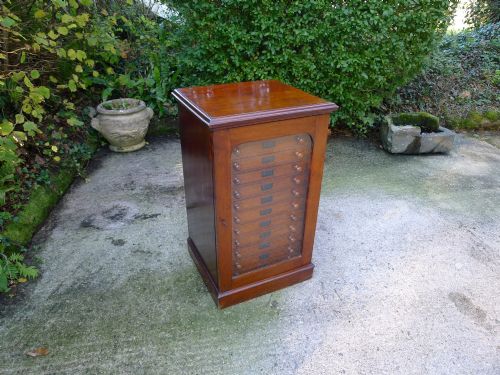
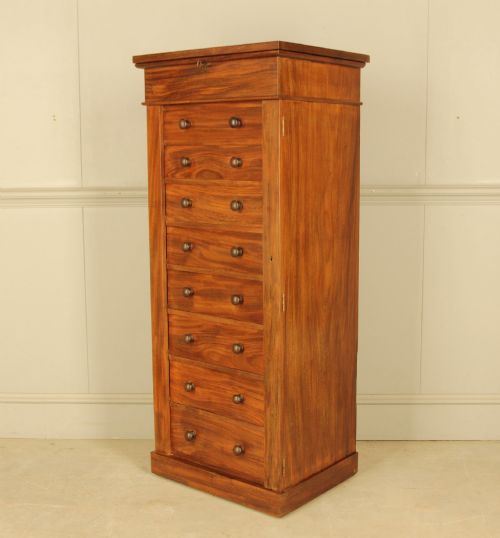
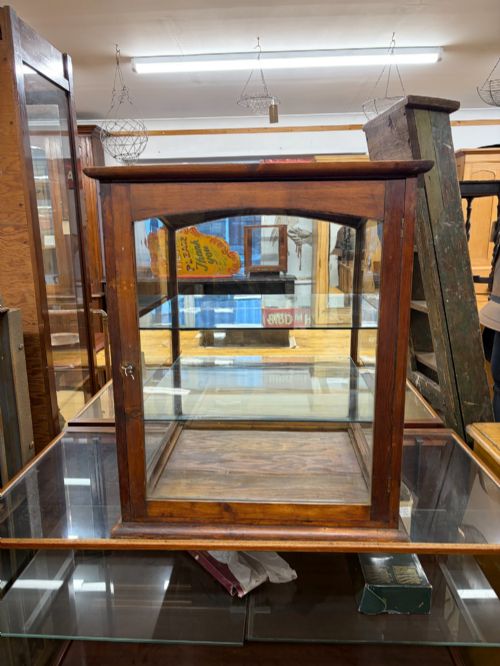
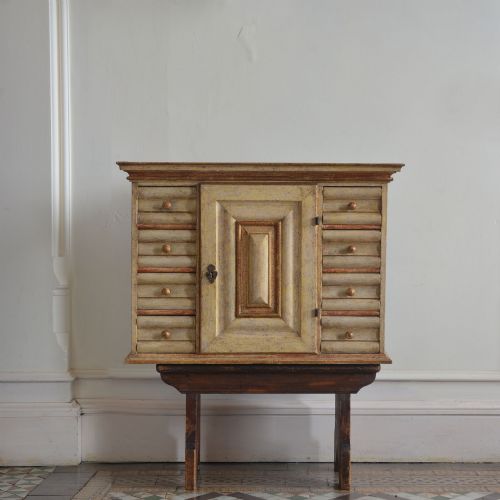
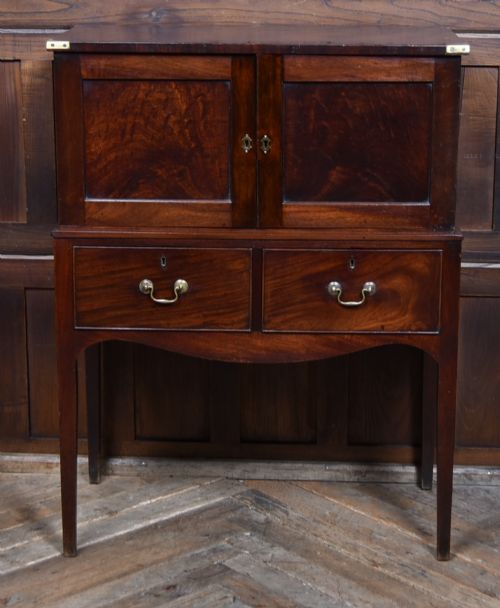
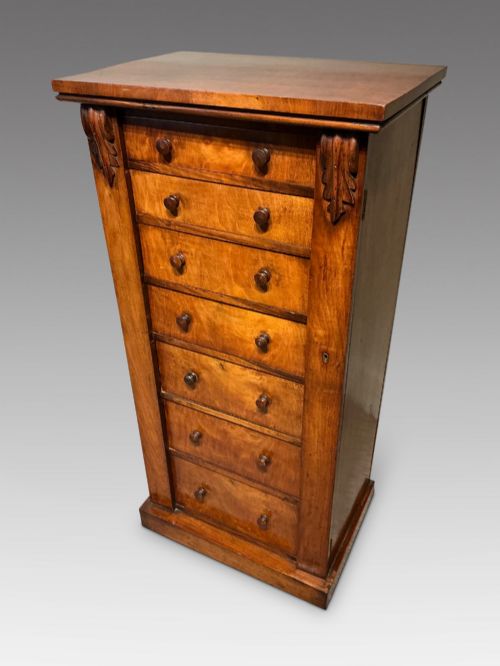
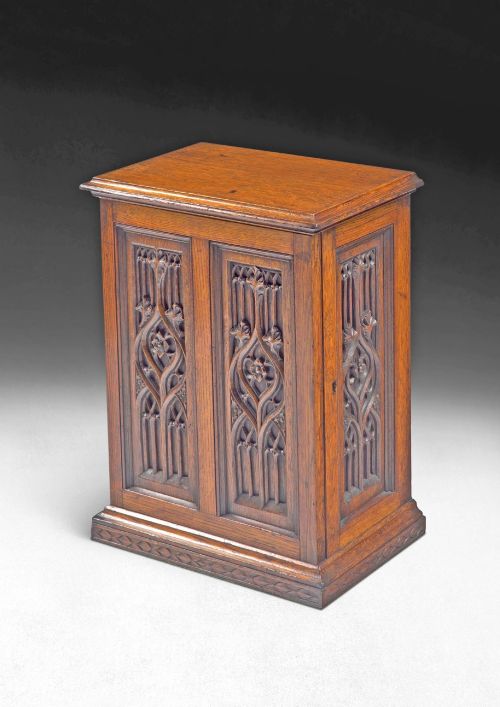
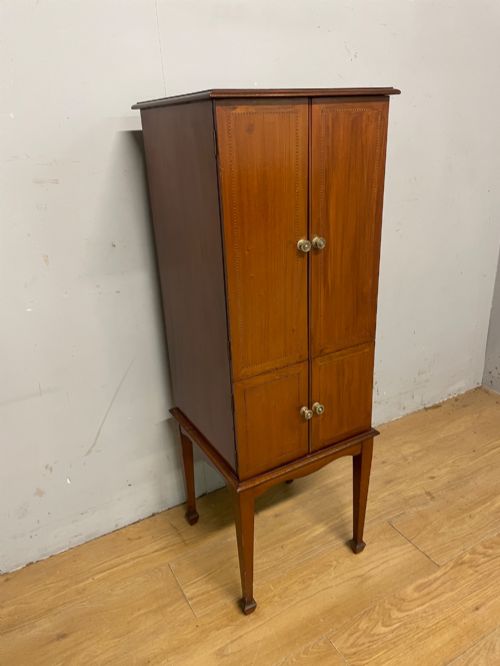
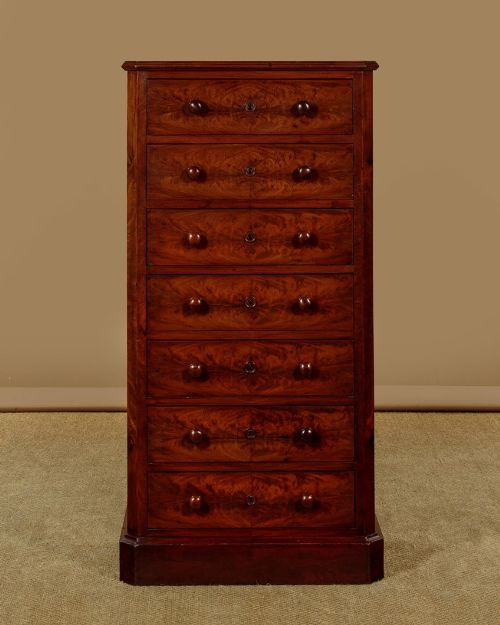
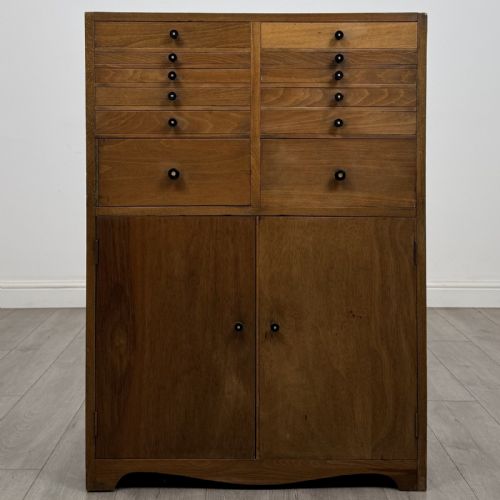
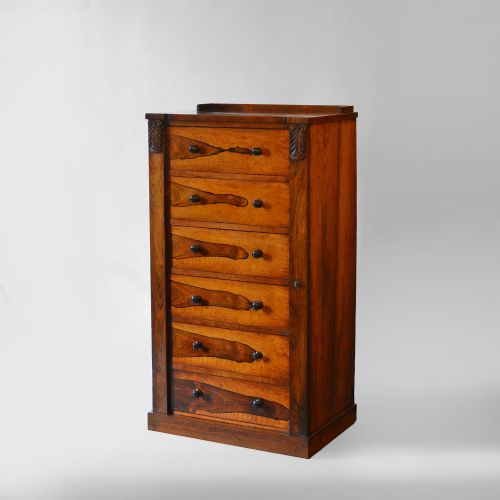
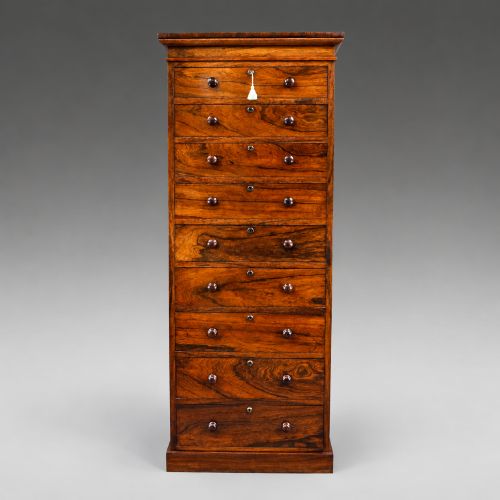
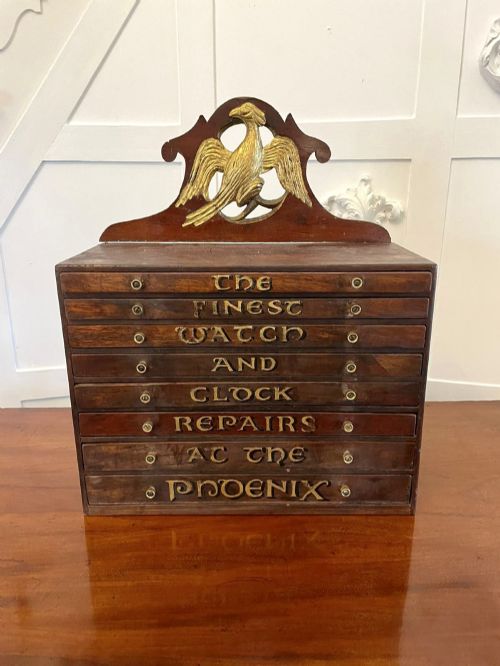
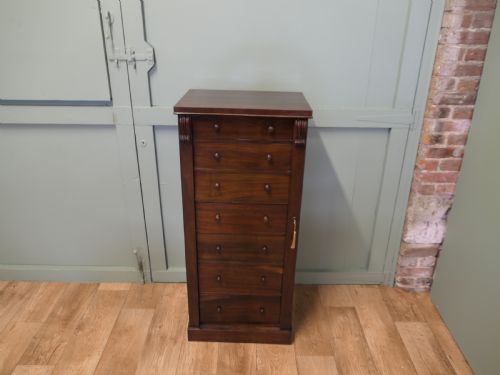
The most common forms on this page include multi-drawer chests, Wellington chests with locking pilasters, and tabletop display cases. Alongside traditional collectors cabinets, you will encounter banks of drawers, apprentice pieces and miniature bureaux.
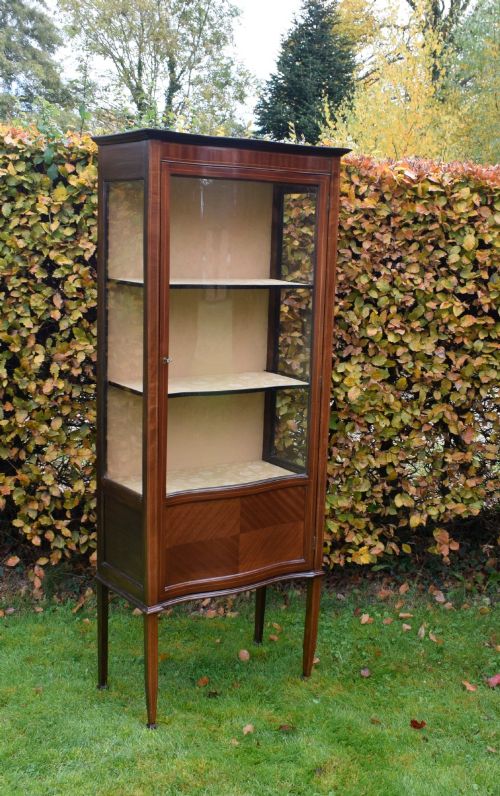
Origins stretch from British workshops to continental Europe and Japan, taking in varied timber construction. Buyers encounter everything from formal glazed vitrines to utilitarian ticket cupboards and apothecary chests.
Timber construction and decorative technique
Makers relied primarily on hardwoods like mahogany, rosewood, oak and walnut for the primary structure and drawer fronts. Pine and other softer woods were frequently utilised for concealed framing, drawer linings and secondary panels.
Surface treatments included French polishing, marquetry inlay, pewter embellishment and parquetry veneering. Brass fittings, including shell pulls, label holders, glazed doors and locking mechanisms, completed the functional hardware of these storage pieces.
Collectors Cabinet Wood Retail Price Guide 2026
Typical asking prices for collectors cabinet wood among the pieces listed under this phrase on Sellingantiques today, from the lower quarter to the upper quarter. They describe what is for sale here now, not the wider market.
Craftsmanship and structural integrity
Quality in these timber cabinets is defined by the precision of the drawer joinery and the selection of figured wood veneers. Superior examples display tight dovetails, smooth drawer action and retained original hardware such as turned wooden knobs or brass pulls.
The presence of maker signatures, original fitted interiors, and specialised mechanisms like locking security staves on Wellington chests elevates a piece. Lesser examples show mismatched replacements, degraded finishes or structural alterations to the original drawer configuration.
G. Bartholomew & Co·Brady of Edmonton
The Collectors Cabinet Wood Glossary
- Wellington chest
- A tall, narrow chest of drawers featuring a hinged locking pilaster on one side that secures all drawers simultaneously. It originates from the nineteenth century and is frequently rendered in mahogany or rosewood.
- Vitrine
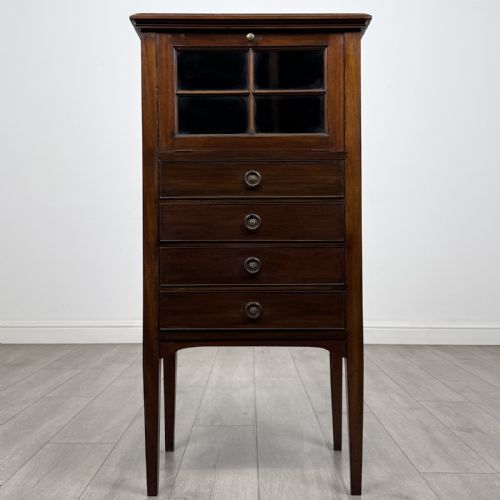
- A glass-panelled display cabinet designed to exhibit porcelain, silver or curiosities. These pieces often feature glazed doors and elevated legs.
- Bijouterie cabinet
- A tabletop or stand-mounted display case with a glazed top and sides, created specifically for jewellery and small ornaments. They emerge strongly during the Victorian and Edwardian periods.
- Parquetry
- A geometric mosaic of wood pieces used for decorative veneering on cabinet surfaces. It relies on contrasting timber tones to form repeating patterns.
Collectors Cabinet Wood: Frequently Asked Questions
What is a Wellington chest?
A Wellington chest is a tall, narrow timber drawer unit secured by a hinged locking pilaster down one side. This wooden bar fastens with a key to lock every drawer in place at once.
Craftsmen built these tall chests primarily in mahogany and rosewood during the nineteenth century to protect private papers and valuable specimens.
How do I use a specimen cabinet?
These shallow-drawer cabinets serve to store flat collections, fossils, coins, stamps and botanical samples. The numerous shallow tiers keep delicate items separated and organised.
Place them on sturdy tables or desks where the drawers can be pulled out safely to inspect contents under good light.
What is an apprentice piece?
An apprentice piece is a small-scale model of furniture built by a woodworker in training. These miniature chests and bureaux demonstrate precise dovetailing and scaling.
Display them on tabletops or within larger shelving units as standalone examples of historical woodworking skill.
How do I date an antique wooden cabinet?
Dating relies on identifying the primary timber, construction methods, hardware styles and decorative techniques like marquetry or French polishing. Georgian pieces often feature fine mahogany and classical proportions, while Victorian and Edwardian items introduce varied locking mechanisms and industrial storage forms.
Examine the secondary woods inside drawer linings and check for hand-cut dovetails to confirm the period of manufacture.