





Collectible Wall Plate
These collectible wall plate examples span Georgian dessert wares to twentieth-century commemoratives, offering hand-painted fruit and floral scenes for display.
Collectible Wall Plate
A collectible wall plate encompasses decorative plates, cabinet plates, and decorative plaques designed primarily for visual appreciation rather than daily dining. These pieces emerge across periods ranging from the Georgian era through the mid-twentieth century.
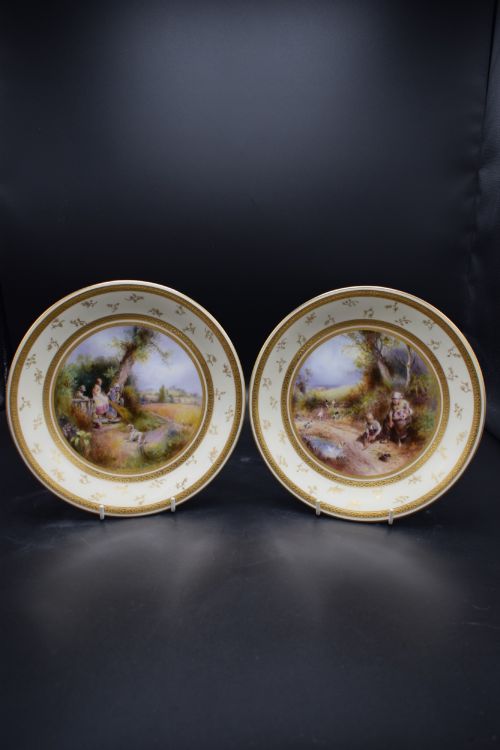
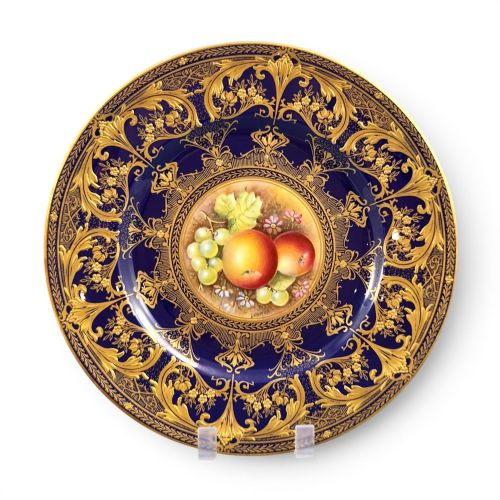
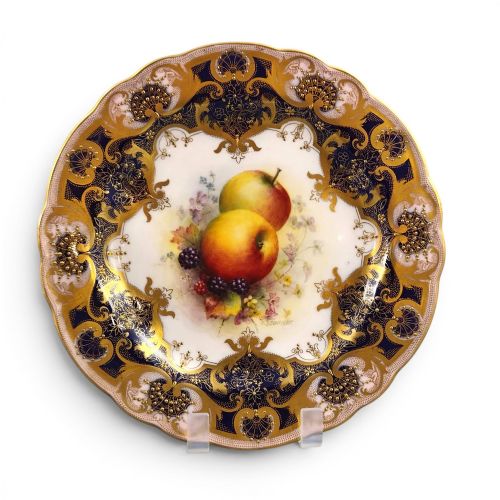
The selections encountered here frequently take the form of cabinet plates or dessert plates, often featuring detailed hand-painted botanical or fruit subjects. Makers utilise porcelain, bone china, and ceramic as foundational bodies for these ornamental items.
Examples stretch from early nineteenth-century Regency and Victorian creations to later twentieth-century productions from established factories. Buyers encounter both single display items and matched pairs intended to grace a wall or cabinet.
Materials and construction methods
The underlying bodies rely on fine porcelain, bone china, and ceramic, shaped into plates, dishes, and plaques. Artisans apply intricate hand-painting directly onto the glazed surfaces, capturing lifelike fruit, floral sprays, and armorial subjects.
Many items incorporate gilding, gold leaf, and gold gilt accents along the borders and rims, sometimes complemented by rope-edge mouldings or moulded green borders. Enamel decoration appears alongside traditional ceramic pigments to secure lasting colour depth.
Collectible Wall Plate Retail Price Guide 2026
Typical asking prices for collectible wall plate among the pieces listed under this phrase on Sellingantiques today, from the lower quarter to the upper quarter. They describe what is for sale here now, not the wider market.
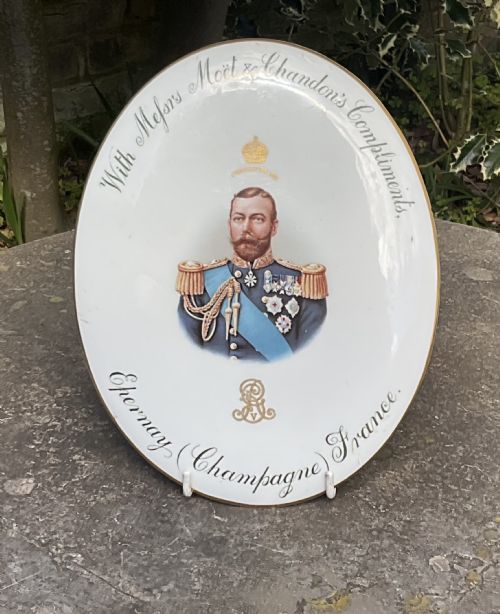
Toast the twentieth century with a celebratory plaque dedicated to George V and champagne.
Distinguishing quality across periods
Quality rests in the precision and delicacy of the hand-painted artistry, particularly evident in botanical and fruit studies executed by known porcelain painters. The finesse of the gilding and the uniformity of the ceramic body further separate standard wares from exceptional cabinet pieces.
The prominence of the factory and the documented hand of the artist elevate the standing of an individual piece within its period. Earlier Georgian and Victorian examples display meticulous brushwork that defines the upper tier of these display items.
Royal Worcester·Derby Porcelain·Minton·Coalport·Meissen·Royal Crown Derby
The Collectible Wall Plate Glossary
- Cabinet plate
- A decorative plate intended for display in a cabinet or mounted on a wall rather than for table service.
- Gilding
- The application of gold leaf, gold gilt, or powdered gold to ceramic surfaces, typically accentuating rims and borders.
- Kakiemon
- An asymmetric style of Japanese enamel decoration adopted by European potteries, featuring distinct floral and animal motifs.
- Dessert plate
- A small plate historically used for the final course of a formal meal, frequently ornamented with elaborate painted designs.
Collectible Wall Plate: Frequently Asked Questions
How do I hang a collectible wall plate safely?
Displaying these items securely involves using coated wire hangers or spring clips designed specifically to distribute weight evenly across the rim without causing friction damage to the ceramic or gilt edges.
Ensuring the wall fixing is anchored into a stud or uses a proper masonry plug provides the necessary stability for porcelain and bone china display pieces.
Were these plates meant for dining?
Cabinet and dessert plates from the Georgian, Victorian, and later periods were primarily created for formal dining courses or visual display in reception rooms rather than heavy everyday use.
Over time, the delicate hand-painted surfaces and extensive gilding transitioned these items entirely into decorative wall or cabinet display pieces.
How can I tell a Georgian plate from a later piece?
Examining the ceramic body, glaze characteristics, and the style of the hand-painted motifs helps determine the likely period of manufacture. Earlier pieces from the Georgian era often feature distinct paste compositions and hand-mixed enamel palettes compared to twentieth-century equivalents.
Factory marks stamped or painted on the reverse side also provide chronological clues when compared against known historical timelines.
What is the difference between a plate and a plaque?
Plates generally retain standard circular dish forms with defined wells and rims, whereas decorative plaques are often flat or slightly bowed surfaces created solely for hanging and viewing as artwork.
Plaques frequently commemorate specific events or showcase the highest skill of the porcelain painter without the functional constraints of a dining shape.