



Collectible Weapons
Collectible antique weapons span centuries of military and civilian craftsmanship, offering buyers tactile pieces of history from the eighteenth to the mid-twentieth century.
Collectible Weapons
Collectible antique weapons encompass a varied group of items, from functional military sidearms to civilian walking sticks concealing hidden blades. Buyers searching for collectible antique weapons will encounter swords, edged weapons, antique firearms, and specialised militaria reflecting distinct historical eras.
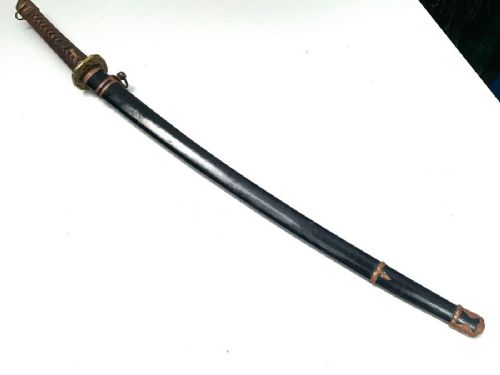
The selections on this page range widely across periods, including Georgian flintlock blunderbusses, Victorian military swords, and Showa period Japanese officers' swords. Walking sticks and sword sticks feature prominently, alongside flintlock and percussion pistols.
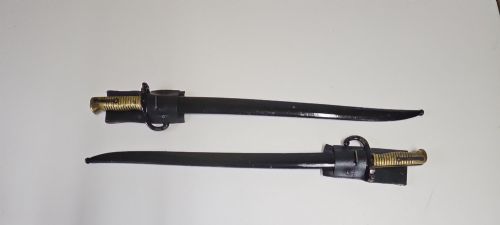
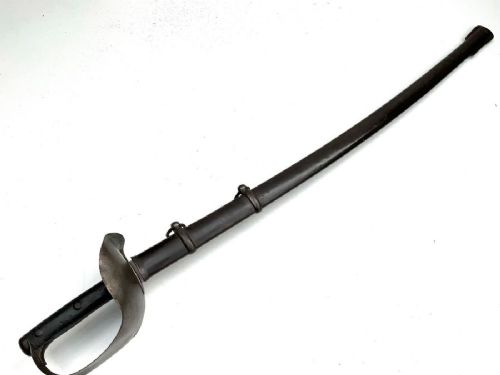
Origin and styling vary across the inventory, showcasing French bayonets, German officers' swords, and British cavalry trooper's swords. Each piece carries specific material and stylistic markers associated with its date of manufacture.
How they were made
Makers utilised traditional materials such as steel, iron, and brass for blades, barrels, and furniture, pairing them with robust woods like walnut, hardwood, holly, and general timber for stocks and shafts. Leather often covers scabbards or walking stick bodies, while decorative elements incorporate porcelain and silver knops.
Construction techniques combined forge work for metal components with careful woodworking for grips, stocks, and cane shafts. Specialist finishing included decorated steel blades and root-ended handles on walking sticks.
Listings feature items from the 18th Century, Victorian period, and 1940, utilising steel, brass, wood, iron, walnut, leather, metal, and hardwood.
What varies in quality
Quality in these pieces rests upon the crispness of metalwork, the integrity of wooden components, and the preservation of original mechanisms such as flintlock and pinfire actions. Finer examples retain clear maker signatures and clean, decorated blade surfaces without heavy pitting.
The standard of execution in concealed mechanisms, such as the catch on a sword stick or the fit of a folding bayonet, distinguishes higher grade items. Materials also influence overall character, with selected hardwoods, silver knops, and Sevres porcelain mounts marking superior production.
Barber of Newark·MASONIC
The Collectible Weapons Glossary
- Flintlock
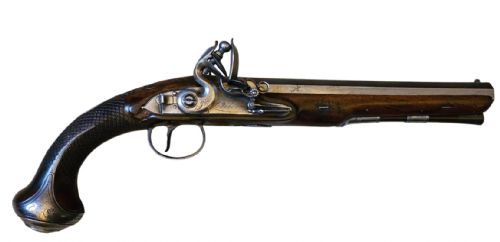
- An ignition mechanism for firearms that uses a flint struck against a steel frizzen to create sparks. This system dominated military and civilian arms throughout the eighteenth century.
- Percussion cap
- A small priming charge enclosed in a metal cap that detonates when struck by the hammer, replacing older ignition systems in the nineteenth century.
- Pinfire
- An early metallic cartridge design featuring a protruding pin struck by the hammer to detonate the internal priming composition. It is commonly found in mid-nineteenth-century pocket pistols and revolvers.
- Bayonet
- A bladed weapon designed to be fitted to the muzzle end of a rifle for close combat. Examples range from French socket designs to folding variants attached to pistols.
- Sword stick
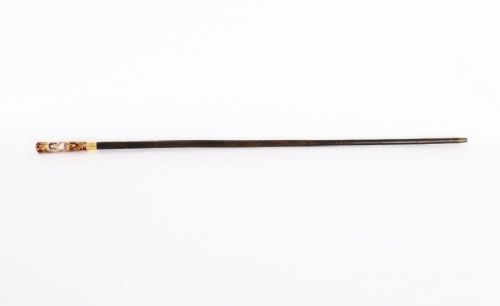
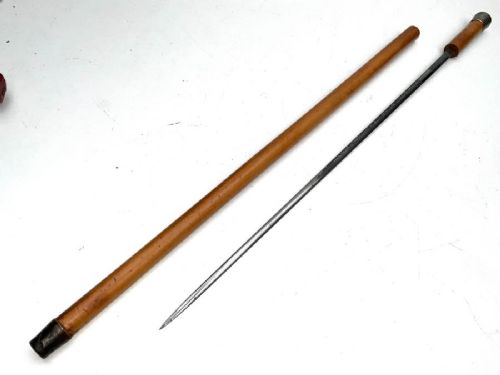
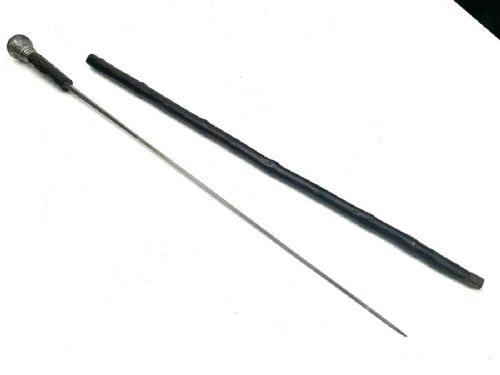
- A civilian walking cane or stick containing a concealed blade protected within the shaft. These personal defence items feature various handle types from root wood to silver knops.
Collectible Weapons: Frequently Asked Questions
What periods do these weapons cover?
The inventory spans multiple centuries, beginning with eighteenth-century flintlock pistols and blunderbusses. Pieces also represent the Victorian era, the nineteenth century generally, and twentieth-century conflicts up to the Showa period.
Buyers will find distinct stylistic markers from Georgian, Victorian, and mid-twentieth-century military production. Each era displays characteristic changes in technology, from flintlocks to percussion systems and modern service arms.
How were sword sticks used?
Sword sticks served as civilian walking aids that doubled as discreet personal defence tools during the nineteenth and early twentieth centuries. Gentlemen carried them for protection and fashion in urban and rural settings.
The hidden blades remained secured inside the wooden shafts until released by a catch or twist mechanism. They combined the utility of a walking cane with the readiness of an edged weapon.
What is the difference between flintlock and percussion?
Flintlock weapons rely on a piece of flint striking a steel frizzen to produce a spark that ignites black powder in the pan. This mechanical system was standard during the eighteenth and early nineteenth centuries.
Percussion firearms utilise a hammer striking a primed metal cap to ignite the propellant charge. This later system offered greater reliability in damp weather and gradually replaced flintlock mechanisms.
How do I identify military versus civilian pieces?
Military pieces typically bear official pattern dates, service markings, and regulation mounts associated with specific regiments or foreign officers. Examples include British cavalry trooper's swords and German officers' swords.
Civilian pieces often incorporate decorative elements like Sevres porcelain, silver knops, or specialised wood handles designed for personal carriage rather than combat. Walking sticks and duelling pistols often reflect private ownership and bespoke craftsmanship.