



Collectible Gun
A collectible antique gun carries the weight of past conflicts, engineering shifts, and master craftsmanship in steel and wood.
Collectible Gun
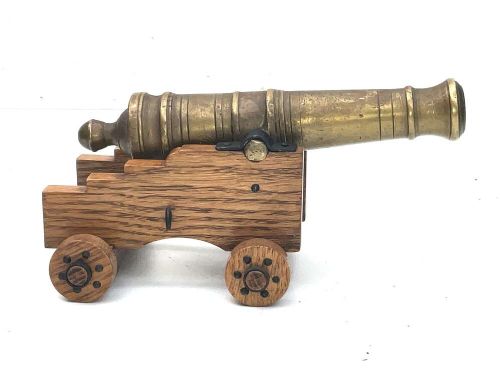
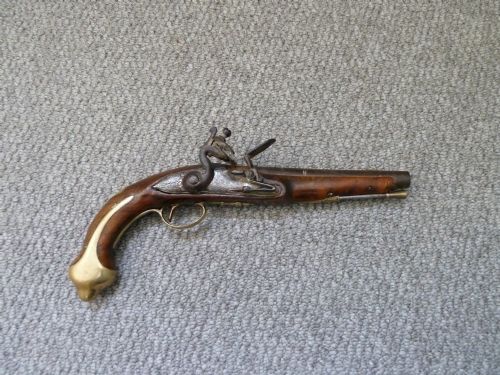
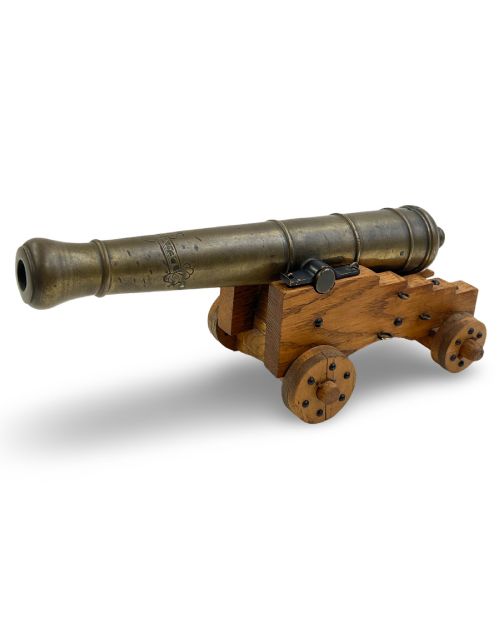
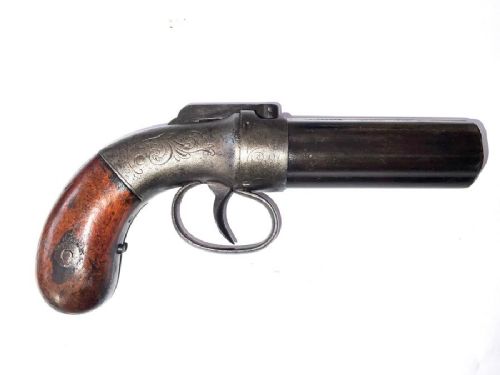
A collectible antique gun encompasses a range of historic firearms and related ordnance spanning from the eighteenth century through the Victorian era and into the early twentieth century. Buyers encounter muzzle-loading flintlock and percussion pistols, blunderbusses, revolvers, and pepperpot pistols alongside miniature scale models, signal cannons, and powder flasks.
The pieces on this page originate from British, European, and American makers, reflecting military contracts, civilian self-defence, and maritime service. Examples include regulation military pieces like the 1796 pattern light cavalry flintlock pistol alongside ornate silver-mounted pocket pistols and Ottoman snaphaunce long pistols.
Materials and construction
Makers built these firearms using forged steel and iron for barrels and lock mechanisms, paired with stocks shaped from dense domestic hardwoods such as walnut and oak. Brass and bronze appear frequently in barrel construction, furniture, and signal cannons, while silver wire inlay and mounts elevate the decorative appeal of civilian pocket pistols.
Manual techniques governed the creation of each piece, from hand-filer work on lockplates to the meticulous shaping of stocks and the casting of bronze ordnance. Metal parts often display proof marks and maker signatures engraved directly into the steel or brass components.
Collectible Gun Retail Price Guide 2026
Typical asking prices for collectible gun among the pieces listed under this phrase on Sellingantiques today, from the lower quarter to the upper quarter. They describe what is for sale here now, not the wider market.
Listings feature steel, walnut, brass, iron, silver, wood, oak, and bronze across eighteenth and nineteenth-century military and maritime forms.
Assessing the standard
Quality in a collectible antique gun rests upon the crispness of the action, the legibility of maker signatures and proof marks, and the preservation of original components. Pieces retaining matching serial numbers, unpolished metal surfaces, and well-figured walnut stocks command greater interest from collectors.
The level of ornamentation also distinguishes the range, moving from utilitarian military issue sidearms stamped with ordnance marks to civilian pocket pistols adorned with intricate silver wire inlay and cast brass mounts. The integrity of the wood-to-metal fit and the operation of internal springs determine the overall standard of survival.
Henry Nock·James Barber·Timothy Hughes·Auguste Francotte·John Manton·Meyer And Mortimer·Allen And Thurber
The Collectible Gun Glossary
- Flintlock
- An ignition mechanism utilising a piece of flint held in a cock to strike a steel frizzen, creating sparks to ignite the priming powder. This system dominated military and civilian firearms throughout the eighteenth century.
- Percussion cap
- A small metal cup containing detonating powder placed on a nipple, which a hammer strikes to fire the weapon. This mid-nineteenth-century innovation replaced the flintlock system.
- Pepperpot
- A multi-barrelled firearm where the barrels themselves revolve around a central axis when cocked and fired. This design offered multiple shots without a traditional cylinder.
- Frizzen
- The vertical steel plate struck by the flint in a flintlock mechanism to generate sparks. It covers the priming pan until the trigger releases the cock.
- Snaphaunce
- An early type of flintlock ignition using a separately sliding pan cover. The mechanism represents an important transitional step in firearm development.
Collectible Gun: Frequently Asked Questions
Are these antique guns legal to own?
Most antique firearms kept as ornamental items, curiosities, or historical collections do not require a modern firearms licence under British law. The legal status depends on the ignition system, ammunition availability, and whether the piece operates as an antique.
Certain cartridge-firing revolvers from the nineteenth century may fall under stricter regulations. Buyers must verify current local legislation regarding possession and display before purchase.
How can I tell the date of a pistol?
Dating relies on stylistic markers, proof marks stamped into the metal, and engraved signatures identifying the maker and working address. The transition from flintlock to percussion systems around the nineteenth century provides a clear chronological baseline.
Military contracts often bear government acceptance marks or dates directly on the lockplate or stock. Comparing barrel shapes and mounting styles against known maker periods narrows the manufacture window further.
What is the difference between a flintlock and percussion pistol?
A flintlock pistol uses a piece of flint striking a steel frizzen to produce sparks that ignite loose gunpowder in an external pan. This system requires priming powder and remains vulnerable to damp weather conditions.
A percussion pistol relies on an enclosed percussion cap placed on a nipple, struck directly by the hammer to ignite the internal charge. This mid-nineteenth-century invention offered greater reliability and faster loading times in the field.