
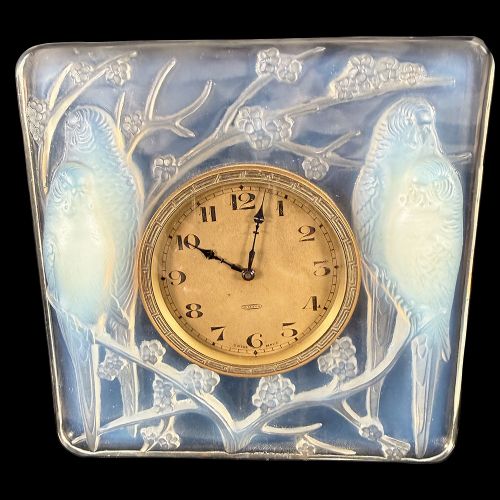


Collectible 1920s Glassware
Collectible 1920s glassware brings distinct Art Deco forms and luminous opalescent finishes into a room, prized for their decorative presence.
Collectible 1920s Glassware
Collectible 1920s glassware encompasses decorative pieces shaped during the Art Deco era, predominantly featuring vases, bowls, plates, clocks, and decanters. These objects serve as striking interior ornaments rather than utilitarian vessels.
The pieces on this page are heavily represented by French production, specifically showcasing moulded and press-moulded techniques. Buyers encounter substantial opalescent bowls, detailed decorative plates, and characteristic vases bearing specific flora and fauna motifs.
How they were made
The manufacturing process relies heavily on press-moulded and opalescent glass, often enhanced with frosted textures and sepia stain to accentuate relief details. Molten material is forced into iron moulds to achieve intricate surface designs.
Metal components integrate into specific functional forms, such as clocks, providing structural support to the glass body. Cooling and finishing techniques determine whether the final object displays a milky opalescence or a clear transparency.
Love birds and chattering dogs peer eternally from the heavy glass walls of 1920s clocks and plates.
What varies in quality
Quality separates through the crispness of the moulded relief and the depth of the opalescent effect within the glass. Superior examples exhibit sharp botanical or avian contours and a vibrant play of light across the milky surface.
The presence of supplementary treatments, such as sepia stain or metal integration, alters the visual weight of a piece. Finer items maintain balanced proportions and uncompromised clarity in their frosted and clear sections.
Rene Lalique
The Collectible 1920s Glassware Glossary
- Opalescent Glass
- Glass that milky-blue or fiery appearance when viewed in reflected light. This effect is achieved through chemical additions during the melting process.
- Press-Moulded Glass
- Glass shaped by pressing molten metal into a metal mould using a plunger. This technique allows for complex patterns and high-relief decoration to be produced consistently.
- Art Deco
- The dominant design style of the 1920s and 1930s, characterised by streamlined geometric forms and stylised motifs. It influences the silhouettes of glassware and associated metal mounts.
- Sepia Stain
- A brownish pigment applied to glass surfaces and wiped back to highlight recessed details in relief. It deepens the contrast on moulded decorative plates and vases.
Collectible 1920s Glassware: Frequently Asked Questions
What defines collectible 1920s glassware?
Collectible 1920s glassware is defined by its Art Deco styling, moulded forms, and characteristic opalescent finishes. These decorative objects reflect the aesthetic priorities of the interwar period.
The category includes functional and decorative items such as vases, clocks, and plates. Their enduring appeal lies in the combination of sculptural relief and light-reactive glass.
How were these glass items used?
These pieces functioned primarily as ornamental display objects within domestic interiors. Vases held floral arrangements, while bowls and plates served as centrepieces on dining and living room furniture.
Clocks and decanters combined utility with decorative presence, integrating glass bodies with metal components. They were designed to catch and refract light in reception rooms.
How do I live with this glassware?
Living with 1920s glassware involves placing pieces where natural light can interact with the opalescent or frosted surfaces. Windowsills, open shelving, and illuminated cabinets suit these light-sensitive materials well.
Careful placement away from high-traffic edges protects the moulded forms from accidental knocks. Regular dusting with a soft cloth maintains the finish without abrasive cleaning.
How can I identify 1920s glass types?
Identification relies on recognising Art Deco motifs, mould seams, and specific glass formulations like opalescence or frosted transparency. Subject matter often includes stylised birds, flora, and geometric patterns.
Weight and thickness also indicate press-moulded production methods typical of the decade. Surface treatments such as sepia staining further distinguish specific decorative editions.