




Cobalt Blue Perfume Bottle
A cobalt blue perfume bottle brings rich hue and tactile weight to a dressing table, drawing on nineteenth-century glass and porcelain traditions.
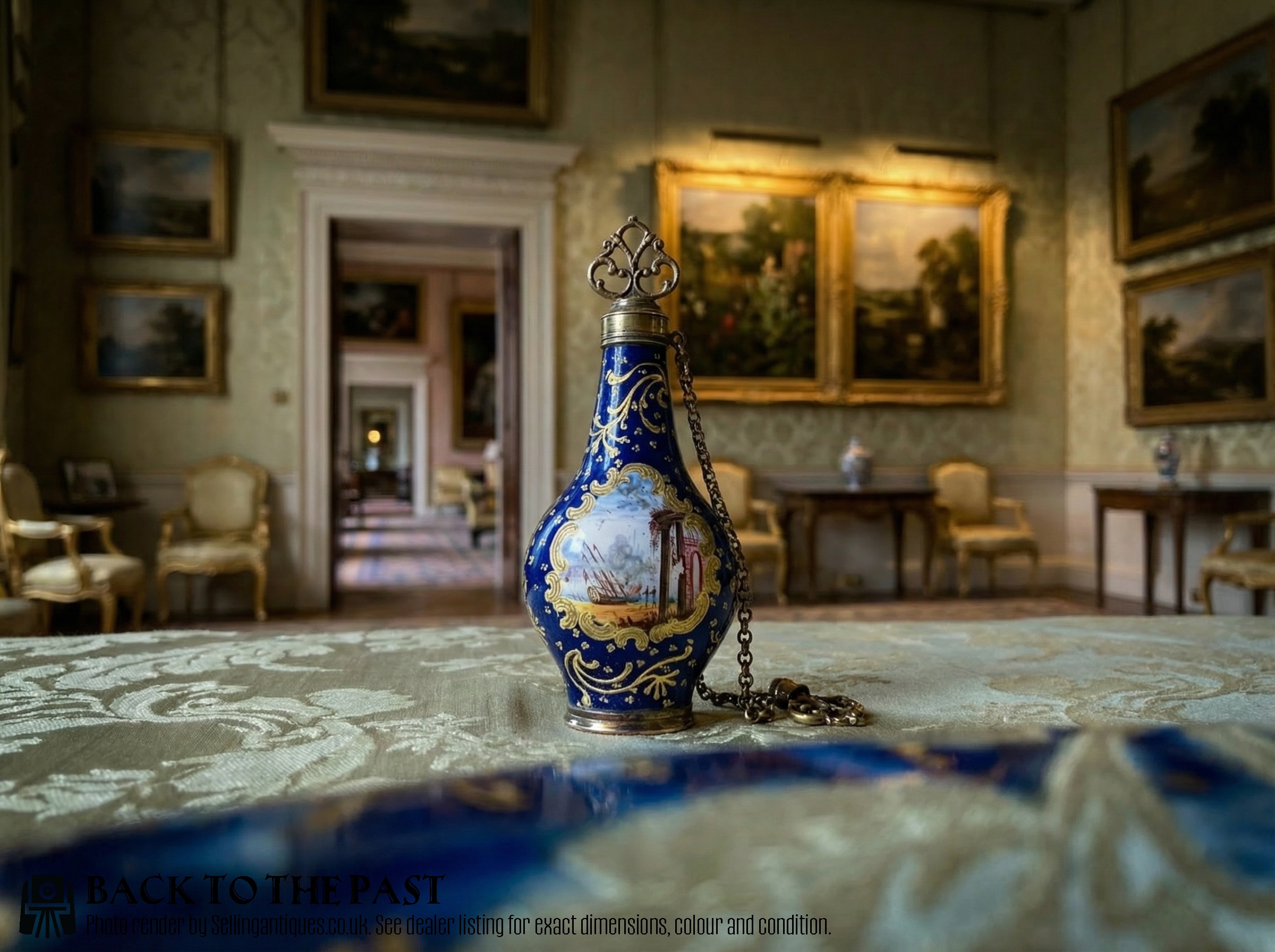
Cobalt Blue Perfume Bottle
When you search for a cobalt blue perfume bottle, you encounter a focused range of small vanity wares and scent containers drawn from Georgian, Victorian and Edwardian periods. These objects include overlay glass vessels, porcelain scent bottles, and silver-mounted vanity pieces.
The selections span English potteries, Welsh studio glass, and continental works such as French overlay glass and Venetian murrine glass. Many incorporate precious metals, gilt decoration, or hand-painted figurative scenes.
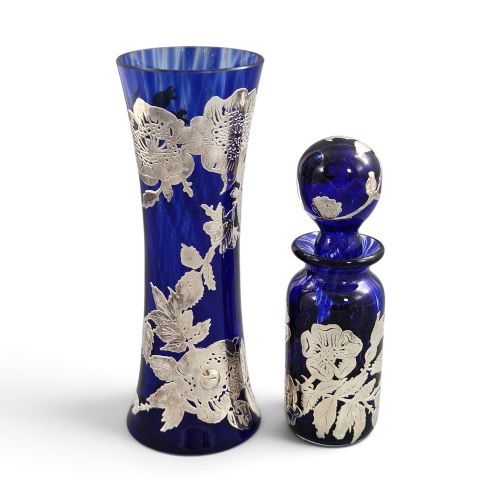
The most typical examples on this page date from the nineteenth century, combining deep blue glass bodies with sterling silver caps, chatelaine mounts, or intricate pierced overlays.
How they were made
Makers shaped these items using cobalt glass, porcelain, or layered glass blanks that were subsequently cut to reveal contrasting clear or coloured strata beneath. Metalsmiths added sterling silver through casting, repoussé work, and pierced overlay techniques.
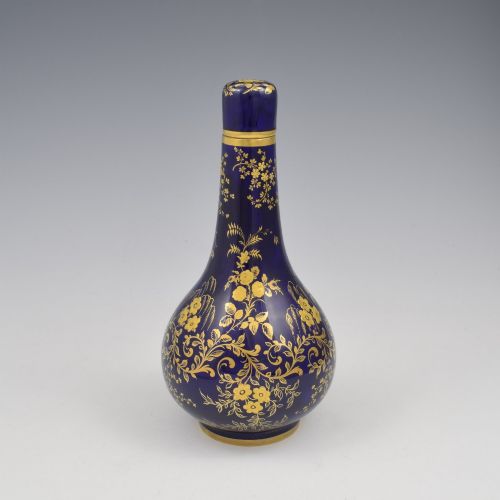
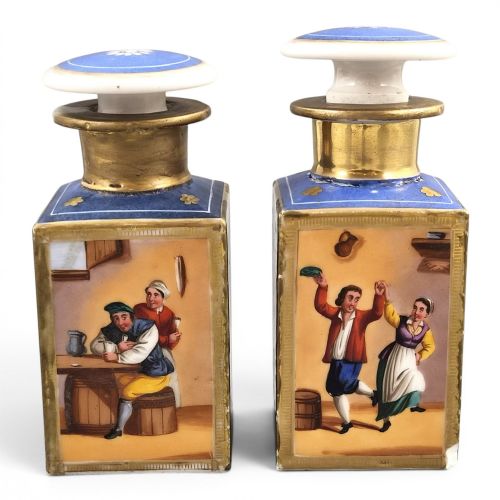
Surface ornamentation often involved applied gold leaf, enamel painting, or Sèvres-style gilding fired directly onto porcelain bodies. Glassworkers also utilised murrine techniques and multi-layered casing to achieve depth and pattern within the material.
Victorian ladies relied on these potent little bottles to revive themselves during particularly dull dinner parties.
What varies in quality
Quality rests in the crispness of the glass cutting, the precision of the porcelain painting, and the integrity of the silver mounts. Finer pieces demonstrate meticulous hand-finishing in the gilt details and secure, well-fitted metal collars.
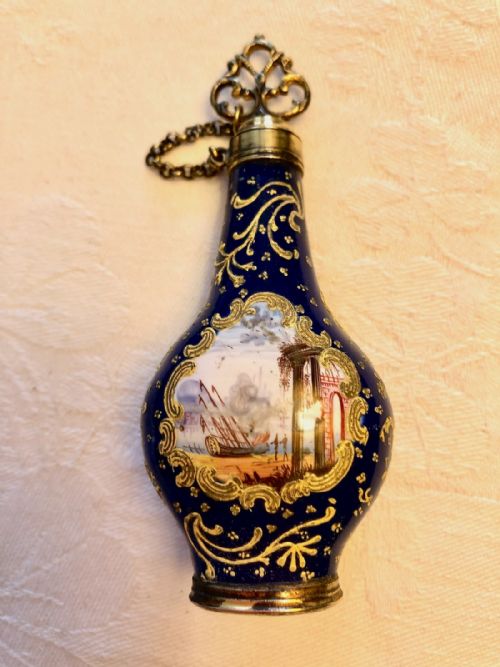
The distinction between standard production items and exceptional works lies in the depth of the glass overlays and the sophistication of painted figural scenes, such as those executed on porcelain or enamel.
Jacob Petit·Crown Staffordshire·Flight Barr And Barr·Franchini And Bigaglia·Laugharne Glass
The Cobalt Blue Perfume Bottle Glossary
- Overlay glass
- A technique where a layer of coloured glass is fused over a clear or contrasting base before being cut back to create patterns. This method allows artisans to play with depth and light.
- Chatelaine scent bottle
- A small container suspended from a belt hook or chatelaine mount, designed for portable use during the nineteenth century. These pieces usually feature secure screw caps.
- Bleu de Roi
- A deep, rich cobalt blue ceramic glaze developed at the Sèvres porcelain factory in France. It provides a striking background for gilt decoration.
- Rose water sprinkler
- A vessel with a narrow neck designed for dispersing perfumed water rather than applying heavy scent. They frequently appear in porcelain from the Regency period.
- Murrine
- Coloured glass cane slices heated and fused together within a matrix, creating intricate geometric or floral patterns. This method demands high technical skill from the glassmaker.
Cobalt Blue Perfume Bottle: Frequently Asked Questions
How do I date a glass scent bottle?
Examine the pontil mark on the base, the style of the silver mounts, and the manufacturing technique. Nineteenth-century examples often feature rough pontils and hand-cut glass layers.
Silver hallmarks provide precise year markers where applicable. Stylistic cues such as Victorian floral repoussé help narrow down the decade.
Are silver mounts original to the glass?
Most period pieces retain their original matched silver collars and caps, integrated during initial production. Makers designed these metal elements specifically to fit the contours of the glass or porcelain body.
Check for consistent patination between the mount and the bottle. Replacement caps usually differ slightly in weight and wear.
How were small scent bottles used?
These vessels held concentrated perfumes, smelling salts, or vinegar to counter faintness in crowded rooms. Ladies carried them in pockets, reticules, or attached to chatelaine chains.
They also served as decorative dressing table accessories. Their small scale made them personal items of high status.
What is triple overlay glass?
Triple overlay involves casing a glass core in three distinct layers of colour, usually white, clear, and cobalt blue. Artisans cut through these strata to expose the contrasting colours underneath.
This method creates high-relief patterns with rich tonal depth. It requires advanced glassblowing and wheel-cutting expertise.
How should I clean porcelain scent bottles?
Dust gently with a soft, dry cloth to protect fragile gilt surfaces and hand-painted scenes. Avoid submerging antique pieces in water, particularly those with paper labels or exposed adhesives.
Keep silver mounts polished with a mild, non-abrasive cloth. Take care not to let cleaning agents touch painted porcelain or enamel.