

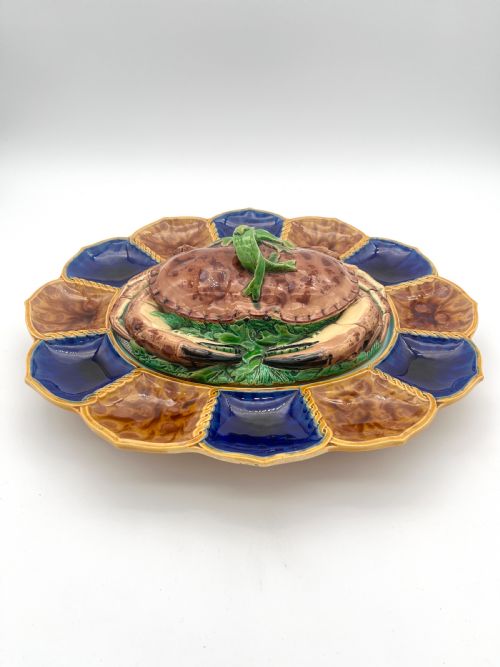


Cobalt Blue Glazed Platter
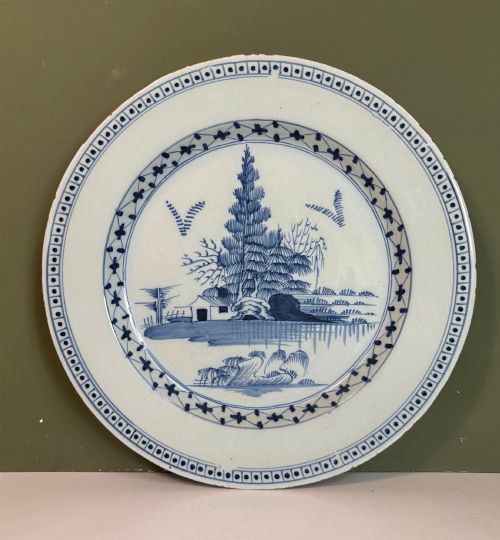
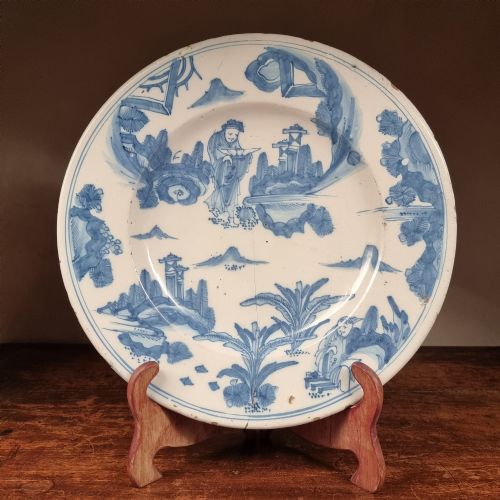
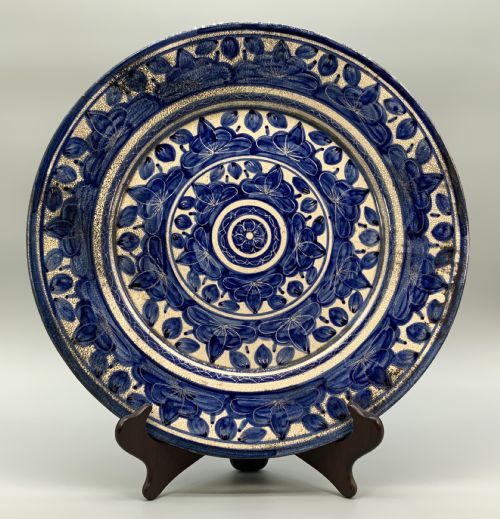
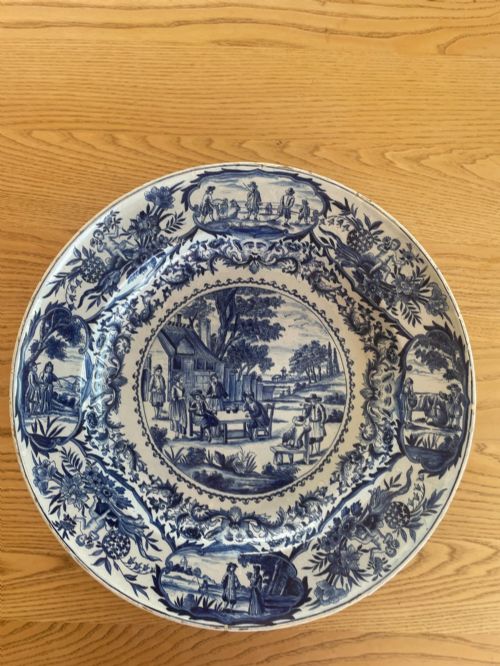
A cobalt blue glazed platter delivers deep cobalt pigment on tin-glazed earthenware, bringing centuries of ceramic craft to your table.
Cobalt Blue Glazed Platter
When you search for a cobalt blue glazed platter, you encounter large chargers, decorative plates, and serving dishes spanning from the seventeenth century through to the Victorian era. The selection centres heavily on Delftware chargers produced in English and Dutch workshops, alongside nineteenth-century transfer-printed meat platters.
Most examples take the form of generous circular chargers or oblong meat dishes designed for display or formal service. The visual weight comes from bold cobalt pigment applied directly to a white tin-glazed earthenware surface, creating high contrast patterns.
How they were made
Potters shaped earthenware bodies and coated them in an opaque tin glaze that provided a smooth white canvas for decoration. Cobalt oxide pigment was then painted onto the raw glaze before firing, sinking into the surface to achieve its characteristic rich blue tone.
Makers utilised earthenware and stoneware clays, finishing pieces with vibrant glazes that absorbed the cobalt pigment during high-temperature kiln firings. Later nineteenth-century examples incorporated transfer printing techniques alongside traditional hand painting to apply intricate blue designs.
Listings feature earthenware and stoneware materials decorated with cobalt pigment, spanning the seventeenth to the twentieth century.
What varies in quality
Quality rests in the clarity of the cobalt pigment and the precision of the hand-painted or transfer-printed motifs across the surface. Stronger examples display deep, uniform blues without running, set against a clean tin glaze.
The weight and scale of the ceramic body also distinguish finer items, with large seventeenth and eighteenth-century chargers demanding superior throwing skill to prevent warping during firing.
John Ridgway·Moorcroft England·Minton Majolica·Spode
The Cobalt Blue Glazed Platter Glossary
- Charger
- A large decorative plate or platter typically measuring over thirty centimetres across, used historically for ceremonial dining or wall display.
- Tin-Glaze
- An earthenware ceramic glaze made opaque by the addition of tin oxide, providing a white background for painted decoration.
- Cobalt Pigment
- A metallic oxide colorant that turns a deep, intense blue when fired at high temperatures on ceramic ware.
- Delftware
- Tin-glazed earthenware made in Holland or England, renowned for its blue and white decoration imitating Chinese porcelain.
Cobalt Blue Glazed Platter: Frequently Asked Questions
How are cobalt blue glazed platters cleaned safely?
Wash these ceramic pieces gently by hand using lukewarm water and mild soap. Avoid soaking or placing them in modern dishwashing appliances.
Dry them thoroughly with a soft cloth to protect the historic glaze and earthenware body from moisture damage.
Can I use these antique platters for serving food?
Historic chargers and platters from the seventeenth to nineteenth centuries are primarily intended for display or light decorative use. Their aged tin glaze and porous earthenware bodies make them unsuited for modern culinary preparation.
Display them on walls or sturdy sideboards to preserve their glaze and painted surfaces.
How do I distinguish English Delft from Dutch Delft?
English and Dutch delftware both utilise tin-glazed earthenware and cobalt pigment, yet subtle differences in clay bodies and motifs often separate them. English pieces frequently display softer paste structures and distinct regional painting styles.
Examining the foot ring and back of the charger usually reveals clues regarding the specific origin workshop.
What periods do these blue and white platters cover?
The available selection spans from the seventeenth century through the Georgian and Victorian eras up to the mid-twentieth century. Eighteenth-century pieces form a significant portion of the available delftware chargers.
Later nineteenth-century examples introduce transfer-printed stoneware and majolica techniques alongside traditional earthenware.