




Coastal Village Art
Coastal village art brings harbours, cliffs and fishing communities into your home through watercolours and oils.
Coastal Village Art
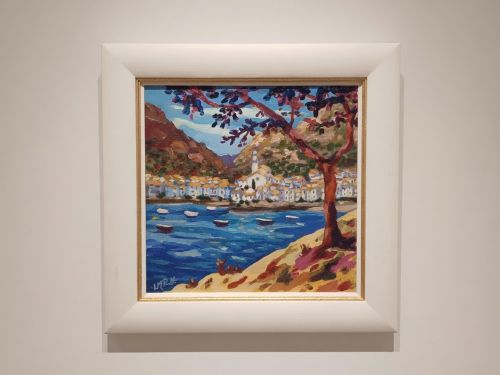
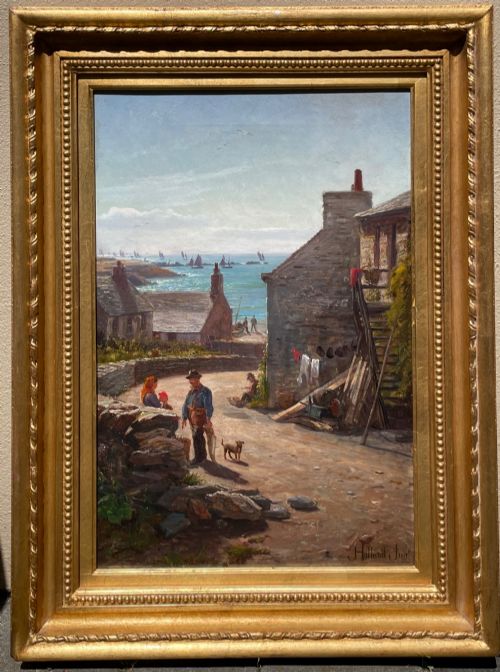
When you search for coastal village art, you encounter scenes capturing harbours, coastal settlements, and fishing communities across Britain and beyond. The works span from the Victorian era through the twentieth century, recording maritime life in watercolours, oils, and pastels.
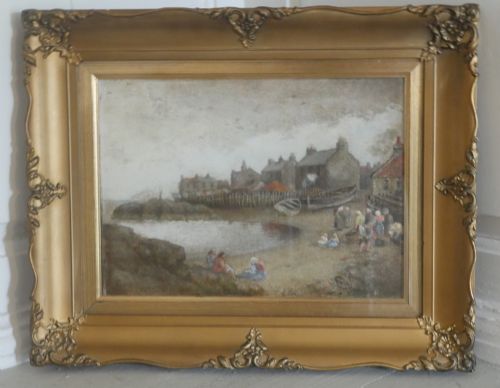
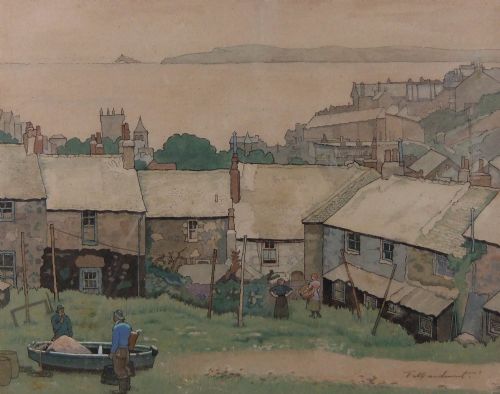
You meet watercolours by artists associated with Staithes and St Ives alongside oils depicting Cornish and Scottish harbours. These pieces portray daily life by the sea, featuring fishing boats, quaysides, and whitewashed cottages.
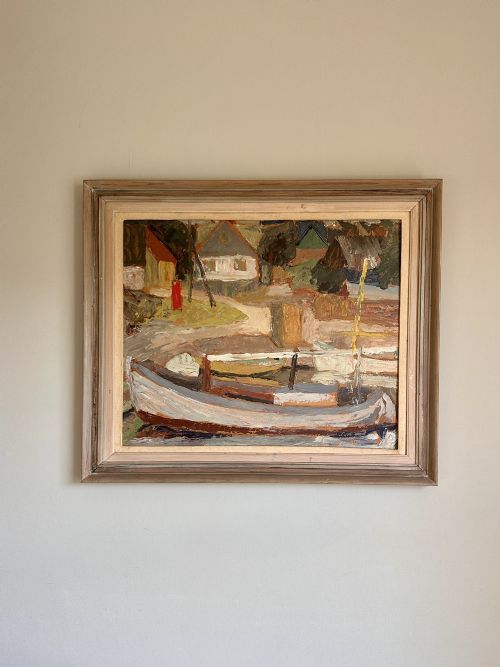
The selection ranges from detailed nineteenth-century topographical watercolours to broader impressionistic oil paintings. Each piece documents a specific shoreline, whether in Yorkshire, Cornwall, the Isle of Man, or further afield.
How coastal village art was made
Artists painted these scenes using watercolour, gouache, and oil paint applied to paper, canvas, or wood panels. Watercolours often relied on fluid washes and fine brushwork to capture coastal light, while oils built up texture on canvas.
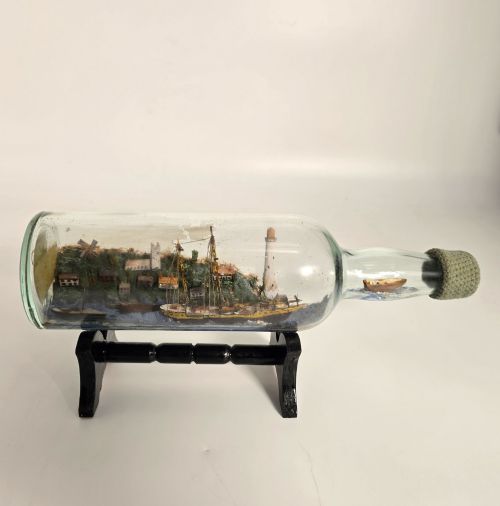
Many works incorporate framing using wood and sometimes gold leaf to protect the paper or canvas. Maritime dioramas also appear, constructed within glass bottles using wood and paper materials.
Coastal Village Art Retail Price Guide 2026
Typical asking prices for coastal village art among the pieces listed under this phrase on Sellingantiques today, from the lower quarter to the upper quarter. They describe what is for sale here now, not the wider market.
A solitary ship in a bottle diorama dated 1922 sits alongside traditional harbour watercolours.
What varies in quality
Quality rests upon the artist's ability to handle light, atmosphere, and maritime topography effectively. Works by established regional painters demonstrate a confident command of medium and composition that lesser sketches lack.
Condition and preservation of the paper or canvas also set pieces apart. Strong watercolours retain their original pigment vibrancy without excessive fading, while oils maintain stable surfaces on canvas or wood.
The Coastal Village Art Glossary
- Watercolour
- A paint consisting of pigment suspended in a water-based solution, typically applied to paper. It allows for transparent washes that capture changing coastal light.
- Oil paint
- A slow-drying paint made with pigments suspended in a drying oil, traditionally linseed. It provides rich colour depth for harbour scenes on canvas.
- Gouache
- An opaque water-based paint similar to watercolour but with added white pigment for solid colour effects. Artists use it to add highlights to maritime watercolours.
- Diorama
- A three-dimensional scene built inside an enclosure, such as a glass bottle. In coastal art, these often depict sailing vessels.
- Impressionism
- An art style focusing on accurate depiction of light and its shifting qualities. British Impressionist works on this page interpret coastal villages through visible brushstrokes.
Coastal Village Art: Frequently Asked Questions
What periods do these paintings come from?
The selections date from the Victorian period and the late nineteenth century through to the mid-twentieth century and later. Earlier pieces often record specific topographical details of British fishing ports.
Later works adopt looser brushwork associated with twentieth-century schools like St Ives and Staithes. This span shows how artists' interpretations of coastal life evolved over time.
Where are the depicted places located?
The locations include Cornish harbours like Polperro, Yorkshire fishing villages such as Staithes and Whitby, and sites on the Isle of Man. Other scenes record coastal views in Scotland and North Wales.
Many titles name the exact village, harbour, or island, allowing you to trace the specific geography of the British coastline.
What materials were used by the artists?
Painters utilised watercolours, oils on canvas, gouache, and pastel drawings on paper or wood supports. Some works combine watercolour and gouache to build contrast in the coastal scenery.
Framed artwork frequently incorporates wood mouldings and gold leaf. Maritime dioramas use glass and wood alongside paper elements to construct miniature shipping scenes.
How do I hang and live with watercolours?
Watercolours and works on paper require placement away from direct, strong sunlight to prevent fading of the pigments over time. Glazing with protective glass helps shield the paper surface from atmospheric moisture and dust.
Displaying them in stable interior environments ensures the paper and framing remain secure. Regular inspection of the backing board helps maintain the condition of the artwork.