






Clock with Glass Dome
A clock with glass dome brings together precision movement and protective clarity, preserving delicate mechanisms and fine decoration under blown glass.
Clock with Glass Dome
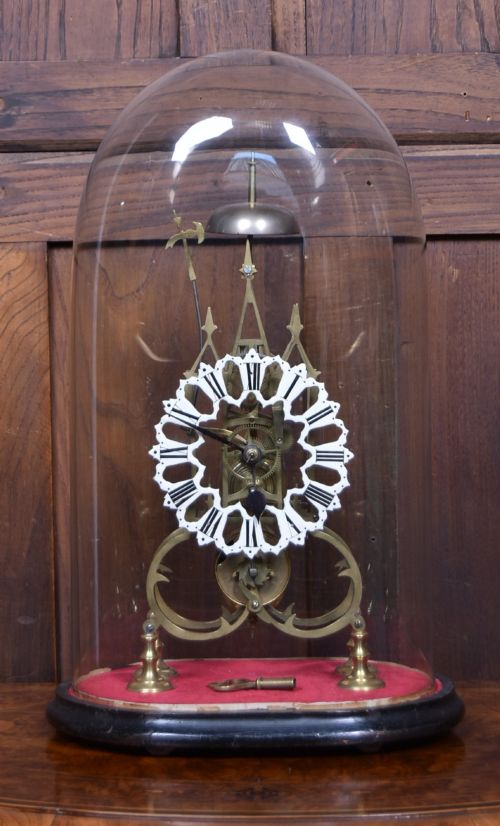
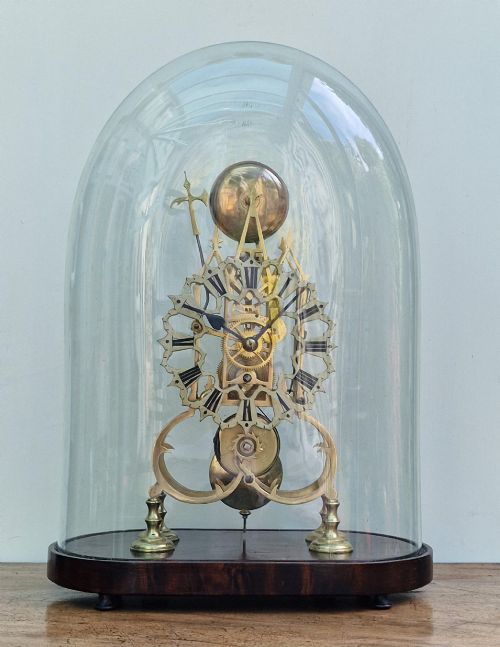
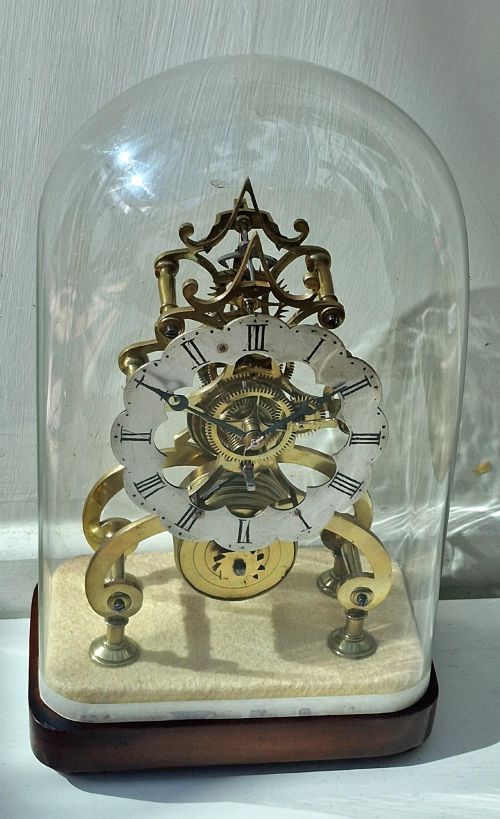
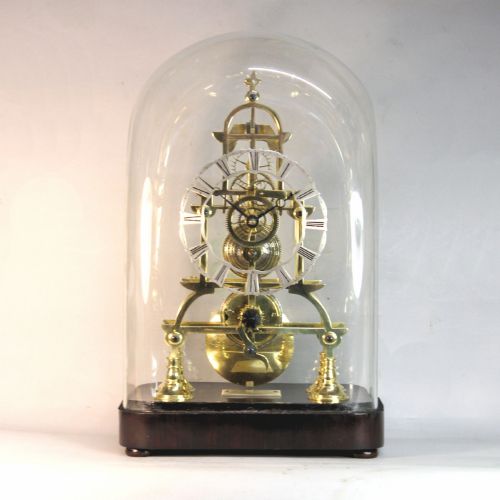
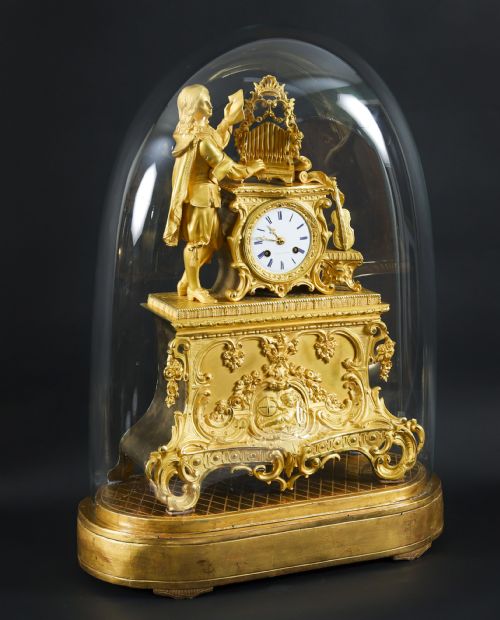
A clock with glass dome pairs a mechanical timepiece with a transparent protective cover, often taking the form of a mantel clock or a skeleton clock displayed beneath a cloche. These pieces range from mid-nineteenth-century English and French examples to later twentieth-century iterations.
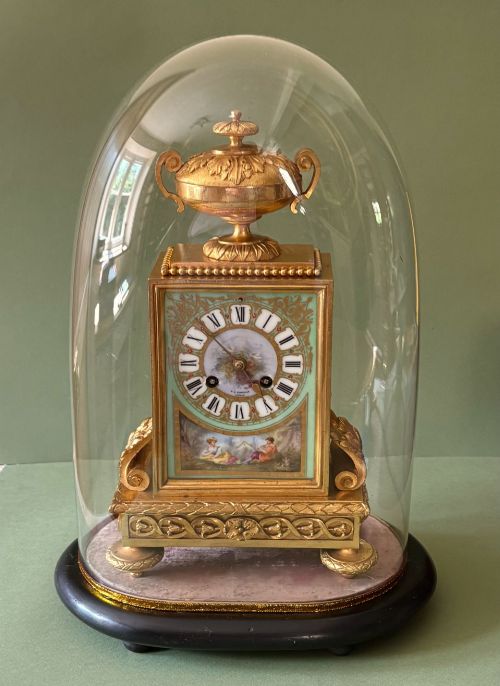
The assortment on this page spans distinct forms, including skeleton clocks with exposed gear trains, porcelain-mounted mantel clocks, and swinging cherub designs. Many retain their original hand-blown glass domes and stands, which shield the delicate brass and ormolu components from dust.
Origins stretch across Britain, France, and Italy, incorporating styles such as Victorian, Napoleon III, and Art Deco. Buyers encounter everything from large architectural mantel pieces to compact fusee skeleton clocks accompanied by square or circular glass covers.
How they were made
Makers constructed these clocks using brass, ormolu, gilt bronze, and ebonised wood, frequently incorporating enamel dials and painted porcelain panels. Movements range from fusee and passing strike mechanisms to bell-striking calibres housed within metal or stone structures.
Domes were produced as hand-blown glass or display cloches, occasionally paired with wooden or carved alabaster bases to support the weight of the glass and the clock within.
Clock with Glass Dome Retail Price Guide 2026
Typical asking prices for clock with glass dome among the pieces listed under this phrase on Sellingantiques today, from the lower quarter to the upper quarter. They describe what is for sale here now, not the wider market.
Object forms include mantel clocks, skeleton clocks with passing strikes, Italian carved alabaster cases, and taxidermy display domes.
What varies in quality
The distinction between tiers rests upon the crispness of the cast ormolu, the complexity of the skeleton movement, and whether the glass dome is the original hand-blown component belonging to the piece. Finer examples feature intricate lyre plates, detailed porcelain panels, and bespoke alabaster or ebonised bases that complement the proportions of the clock.
Material selection also defines the upper range, where heavy gilt bronze, finely painted enamel dials, and robust fusee movements outrank standard mass-produced brass alternatives. The survival of an undamaged, original glass cover significantly elevates the integrity of the ensemble.
The Clock with Glass Dome Glossary
- Fusee
- A conical pulley used in spring-driven clocks to ensure even tension as the mainspring unwinds. This mechanism helps the clock maintain consistent timekeeping throughout its run.
- Ormolu
- Gilding technique using finely ground high-carat gold applied to a bronze base. It provides a rich, warm metallic finish common on French mantel clocks.
- Skeleton clock
- A timepiece designed with an open framework that exposes the gear train and escapement. This construction allows the viewer to observe the mechanical action from the sides.
- Cloche
- A bell-shaped glass cover used to protect delicate objects. In this context, it serves as the dome enclosing the mantel clock.
- Clock garniture
- A set consisting of a central clock accompanied by matching decorative side pieces or vases. These sets sometimes incorporate multiple glass domes.
Clock with Glass Dome: Frequently Asked Questions
How do I clean a glass dome?
Lift the dome carefully using both hands and place it on a stable, flat surface away from the edge of the table. Clean the glass with a mild glass cleaner and a soft microfibre cloth before replacing it over the clock.
Avoid using harsh chemicals or abrasive pads that might scratch the surface. Ensure the glass is completely dry before lowering it back onto the wooden or metallic base.
How do I wind a fusee skeleton clock?
Use the appropriate winding key on the dial or backplate, turning it gently in the correct direction until resistance is felt. Take care not to overwind the mainspring, as this can damage the fusee chain or gear teeth.
Consult the specific movement type before attempting to adjust the hands or tension. Regular gentle winding preserves the mechanical health of nineteenth-century gear trains.
How do I tell Victorian from French pieces?
Victorian clocks often feature English fusee movements with robust brass plates and traditional wooden or ebonised bases. French pieces frequently display ormolu mounts, porcelain panels, and striking mechanisms cast in Paris or provincial workshops.
Stylistic cues such as Neoclassical or Napoleon III ornamentation point towards French manufacture. Examining the interior backplate usually reveals maker marks or stamps confirming the origin.