




Clear Glass Pedestal
These clear glass pedestal pieces combine elevation and transparency, offering a distinct way to display fruit, sweets, and ornaments.
Clear Glass Pedestal
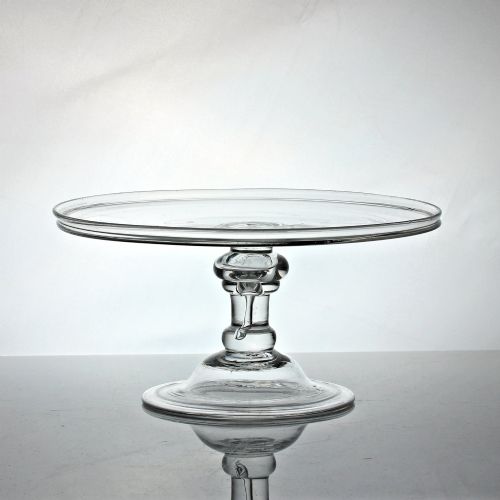
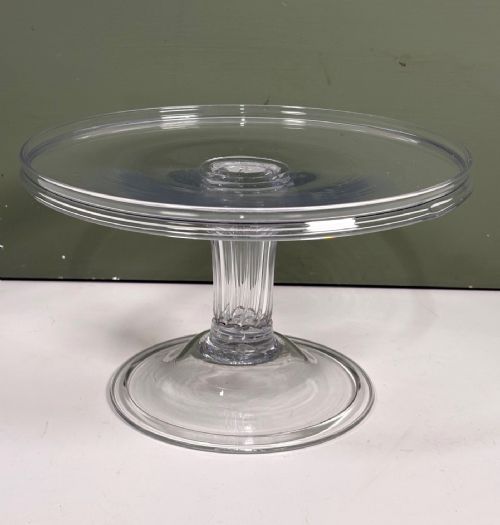
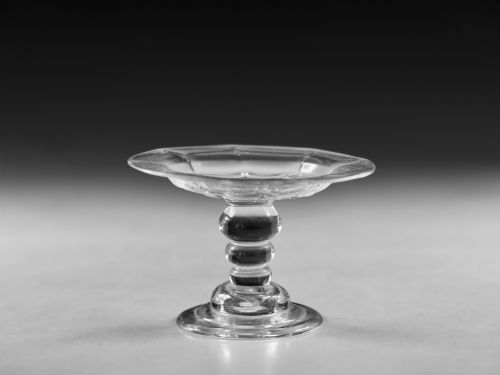
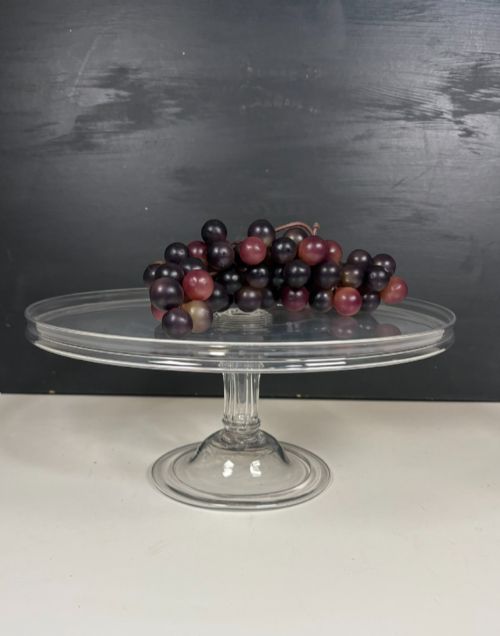
A clear glass pedestal typically takes the form of a tazza, comport, centrepiece bowl, or patch stand raised upon a stem or foot. When searching for a clear glass pedestal, a buyer encounters elevated vessels spanning from the early Georgian period through the Victorian and Edwardian eras. These elevated forms served various social functions, from dining table sweetmeat presentation to the display of small personal items.
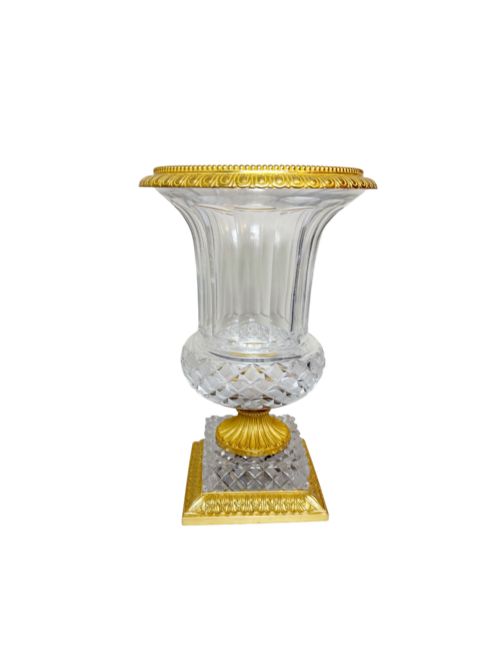
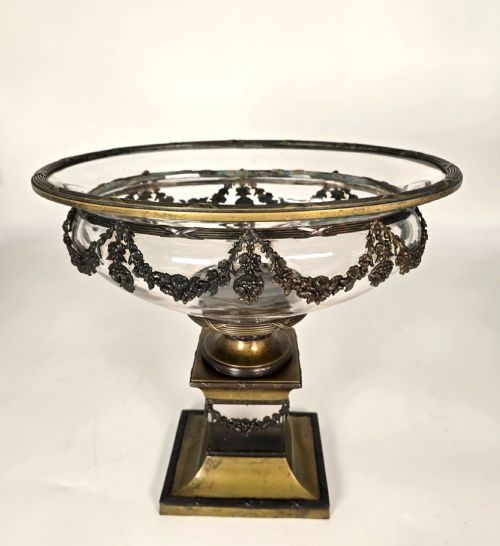
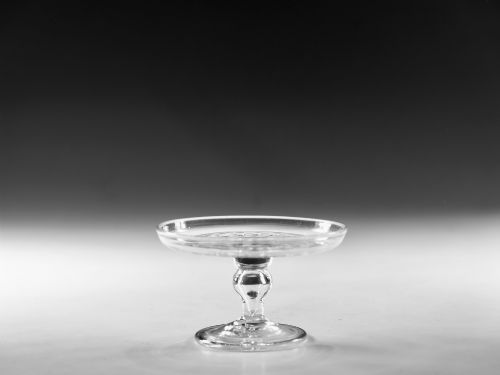
The assortment on this page includes 18th-century baluster tazze, nineteenth-century cut crystal comports, and later Edwardian fruit bowls. Miniature patch stands from the George II period represent the smaller scale of these elevated designs, whilst substantial French bronze-mounted bowls demonstrate larger decorative ambitions. Each object relies on a vertical stem to lift the primary vessel above the surface of a table or sideboard.
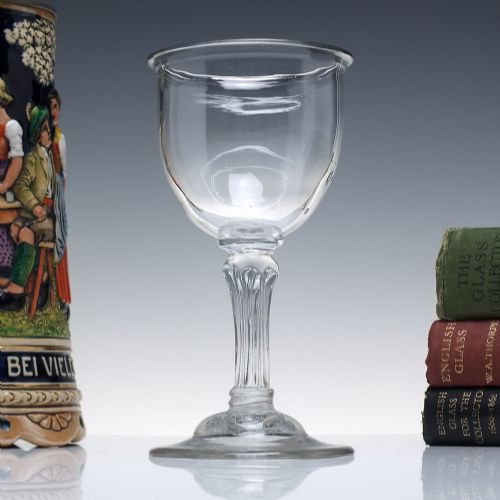
Origin and period heavily dictate the physical characteristics of these pieces, separating early hand-blown lead glass from later moulded or pressed items. English and Irish workshops dominate the earlier centuries, while continental examples introduce alternative mountings in brass and bronze. A buyer navigates variations in stem construction, ranging from simple folded feet to complex baluster profiles.
Materials and construction methods
Makers utilised lead glass, crystal glass, and standard clear glass, often shaping vessels through free-blowing or mould-blowing techniques. Early pieces frequently display the characteristic weight and refractive qualities of lead metal formulations, while later nineteenth-century items utilise extensive cutting and engraving. Hand-blown specimens may reveal pontil marks on the underside, recording the separation point from the blowing iron.
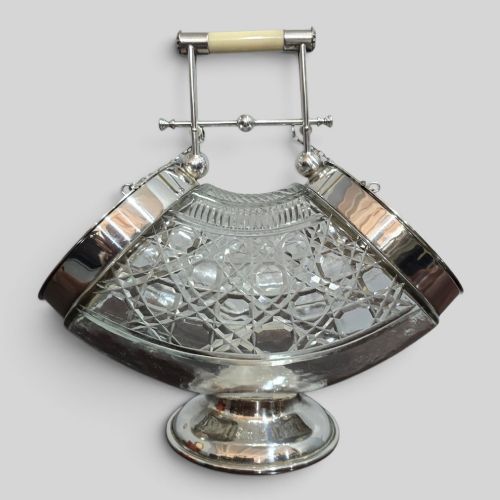
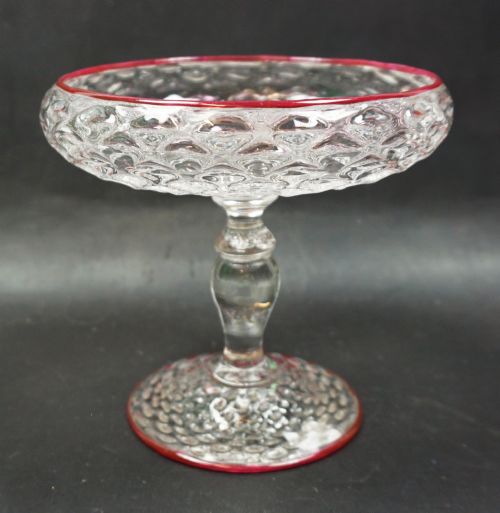
Surface ornamentation on these elevated vessels involves wheel-cutting, hobnail patterns, honeycomb moulding, and occasional gilding or red cane decoration. Metal components, where present in bronze or brass, attach securely to support the glass bowls or provide stable bases for oil lamps and decorative stands. The integration of silver plate on specific Edwardian spill vases demonstrates mixed-media construction within the later inventory.
Clear Glass Pedestal Retail Price Guide 2026
Typical asking prices for clear glass pedestal among the pieces listed under this phrase on Sellingantiques today, from the lower quarter to the upper quarter. They describe what is for sale here now, not the wider market.
The listings span from early Georgian patch stands to 1920s countertop shelves, incorporating lead crystal, brass, and silver plate.
Factors determining quality
Superiority in these elevated vessels rests upon the crispness of the cutting, the proportional balance of the stem to the bowl, and the clarity of the metal itself. Hand-cut facets that remain sharp and deep indicate superior craftsmanship compared to soft, rounded mouldings produced in volume. The weight of the lead crystal and the absence of heavy internal impurities further distinguish finer examples.
The design ambition of the stem and foot structure separates standard production from exceptional works. Pieces featuring complex baluster formations, basal bubbles, or folded feet demonstrate greater technical skill by the glassblower. Additionally, the integration of secondary materials, such as finely chased bronze mounts, elevates the overall execution of the object.
Graystan·WMF
The Clear Glass Pedestal Glossary
- Tazza
- An elevated shallow bowl or plate mounted on a stem and foot, traditionally used for serving small sweetmeats or fruit. These pieces form a significant portion of the early elevated glassware inventory.
- Patch stand
- A tiny elevated dish utilised in the eighteenth century to hold cosmetic patches for the face. These miniature stands often feature delicate lead glass or moulded honeycomb patterns.
- Baluster
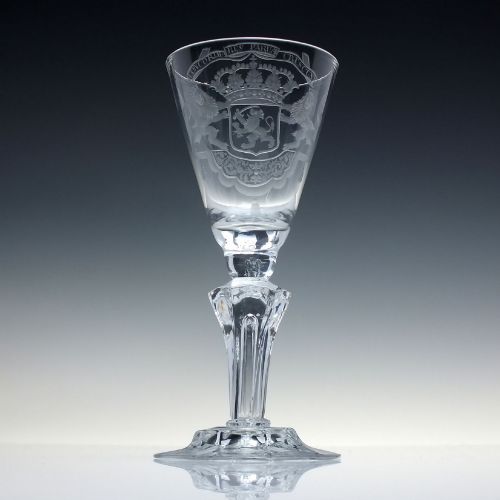
- A swelling, architectural stem form found on drinking glasses and tazze from the seventeenth and eighteenth centuries. This thick stem shape provides substantial weight and support beneath the upper vessel.
- Comport
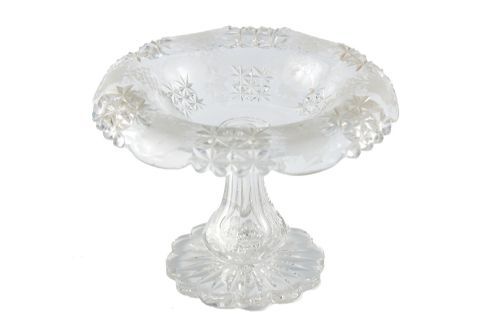
- A large standing bowl or dish designed for fruit, functioning similarly to a centrepiece bowl. They appear frequently in nineteenth-century cut crystal and pressed glass variations.
- Hobnail
- A raised, faceted pattern cut into the surface of glassware resembling the head of a hobnail boot. This decorative technique creates intense light refraction across the body of the bowl or decanter.
Clear Glass Pedestal: Frequently Asked Questions
What is a patch stand used for?
A patch stand is a miniature elevated dish designed to hold small cosmetic patches worn on the face during the eighteenth century. These delicate glass items sat upon dressing tables or served during social gatherings.
They represent some of the smallest pedestal forms produced in lead glass, often featuring moulded or honeycomb patterns. Collectors prize their survival due to their fragile nature and tiny proportions.
How do I date an 18th-century pedestal bowl?
Dating an eighteenth-century pedestal bowl involves examining the metal composition, pontil marks, and stem formation. Earlier Georgian pieces often display heavy lead metal and distinct tool marks from hand manipulation.
Changes in silhouette, from heavy baluster stems to lighter pillar supports, provide further clues to the decade of manufacture. Comparing the cutting style against documented pieces helps confirm the precise period.
Can these glass pedestals hold food safely?
Antique glass pedestals designed for dining table use, such as fruit bowls and sweetmeat dishes, accommodated food during their original period of manufacture. Their lead glass or clear glass surfaces present a stable material for display.
Modern users frequently utilise them for serving dry foods or fruit, though hand washing is necessary to protect the antique surface and any delicate cut detailing.