

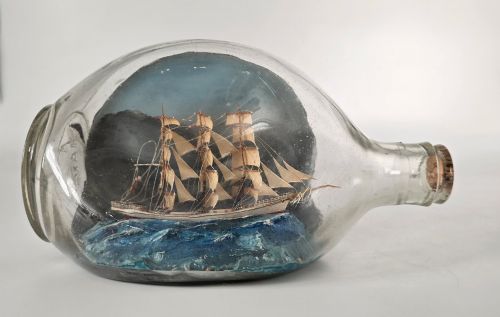


Clear Glass Nautical Bottle
A clear glass nautical bottle holds miniature maritime history, offering handmade folk art ships and dioramas that bring traditional sea life directly into your home.
Clear Glass Nautical Bottle
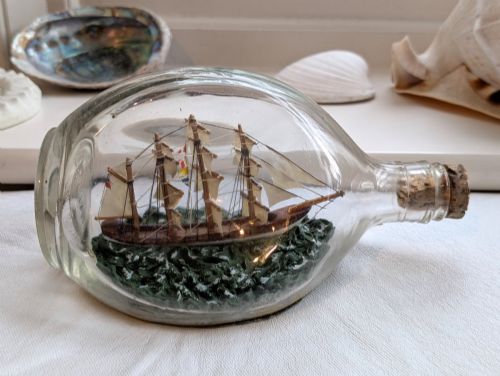
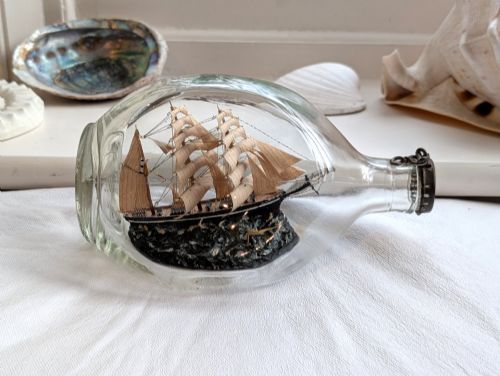
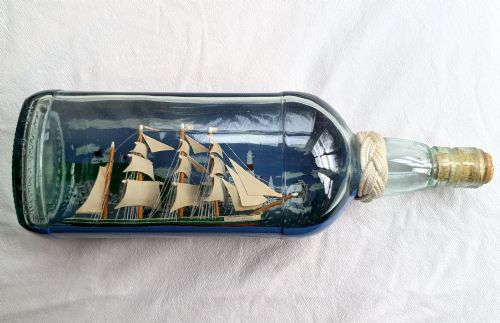
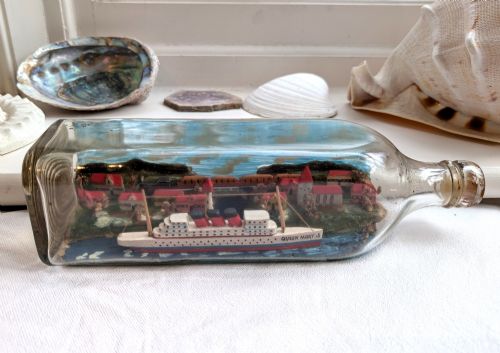
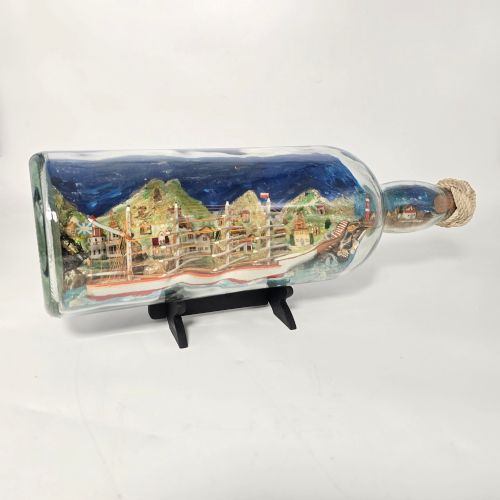
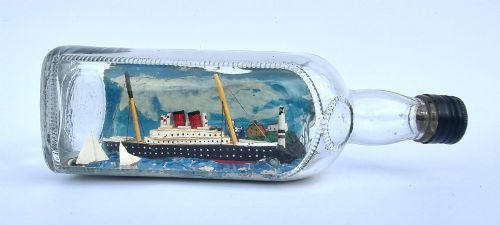
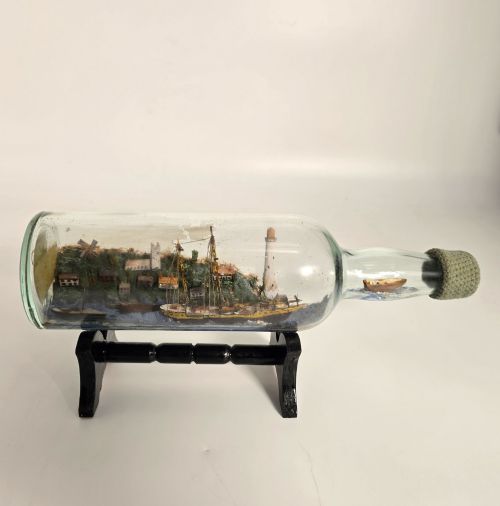
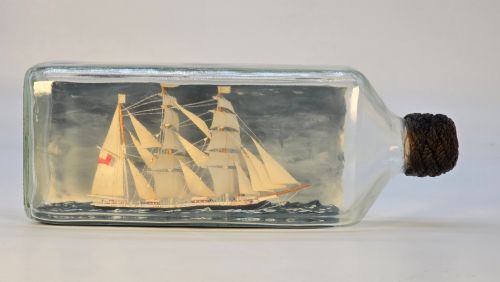
When searching for a clear glass nautical bottle, you encounter miniature sailing vessels, steam ships, and maritime dioramas carefully constructed within transparent glass vessels. These pieces range from folk art creations mounted on wooden plinths to scent bottles with maritime themes.
The most common examples on this page date from the nineteenth century through the mid-twentieth century, with notable representation from the nineteen twenties and nineteen thirties. Makers utilised simple materials to capture complex naval subjects, creating lasting objects of maritime folk art.
Forms include single sailing ships, four-mast vessels, and named ships like the Queen Mary or the Sunray. Each clear glass nautical bottle reflects the individual hand of its maker, often featuring detailed rigging, painted backgrounds, and wooden stands.
Materials and construction
The primary construction relies on clear glass bottles fitted with corks, sealed with putty, and secured with thread or string. Inside these glass enclosures, makers built miniature model ships using wood and paint to represent hulls, decks, and rigging.
Many examples incorporate wooden plinths or stands to support the bottle securely. Additional materials such as metal elements and textiles complete the interior dioramas, requiring delicate assembly through narrow bottle necks.
Clear Glass Nautical Bottle Retail Price Guide 2026
Typical asking prices for clear glass nautical bottle among the pieces listed under this phrase on Sellingantiques today, from the lower quarter to the upper quarter. They describe what is for sale here now, not the wider market.
Listings feature items spanning from the nineteenth century to nineteen fifty, constructed primarily from glass, wood, paint, and cork.
What separates the best pieces
Quality in these items rests on the intricacy of the interior model and the clarity of the glass. Superior examples feature complex rigging, careful painting, and detailed miniature architecture that convincingly replicate real naval vessels.
The presence of original stands, dated inscriptions, and named vessels elevates an object's interest. Lesser pieces show simpler construction with basic forms and minimal interior detailing.
The Clear Glass Nautical Bottle Glossary
- Diorama
- A three-dimensional scene depicting figures or models in a natural setting. Within this collection, these scenes are constructed entirely inside glass bottles.
- Maritime folk art
- Artistic work created by self-taught makers focusing on sea themes and naval subjects. These items reflect traditional coastal crafts rather than academic training.
- Plinth
- A heavy base or support block upon which an object rests. Many bottled ships are mounted on wooden plinths for stable display.
- Rigging
- The system of ropes and chains used to support a ship's masts and sails. In miniature models, this is rendered using fine thread or string.
Clear Glass Nautical Bottle: Frequently Asked Questions
How did they put ships in bottles?
Makers constructed the model ships with hinged masts and rigging that folded flat against the hull. They inserted the vessel through the narrow neck of the bottle and pulled strings attached to the masts to raise them upright once inside.
Securing the ship to the bottom required specialised tools and adhesives like putty. The final interior was then sealed with a cork and string to protect the delicate diorama from dust and moisture.
Are all these bottles very old?
The listings span from the nineteenth century through the mid-twentieth century. Many pieces date specifically from the nineteen twenties and nineteen thirties, reflecting a strong period of folk art production.
While some nineteenth-century examples exist, the majority on this page represent twentieth-century maritime craftsmanship and decorative traditions.
How should I display my bottle?
These objects require stable surfaces away from direct sunlight and extreme temperature fluctuations, which can degrade old glass or interior paint. Placing them on a shelf or mantelpiece keeps them safe from accidental knocks.
Many pieces come fitted with wooden stands or plinths designed to hold the round glass securely in place. Ensure the support is level before leaving the bottle unattended.
What subjects do the ships depict?
The vessels range from traditional four-mast sailing ships and steam ships to specific named vessels like the Queen Mary. Some pieces capture general maritime scenes while others commemorate particular ships.
Folk art makers often drew inspiration from working vessels of the sea, translating large merchant and passenger ships into miniature glass displays.