





Clear Glass Dessert Bowl
These clear glass dessert bowl pieces bring tactile weight and honest proportion to a table, offering genuine period utility.
Clear Glass Dessert Bowl
When you search for a clear glass dessert bowl, you enter a field spanning the eighteenth century through to the art deco period of nineteen thirty. The pieces recorded here include finger bowls, custard cups, jelly glasses, tazzas, and matching sets of decorative glassware.
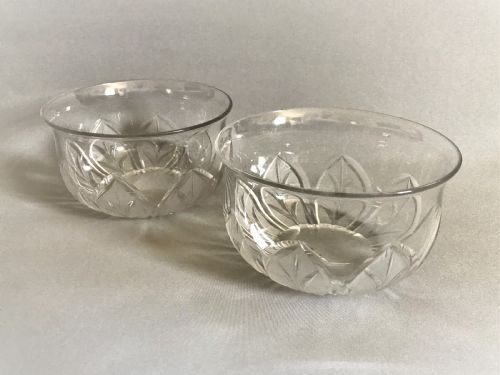
The version you are most likely to meet on this page is the Victorian cut glass finger bowl, often found in matched sets or pairs from eighteen sixty through to eighteen eighty. These utilitarian items served the nineteenth century dining table for rinsing fingers between courses or holding sweet confections.
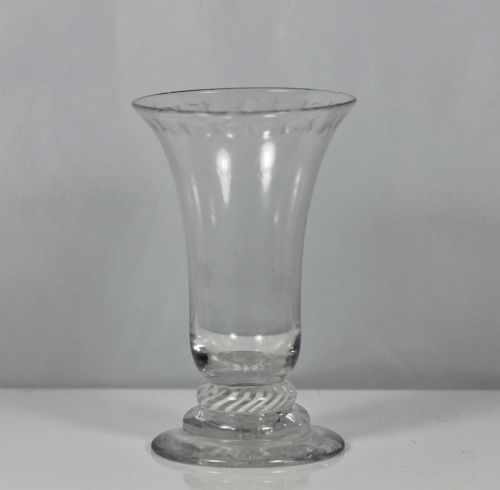
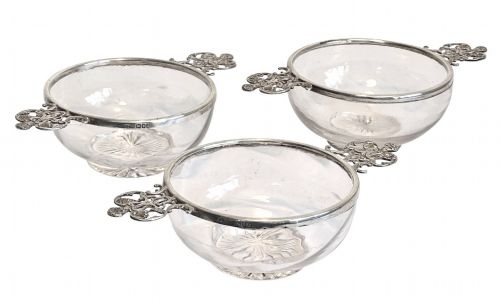
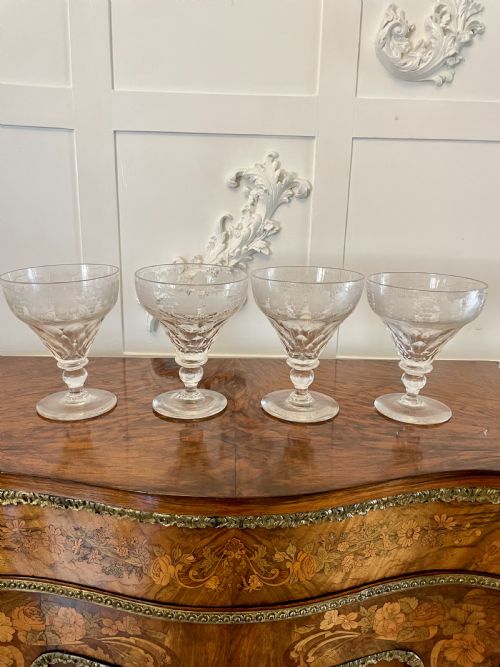
Earlier examples stretch back to the eighteenth century, taking the form of baluster sweetmeat glasses and opaque twist jelly glasses. Alongside these sit later French art deco drinking glasses and silver mounted glass bowls by William Comyns dated eighteen ninety six.
How they were made
Production relies primarily on clear glass, lead glass, flint glass, and cut crystal, shaped by blowing, moulding, and wheel cutting. The heavy refractive quality of lead and flint glass allowed makers to achieve sharp facets and deep incisions that catch candlelight.
Decoration is applied through cutting, frosting, engraving, and enamel work, as seen in the Greek key etched patterns and floral or geometric engravings on Victorian and Regency vessels. Silver mounts add another layer of craftsmanship, integrating precious metal with blown glass forms.
Clear Glass Dessert Bowl Retail Price Guide 2026
Typical asking prices for clear glass dessert bowl among the pieces listed under this phrase on Sellingantiques today, from the lower quarter to the upper quarter. They describe what is for sale here now, not the wider market.
Materials recorded across the inventory include lead glass, flint glass, cut crystal, and applied enamel, alongside silver mounts by known silversmiths.
What varies in quality
Quality rests in the crispness of the cutting, the brilliance of the metal, and the purity of the handle-blown or moulded vessel. Weight and wall thickness differ significantly between the substantial lead crystal of Regency and early Victorian pieces and lighter later wares.
The precision of wheel engraving and the uniformity within a matched set dictate the standing of an item. Pieces retaining original silver mounts or forming large, intact suites demonstrate higher original cost and greater survival value.
William Comyns
The Clear Glass Dessert Bowl Glossary
- Finger bowl
- A small vessel designed for the dining table to hold water for rinsing the fingers. They frequently feature cut glass patterns or etched motifs around the rim.
- Custard cup
- A small-handled or straight-sided vessel used for serving individual portions of custard or cream. These often appear in matched sets from the Victorian era.
- Sweetmeat glass
- A tall-stemmed eighteenth century vessel created for serving sweet confections, nuts, or dry sweetmeats. They typically display baluster stems or air twist formations.
- Tazza
- A decorative pedestal plate or shallow bowl raised upon a foot. They elevate fruit or desserts above the surface of the dining table.
- Flint glass
- An early term for high-clarity glass containing lead oxide, prized for its weight and brilliance under artificial light.
Clear Glass Dessert Bowl: Frequently Asked Questions
What were clear glass dessert bowls used for?
These vessels served the formal dining table for presenting sweetmeats, custards, jellies, and desserts. Many functioned as finger bowls for refreshing hands between courses.
Their substantial weight in lead or flint glass ensured stability on polished mahogany dining tables during the eighteenth and nineteenth centuries.
How do I identify a Georgian piece?
Georgian items display the characteristic heavier pontil marks and darker metal associated with eighteenth century glasshouses. Forms like baluster sweetmeats and opaque twist jelly glasses reflect earlier blowing techniques.
They lack the mechanical precision of later Victorian press-moulded wares, showing subtle irregularities in wall thickness and hand-cut facets.
Are these bowls dishwasher safe?
Antique glass requires hand washing in warm water with mild soap. Thermal shock and harsh detergents can damage fragile lead crystal and nineteenth century enamel.
Silver mounted pieces demand particular care to protect the metal components from prolonged moisture exposure.
What is the difference between cut glass and crystal?
Crystal contains lead oxide, which increases the density, refractive index, and weight of the material. This composition allows glasscutters to achieve sharper, deeper facets.
Standard clear glass lacks this lead content, resulting in a lighter feel and less brilliance when turned in the light.