




Clear Glass Desk Light
A clear glass desk light brings brilliant refraction and functional illumination to a study, built from heavy crystal and gleaming brass.
Clear Glass Desk Light
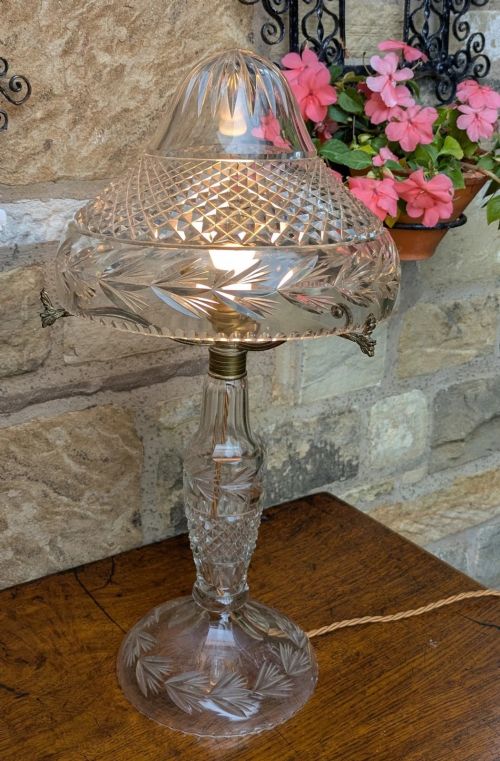
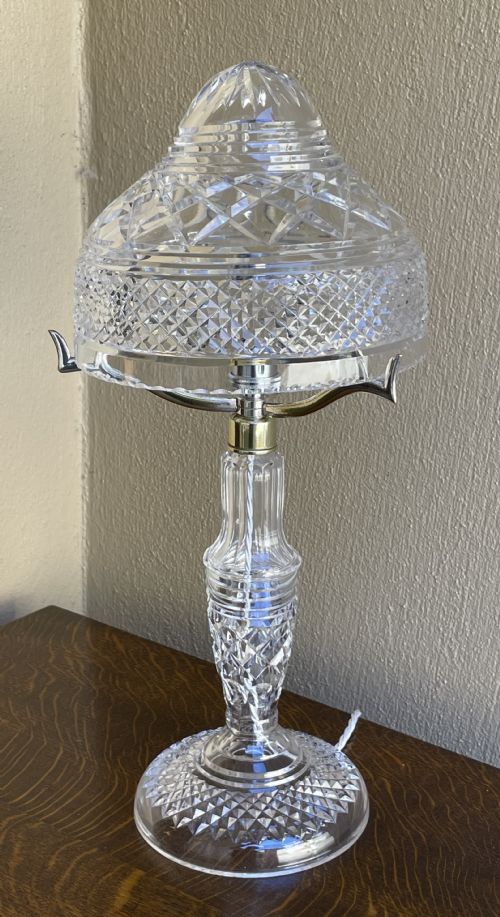
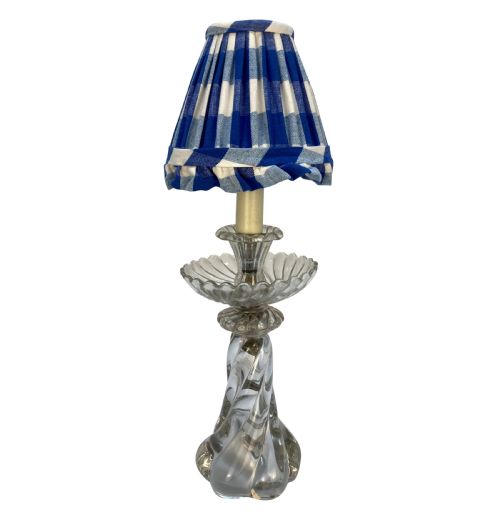
A clear glass desk light draws the eye through heavy crystal, cut glass, and brass mounted forms dating from the nineteenth century into the mid-century modern era. Table lamps, oil lamps, and desk lamps dominate the selection, showing Victorian, Edwardian, and Art Deco influences.
Buyers meet mushroom lamps, Corinthian column table lamps, and cubic designs mounted on mahogany. These pieces range from early Victorian spirit dispensing barrels to iconic 1930s continental works.
The prevailing forms rely on clear glass and lead crystal bodies that disperse light cleanly across a workspace. Traditional English and classical styles sit alongside modernist interpretations from the 1930s.
Materials and construction
Makers shaped these pieces using heavy cut crystal and glass paired with polished brass and chrome. The glass components frequently feature deep brilliant-cut facets that catch and multiply ambient light.
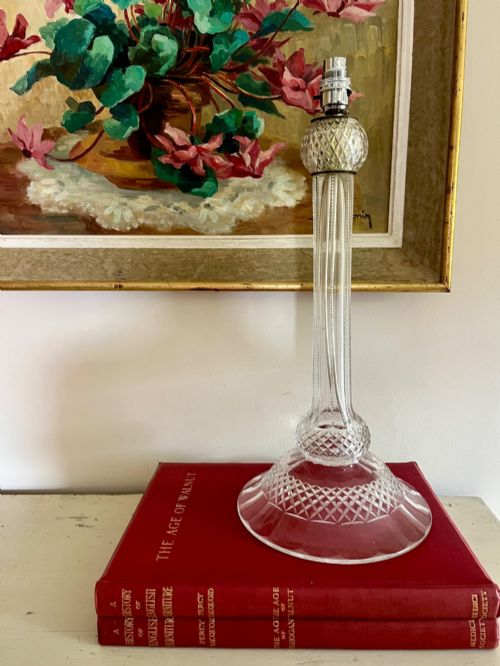
Metal mounts in brass provide structural support for delicate glass bodies, whilst wooden elements such as mahogany ground modernist cubic designs. Oil lamps incorporate functional brass reservoirs beneath glass fonts.
Production methods span Victorian hand-blowing and cutting traditions through to twentieth-century moulded forms and chrome-plated assemblies.
Listings span periods from 1860 to 1950, uniting Victorian oil lamps and Art Deco crystal mushroom designs.
Judging quality in clear glass desk light
The distinction between tiers rests upon the depth of the glass cutting and the weight of the crystal. Superior examples display crisp, hand-cut facets and substantial metal mounts rather than light pressed glass.
Detailing in the brass and the integration of secondary materials like mahogany or chrome dictate the refinement of the piece. Maker attribution, such as signed crystal or distinct structural proportions, elevates standard table lamps into notable decorative objects.
Stuart Crystal·Osler·Karl Palda
The Clear Glass Desk Light Glossary
- Lead crystal
- Glass containing metal oxide that increases weight, clarity, and refractive brilliance. This material allows for deeper, sharper facet cutting than standard glass.
- Corinthian column
- An architectural order featuring fluted shafts and ornate capitals decorated with acanthus leaves. Lamps utilising this form adapt classical stone columns into brass and glass lighting.
- Mushroom lamp
- A rounded shade and base configuration resembling a fungus. These silhouettes gained popularity during the Art Deco period.
- Spirit dispensing barrel
- A cylindrical glass vessel originally designed to hold and serve potable spirits, later adapted into novelty table lamps during the Victorian period.
- Cubic
- A geometric modernist form emphasising square angles and rectilinear planes. This style appears alongside traditional classical silhouettes in 1930s lighting.
Clear Glass Desk Light: Frequently Asked Questions
How do I date a clear glass desk light?
Dating relies on examining the mounting materials, screw threads, and glass cutting techniques. Victorian pieces often combine heavy cast brass with hand-blown oil fonts, whilst 1930s examples introduce chrome and geometric modernist silhouettes.
Changes in electrical wiring standards, burner mechanisms, and patent marks also provide chronological markers. Comparing the style against documented Victorian, Edwardian, and Art Deco forms clarifies the production era.
Were these lamps originally electrified?
Many nineteenth-century examples began life as oil lamps or spirit dispensing vessels before later conversion to electricity. Brass burners and cotton wick mechanisms were replaced with internal wiring and lamp holders during the twentieth century.
Mid-century and 1930s designs were more commonly manufactured specifically for electric bulbs. Evaluating the base fittings reveals whether the piece has undergone historical adaptation.
How do I clean cut crystal and brass safely?
Crystal components benefit from gentle washing in lukewarm water with mild soap, avoiding harsh chemical cleaners that can damage vintage glass. Soft microfibre cloths prevent scratching during drying.
Unlacquered brass mounts require non-abrasive metal polish applied sparingly to avoid staining adjacent glass surfaces. Keeping polish away from old wiring and felt bases preserves the integrity of the piece.
What distinguishes lead crystal from standard glass?
Lead crystal contains dense mineral content that creates a heavier feel and a resonant chime when struck gently. This composition permits sharper, deeper cutting facets that refract light more intensely than ordinary soda-lime glass.
In desk lighting, lead crystal offers superior optical clarity and greater structural stability for elaborate multi-part lamp bodies. The added weight also provides a more stable base for taller table lamps.