
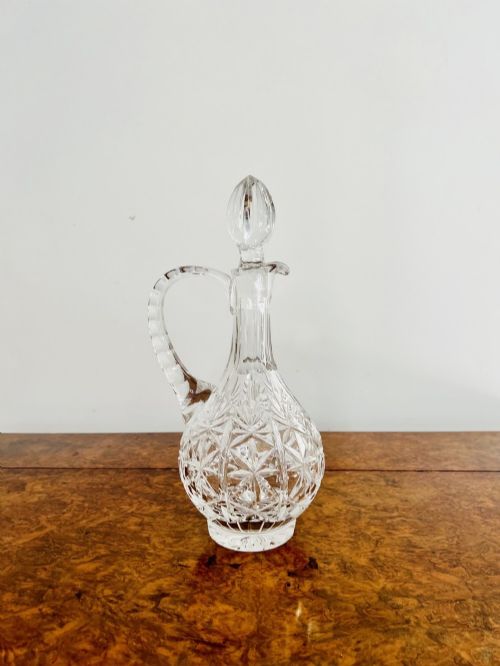
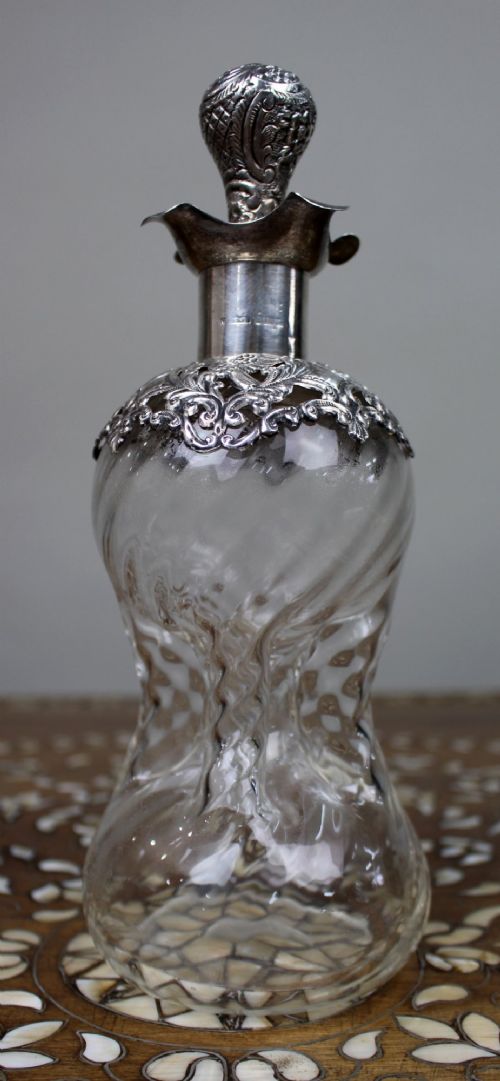
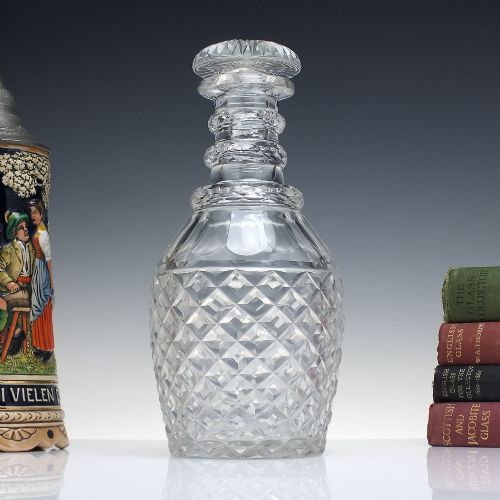
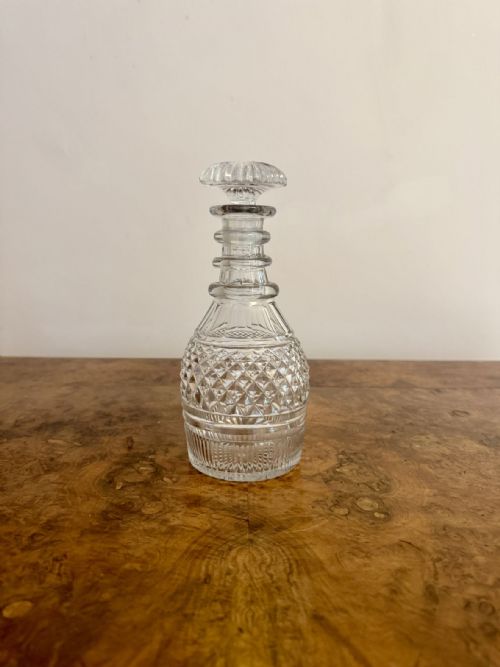
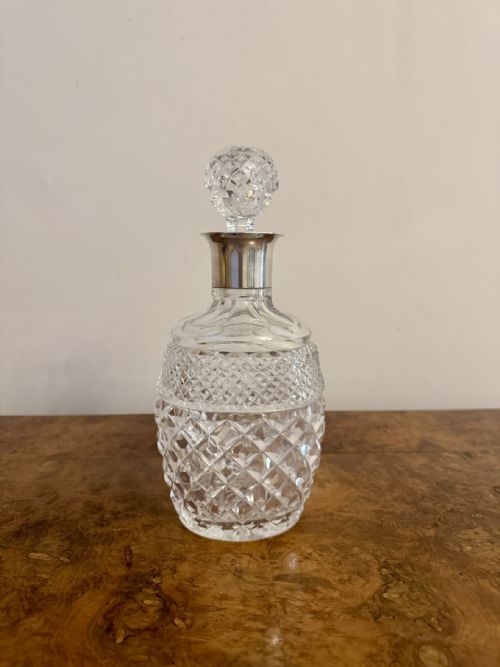
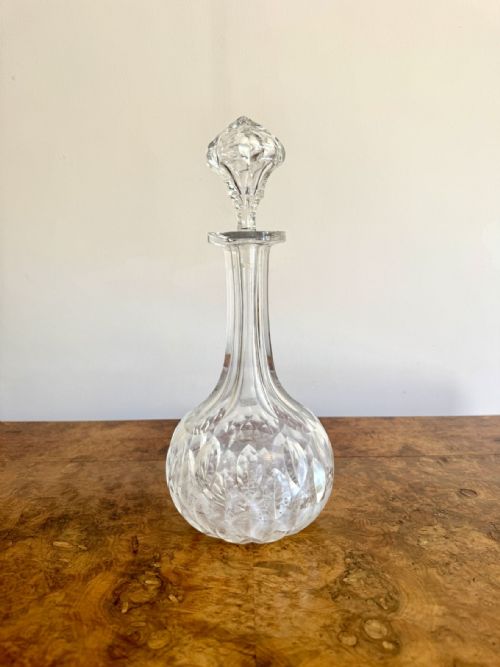
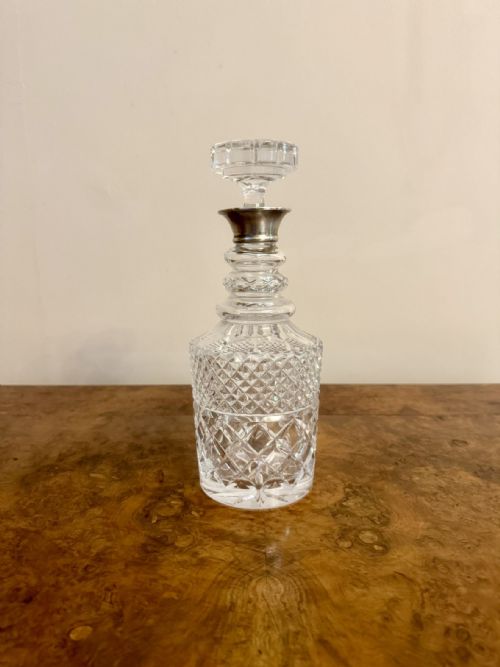
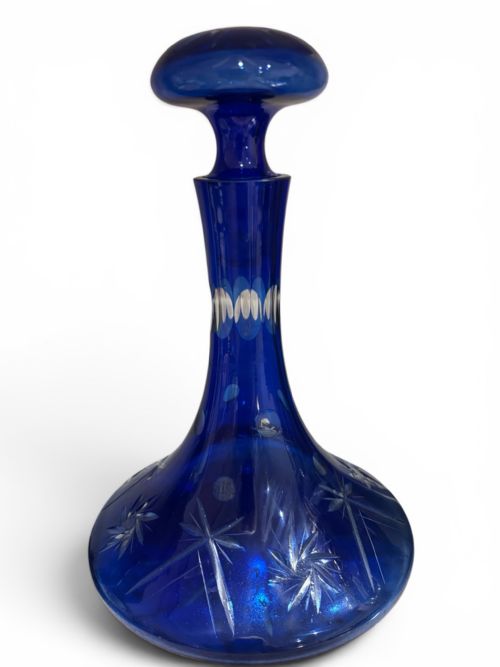
Clear Crystal Spirit Decanter
A clear crystal spirit decanter brings weight and brilliance to the sideboard, catching the light through decades of cut and etched glass.
Clear Crystal Spirit Decanter
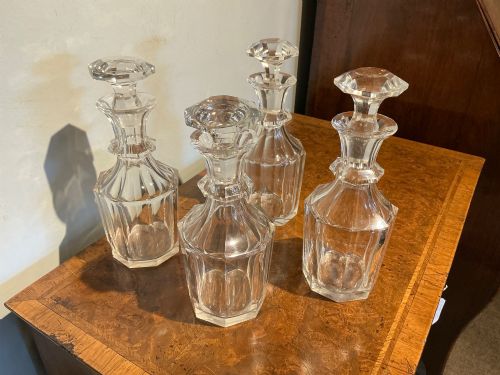
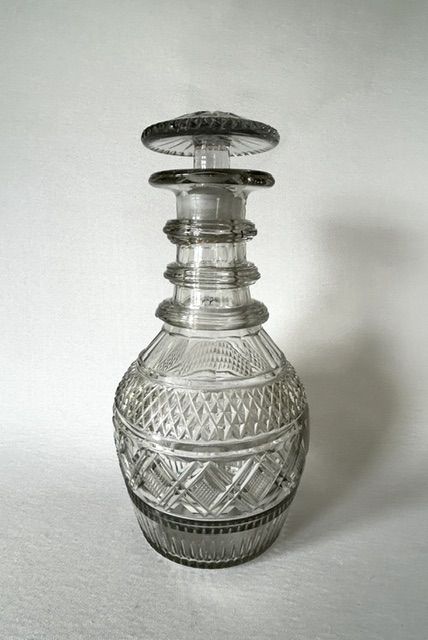
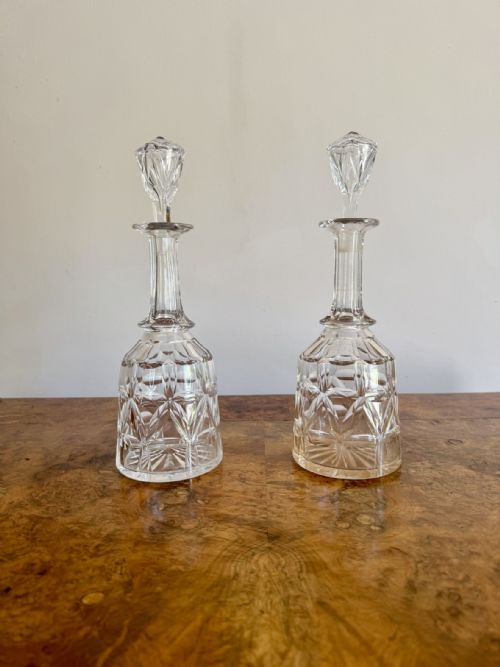
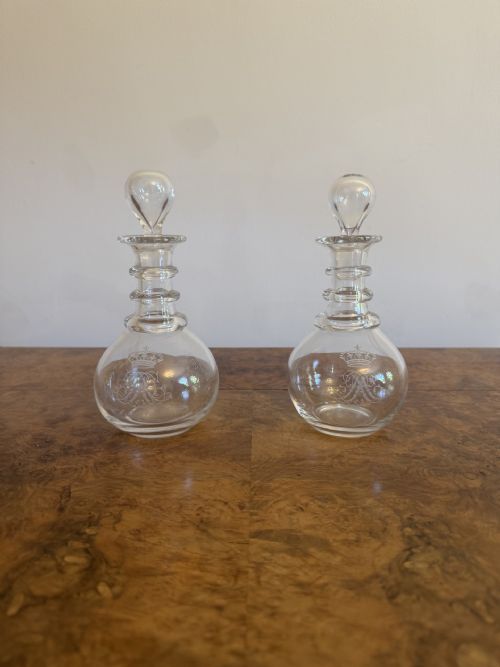
When searching for a clear crystal spirit decanter, collectors examine vessels that hold gin, whisky, liqueurs and rum across several centuries. The selection spans the Georgian, Regency, Victorian and Edwardian eras, extending into Art Deco designs from Czechoslovakia. Most pieces on this page originate from the Victorian and Edwardian periods, appearing as single bottles, pairs, sets with matching glasses, or fitted within decanter stands.
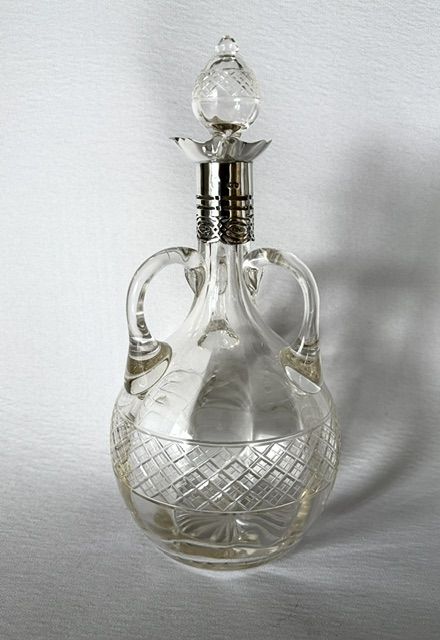
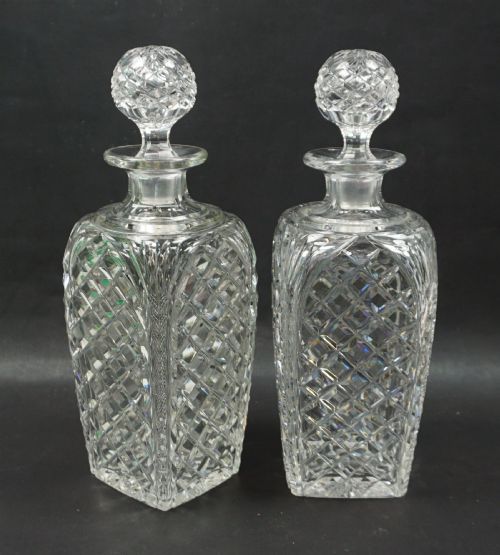
Traditional forms include bell-shaped bodies, square section tapered profiles, shoulder decanters, shaft and globe shapes, and flat-bottomed ship's decanters designed to stay steady at sea. These vessels range from modest liqueur decanters to large wine and spirit decanters, occasionally fitted with silver collars or mounts.
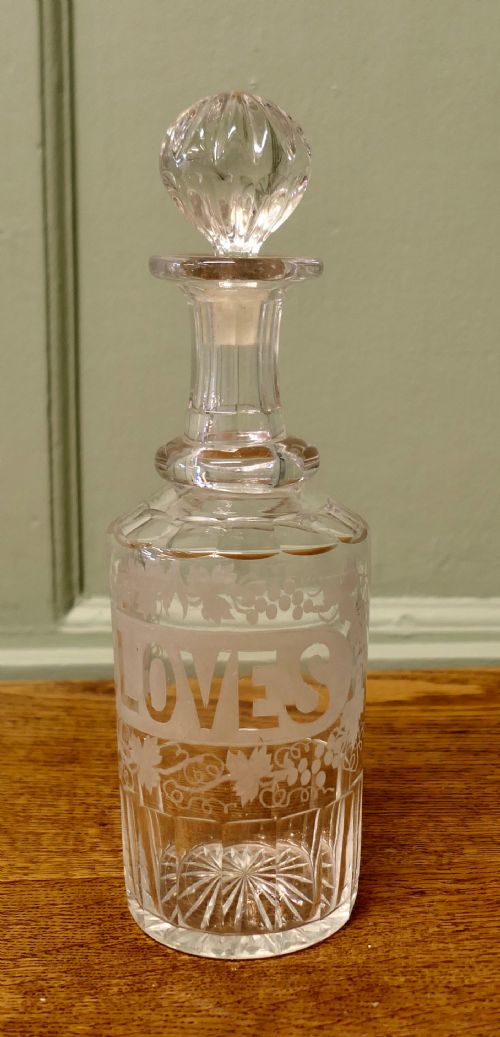
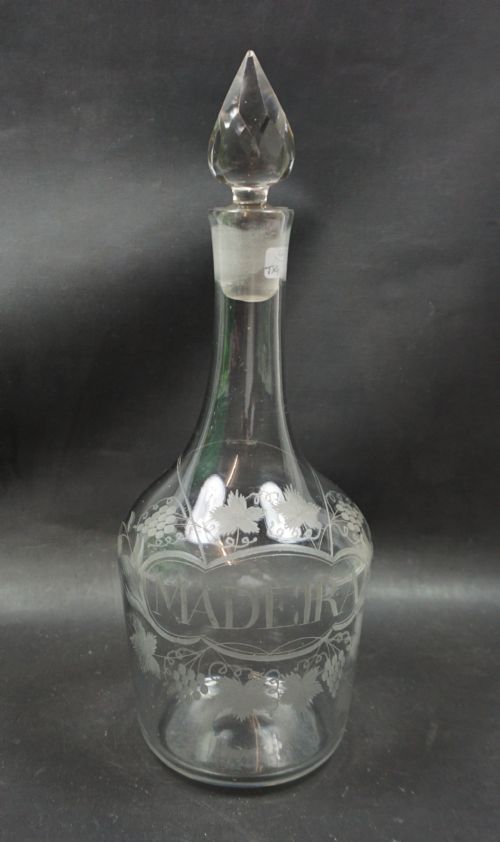
Origins stretch across English, Irish and Bohemian workshops, reflecting distinct local traditions in heavy glass-blowing and deep wheel-cutting. Buyers find both plain polished glass and elaborately decorated surfaces, often bearing engraved labels such as Madeira or floral motifs.
Materials and Techniques
The primary material is lead crystal or heavy cut glass, shaped by blowing into moulds or free-blowing before hand-finishing. Artisans achieved brilliance and heft through high lead content, which allowed deep facets and sharp prisms to be cut into the surface using rotating wheels.
Decoration relied on wheel-cutting, etching, and engraving to create geometric patterns, flutes, starbursts and botanical motifs. Many Edwardian and Victorian examples incorporate sterling silver collars, mounts or ewer lips, securing the neck and adding functional weight to the pour.
Ship's decanters were built with excessively wide bottoms so enthusiastic sailors could enjoy a heavy pour without chasing their gin across a rolling cabin floor.
Judging Quality
Quality rests upon the clarity of the metal, the crispness of the cutting, and the balance of the vessel in the hand. Superior pieces display deep, sharp facets that catch the light cleanly, whereas lesser examples show shallow, rounded polishing marks from hurried production.
The proportion between the neck, body and base dictates the elegance of the piece. Well-made stoppers fit snugly and match the body in glass colour and cut, maintaining the integrity of the ensemble.
Karl Palda
The Clear Crystal Spirit Decanter Glossary
- Lead crystal
- Glass containing lead oxide, which increases weight, refractive index and brilliance. This material allows for deep, sharp wheel-cutting.
- Ship's decanter
- A decanter with a wide, stable base and a conical body designed to prevent tipping on rolling tables. It remains a practical choice for modern sideboards.
- Sterling silver collar
- A protective metal band fitted around the neck of a glass decanter. It often bears hallmarks indicating the year and place of assay.
- Shaft and globe
- A decanter shape featuring a long slender neck above a spherical body. This form became particularly popular during the Victorian era.
- Wheel-cutting
- A decorative technique where the glass vessel is held against a rotating stone or metal wheel to carve away material. It produces the characteristic facets seen on antique decanters.
Clear Crystal Spirit Decanter: Frequently Asked Questions
How do I clean an antique decanter?
Wash the interior with warm water and non-abrasive beads or specialised cleaning tablets, avoiding harsh detergents that might cloud the ancient glass.
Dry the vessel thoroughly upside down on a soft cloth and leave the stopper out until moisture evaporates completely.
Are these decanters safe for modern spirits?
Most antique crystal decanters are safe for holding spirits for immediate serving during an evening. However, lead crystal should not be used to store alcoholic beverages for long periods.
Empty any remaining contents back into original bottles if the decanter is to sit unused for weeks or months.
How do I date a clear crystal spirit decanter?
Examine the base for pontil marks, the thickness of the glass, and the specific cutting style associated with periods like Regency or Edwardian. Silver collars often feature hallmarks that provide precise assay dates.
Compare the profile and stopper style against known historical forms to narrow the manufacturing decade.
Can I use mismatched stoppers?
Mismatched stoppers rarely fit the hand-ground neck of an antique decanter properly and disrupt the silhouette. Original stoppers typically share the same cut pattern and glass tone as the body.
Look for numbers ground into both the base of the neck and the bottom of the stopper, which indicate a matched factory pair.