






Clear Chemist Bottles
Clear chemist bottles are functional glass vessels that bring industrial pharmacy history into a room through honest utilitarian design.
Clear Chemist Bottles
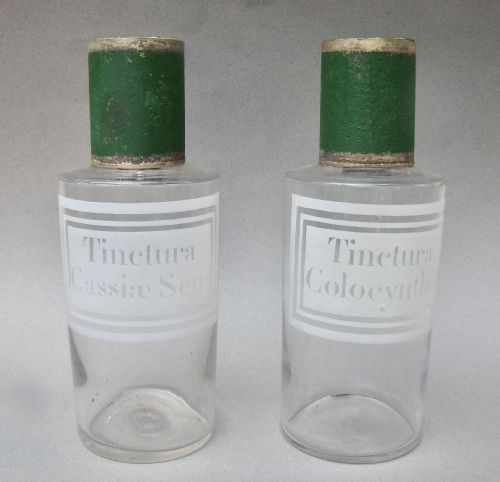
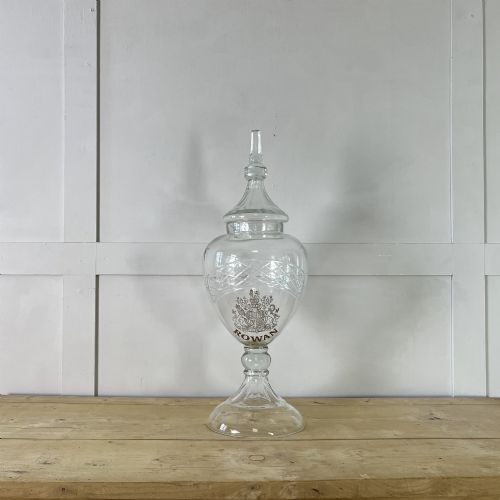
Clear chemist bottles span the Georgian, Victorian, Edwardian and early twentieth-century periods, taking the form of apothecary jars, pharmacy bottles, tincture bottles and carboys. These vessels served practical roles in dispensaries and surgeries before finding a second life as decorative objects.
The pieces listed on this page appear in various configurations, from single large jars to sets of matched bottles and unusual pairs. French examples from the late nineteenth century sit alongside English Georgian and Victorian pieces in clear glass.
How they were made
Makers shaped these clear glass vessels using traditional blowing and moulding techniques, occasionally incorporating cut glass patterns on larger jars. Materials such as gold leaf, paper labels and paint appear on select pieces alongside metal and brass components.
The manufacturing process prioritised durability for storing substances in apothecary and pharmacy settings, resulting in thick walls and robust bases suited to daily handling.
Clear Chemist Bottles Retail Price Guide 2026
Typical asking prices for clear chemist bottles among the pieces listed under this phrase on Sellingantiques today, from the lower quarter to the upper quarter. They describe what is for sale here now, not the wider market.
Some nineteenth-century pharmacy bottles still carry faint traces of dried gelatine and old paint, whispering tales of forgotten medicinal concoctions.
What varies in quality
The distinction between ordinary utility items and superior examples rests on clarity of the glass, crispness of any cut decoration, and the presence of original covers or labels. Heavy-walled carboys and matched sets demonstrate greater presence than single, unmarked utility bottles.
Proportion and scale dictate the visual weight of each piece, with larger Edwardian cut glass jars and early nineteenth-century specimens offering a more pronounced presence in a room.
The Clear Chemist Bottles Glossary
- Carboy
- A large glass bottle with a narrow neck, traditionally used for holding liquids in bulk within a laboratory or dispensary. These sizeable vessels often feature heavy glass walls and substantial bases.
- Tincture bottle
- A small glass container specifically designed to hold alcoholic solutions of medicinal substances. These bottles frequently appear in matched pairs or sets within pharmacy collections.
- Apothecary jar
- A lidded glass vessel intended for storing dry drugs or preparations in a dispensary. They range from modest shelf-ware to large display pieces.
- Cut glass
- Glass decorated by grinding facets or patterns into the surface using a wheel. This technique adds considerable weight and brilliance to the vessel.
Clear Chemist Bottles: Frequently Asked Questions
What were clear chemist bottles used for?
These vessels held various pharmaceutical preparations, dry drugs, and liquid tinctures in dispensaries, surgeries, and pharmacies. Their clear glass construction allowed practitioners to inspect the contents easily.
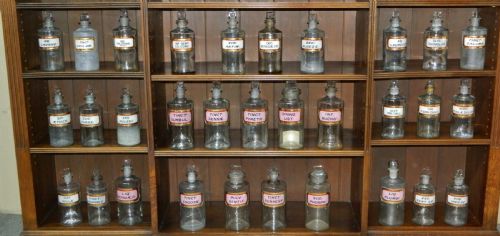
Larger carboys sat on counters or in shop windows to signal the presence of an apothecary, while smaller bottles lined wooden shelving in rows.
How do I date an old chemist bottle?
Dating relies on observing the manufacturing characteristics, such as pontil marks, glass clarity, and the presence of cut decoration or painted labels. Periods range from Georgian through to the early twentieth century.
Form and proportion also offer clues, with Georgian and Victorian pieces displaying distinct mouth formations and wall thicknesses compared to later twentieth-century equivalents.
How should I display chemist bottles at home?
Placing these glass vessels near a light source highlights the clarity of the material and any decorative etching or cut facets. Grouping sets of pharmacy bottles together creates the visual impact of an old dispensary.
Larger carboys and apothecary jars stand well on their own as floor or mantel pieces, benefiting from neutral backgrounds that let the glass form take focus.
Are original lids important for these bottles?
Original matching covers and stoppers complete the silhouette of an apothecary jar or tincture bottle and preserve its historical integrity. Many surviving pieces retain their intended tops from the Victorian or Edwardian eras.
While jars without covers remain useful for display, those retaining their original matched glass lids command more interest from collectors.