


Claw Set Diamond Cluster
A claw set diamond cluster gathers stones closely in metal claws to catch the light, offering striking sparkle and enduring charm.
Claw Set Diamond Cluster
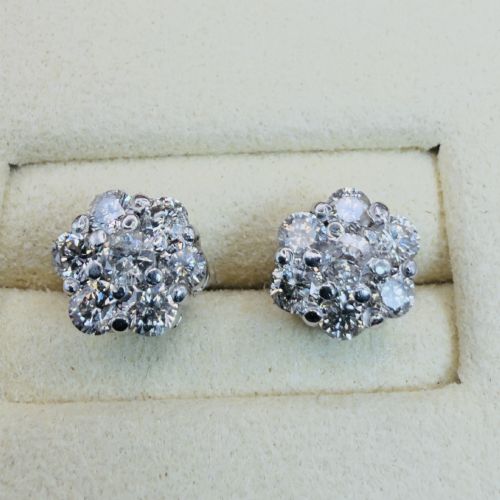
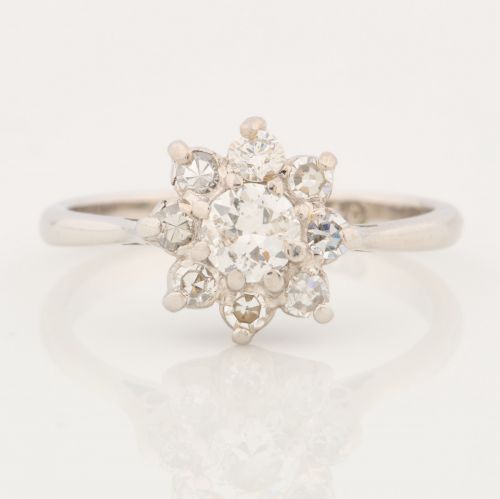
A claw set diamond cluster brings together a central stone surrounded by smaller gems, creating a concentrated focal point on the hand or ear. These pieces span eras from the Edwardian period through to the nineteen fifties and sixties, taking the form of rings and earrings.
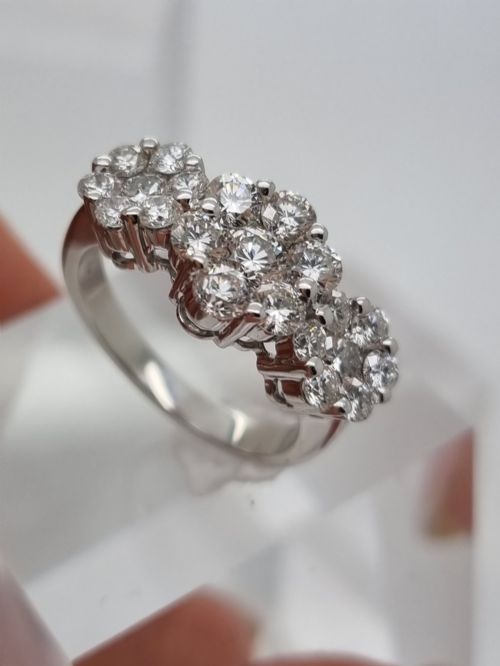
The layout often mirrors natural motifs such as daisies and flowers, alongside geometric configurations. Yellow gold, white gold, platinum and nine carat gold provide the settings, frequently paired with sapphires, emeralds, rubies, aquamarine and tanzanite alongside the diamonds.
Earrings appear as screw back studs whilst rings range from simple daisy clusters to elaborate trilogies and cross-over designs. The Edwardian pieces and mid-century examples dominate the selections, showing lasting popularity for these clustered arrangements.
How they were made
Goldsmiths shape platinum and various grades of gold, including eighteen carat yellow and white gold as well as nine carat gold, to form the mountings. Individual claws are shaped around each diamond and coloured gemstone to hold them securely while permitting maximum light entry.
Stones receive traditional cutting styles suited to their era, including old cut diamonds and brilliant cuts. Gemstones like emeralds, sapphires, rubies, aquamarine, amethyst and tanzanite are integrated directly into the cluster formations alongside the central diamonds.
The selection spans from the Edwardian era through the nineteen twenties, thirties, forties, fifties and sixties.
What varies in quality
The precision of the claw work defines the finesse of the piece, determining how delicately the metal holds the stones. Uniformity in stone size and the harmonious integration of coloured gems like emeralds or sapphires also separate simpler examples from finer work.
The choice of heavier precious metals such as platinum or eighteen carat gold indicates a higher tier of production compared to nine carat gold alternatives. The age of the piece, spanning from Victorian and Edwardian eras into the mid-twentieth century, influences the character of the craftsmanship.
The Claw Set Diamond Cluster Glossary
- Claw set
- A method where thin metal prongs hold a gemstone securely in place. This technique allows maximum light to enter the stone from multiple angles.
- Cluster ring
- A ring design featuring a central stone surrounded by a grouping of smaller gems. It creates a bold visual impact on the finger.
- Trilogy ring
- A ring set with three prominent stones representing the past, present and future. They often combine diamonds with emeralds, rubies or sapphires.
- Screw back
- An earring fastening mechanism that uses a threaded post and nut. It provides secure adjustment for non-pierced or pierced ears.
Claw Set Diamond Cluster: Frequently Asked Questions
How do I clean my cluster ring?
Warm soapy water and a soft brush remove everyday oils safely from the metal and stones.
Avoid harsh chemicals that might harm softer gems like emeralds or opals set within the cluster.
Are these earrings comfortable for daily wear?
Screw back studs offer a secure and adjustable fit for continuous daily use.
The low profile of most cluster designs helps prevent catching on clothing during normal activities.
Can I wear a cluster ring every day?
Eighteen carat gold and platinum mountings provide durability suitable for regular daily wear.
Checking the claws periodically ensures the diamonds and coloured stones remain firmly in place.
How do I identify an Edwardian cluster?
Edwardian pieces often feature platinum settings combined with old cut diamonds and delicate filigree work.
Natural motifs like flowers and daisies frequently inspire the overall layout of these antique designs.