




Classical Window Seat
A classical window seat brings enduring architectural form and practical seating to a hallway or bay, uniting period timber with refined upholstery.
Classical Window Seat
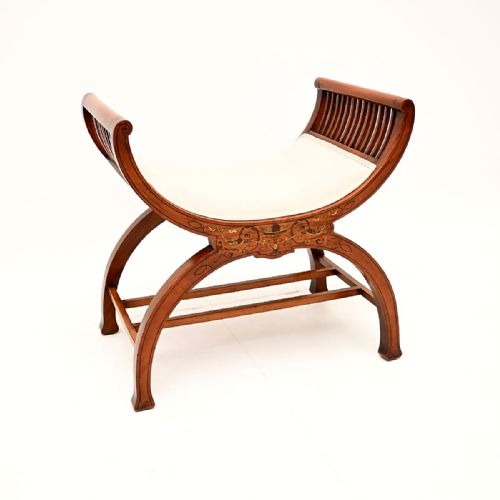
When you search for a classical window seat, you find long benches, stools, and settees originating from periods spanning the eighteenth and nineteenth centuries. These pieces take various structural forms, including X-frame supports and curule bases derived from ancient designs.
The versions you meet most frequently on this page belong to the nineteenth century, alongside examples from around nineteen hundred and the early twentieth century. Makers and cabinetmakers of these eras drew heavily upon Regency and Neoclassical vocabularies to shape their seating.
Materials represented across these examples include mahogany, oak, walnut, and satinwood, frequently paired with cane or upholstered in fabric and damask. Brass mounts and giltwood surfaces also appear among the listed pieces, grounding the category in traditional cabinetmaking practice.
How they were made
Cabinetmakers utilised dense timbers such as mahogany, oak, and walnut to construct the foundational frames of these seats. Artisans shaped these hardwoods through carving and turning to create robust structural supports.
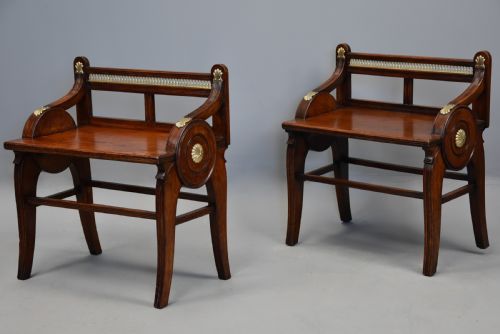
Surfaces often received decorative treatments including painted finishes, giltwood, and gesso application. Metal elements such as brass mounts were securely integrated into the timber structures of specific hall benches.
Upholstery methods involved securing fabrics like red damask directly to the frames, while other seating forms incorporated woven cane panels into wooden seat rails.
Classical Window Seat Retail Price Guide 2026
Typical asking prices for classical window seat among the pieces listed under this phrase on Sellingantiques today, from the lower quarter to the upper quarter. They describe what is for sale here now, not the wider market.
Listings feature eighteenth-century and nineteenth-century pieces incorporating mahogany, oak, walnut, satinwood, cane, and damask.
What varies in quality
The refinement of the carved timber details and the execution of the joinery set superior examples apart from simpler utilitarian forms. Crisp lines in carved oak or mahogany indicate a higher level of workshop execution.
The integration of decorative components such as giltwood, gesso, or brass mounts influences the overall character of the piece. Material selection, from plain oak to figured satinwood, dictates the visual weight of the furniture.
James Shoolbred & Co.
The Classical Window Seat Glossary
- Neoclassical
- A style drawing inspiration from the classical art and architecture of ancient Greece and Rome. This aesthetic manifests in symmetrical forms and restrained decorative motifs.
- Curule stool
- An ancient Roman chair form characterised by curved legs crossing in an X shape. Nineteenth-century revivals adapted this silhouette for ceremonial and domestic seating.
- Satinwood
- A durable hardwood prized for its golden lustre and fine grain. Cabinetmakers used it for painted and inlaid furniture during the late nineteenth and early twentieth centuries.
- Damask
- A reversible figured fabric traditionally woven on a jacquard loom with patterns formed by contrasting warp and weft threads. It provides traditional upholstery for period seats.
Classical Window Seat: Frequently Asked Questions
Where should I place a classical window seat?
These seats suit narrow transitional spaces like hallways, entryways, or long corridors where deep furniture might obstruct movement. Their low profiles also make them suitable for positioning beneath tall bay windows.
Placing one in a bedroom or reception room provides secondary seating without dominating the room's spatial balance. The integration of cane or upholstered pads ensures comfort during brief periods of sitting.
How do I identify a Regency window seat?
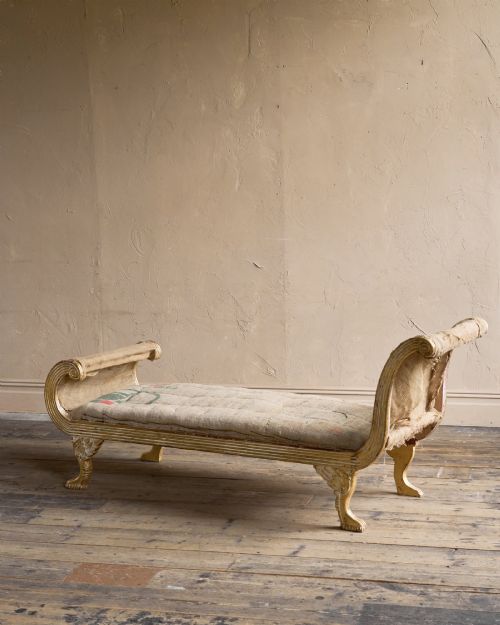
Regency pieces often display classical architectural motifs such as reeding, scroll arms, and X-frame supports. Cabinetmakers of this period looked directly to Greek and Roman precedents for their design inspiration.
Mahogany was the primary timber utilised during the Regency era, frequently left with a dark, polished finish. The presence of brass mounts or paw feet further points toward this period's stylistic preferences.
Are these seats suitable for daily use?
Solid hardwood frames constructed from oak, mahogany, or walnut provide structural integrity capable of supporting daily use. Period joinery techniques ensure these pieces remain robust after generations of domestic service.
Maintenance involves regular dusting of timber surfaces and careful cleaning of upholstered or caned areas. Preserving the original structural components ensures the longevity of the furniture.