




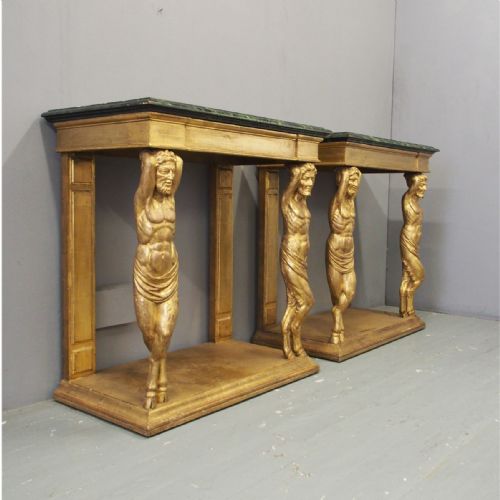


Classical Wall Console Table
A classical wall console table anchors a room with architectural dignity, offering a striking display surface mounted securely against a wall.
Classical Wall Console Table
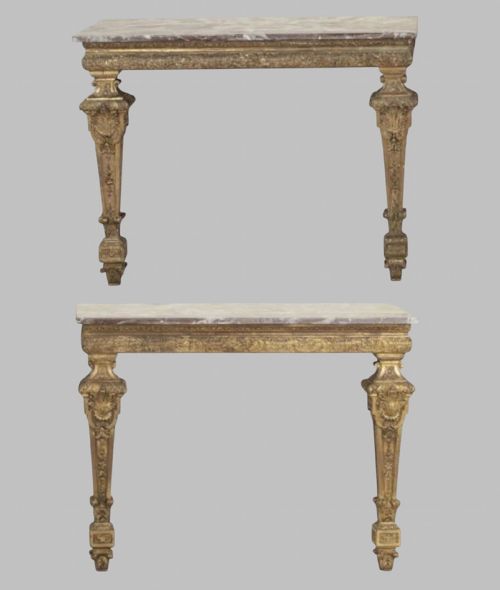
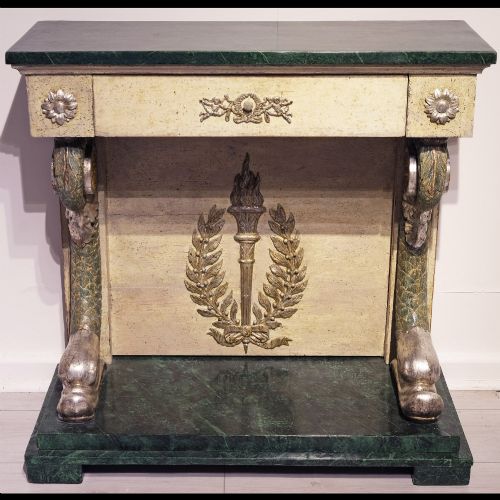
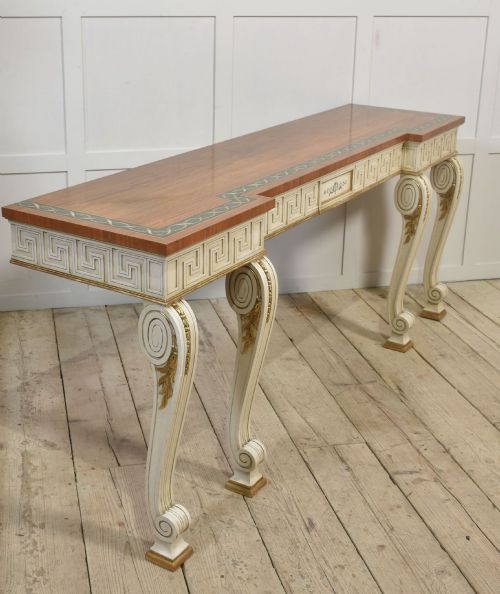
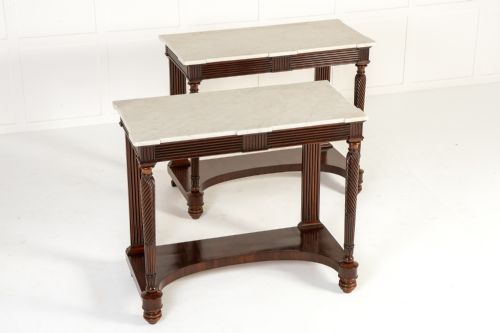
A classical wall console table represents a formal architectural furniture form designed to stand flat against a wall, frequently accompanied by a matching pier mirror or positioned in grand hallways and reception rooms. These pieces span the eighteenth and nineteenth centuries, taking form in distinct regional idioms including Italian Neoclassical, Gustavian, French Empire, and Regency styles.
Buyers encountering this selection will find a diverse range of materials and proportions, from restrained mahogany tables to heavily ornamented giltwood and painted surfaces topped with marble or faux porphyry. The pieces vary from compact side tables to large pairs intended for symmetrical placement, incorporating decorative motifs such as rams and maiden heads, centaur designs, and crisp neoclassical carving.
Materials and construction methods
Cabinetmakers constructed these tables using solid timbers such as mahogany, applying veneers like flame mahogany alongside carved softwoods intended for gesso and gold leaf application. Painted wood surfaces received careful preparation to support faux finishes, including the creation of faux porphyry effects to imitate costly stone.
Heavy decorative elements rely on intricate hand carving in wood or moulded gesso, particularly visible on giltwood examples in the Kentian manner and French Empire pieces. Heavy marble tops sit upon these timber frames, requiring robust structural support to bear the weight of the stone.
Classical Wall Console Table Retail Price Guide 2026
Typical asking prices for classical wall console table among the pieces listed under this phrase on Sellingantiques today, from the lower quarter to the upper quarter. They describe what is for sale here now, not the wider market.
Listings feature mahogany, giltwood, and painted wood surfaces, spanning the eighteenth and nineteenth centuries with a strong representation of neoclassical design.
Factors of distinction
The sophistication of the carved ornamentation and the depth of the gilding set superior examples apart from simpler production. Crisp execution of classical motifs, such as acanthus leaves, figures, and architectural moulding, reveals the hand of a more accomplished workshop.
The choice and quality of the primary materials, particularly figured mahogany timbers, intact marble slabs, and original painted or gilded surfaces, dictate the standing of a piece. Retaining period finishes without extensive modern intervention elevates the integrity of the furniture.
The Classical Wall Console Table Glossary
- Console table
- A table designed to be fixed against a wall, often supported by front legs with the rear secured directly to the structure.
- Giltwood
- Timber that has been coated with a thin layer of gold leaf or powder over a prepared gesso ground.
- Pier mirror
- A tall mirror designed to hang on the pier, the narrow section of wall space situated between two windows, frequently paired with a console table.
- Faux porphyry
- A decorative paint finish executed to simulate the deep purple-red igneous rock prized in antiquity.
- Gesso
- A plaster mixture applied to wood surfaces as a smooth base for gilding and painting.
Classical Wall Console Table: Frequently Asked Questions
How were console tables used historically?
These tables served as formal display surfaces in grand entrances, saloons, and drawing rooms, often positioned beneath a pier mirror to reflect light and display decorative objects.
Their primary function was ornamental and architectural, anchoring the wall elevation of a reception room rather than serving as movable domestic furniture.
Are marble tops original to these tables?
Many classical console tables were manufactured specifically to carry heavy marble or faux porphyry slabs, which provided a durable and luxurious surface.
Determining originality involves examining the fit of the stone within the wooden frame and checking for contemporary support blocks.
How do I identify a neoclassical console table?
Neoclassical pieces feature straight tapered legs, symmetrical geometry, and classical architectural motifs derived from ancient Greek and Roman design.
Common decorative elements include fluting, paterae, swags, and carved figures rather than the exuberant asymmetrical curves found in earlier Baroque furniture.
Can these tables stand without wall attachment?
Wall console tables often rely on the wall for part of their structural stability, particularly forms with only two front legs.
Proper installation requires secure brackets or fixings to the wall to ensure safety, as the weight of marble tops can make them front-heavy.