




Classical Sideboard Table
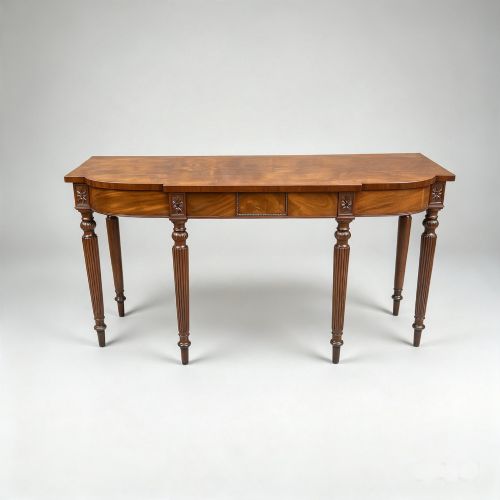
These classical sideboard table options and associated lighting bring architectural proportion and figured timber into the dining room or hall.
Classical Sideboard Table
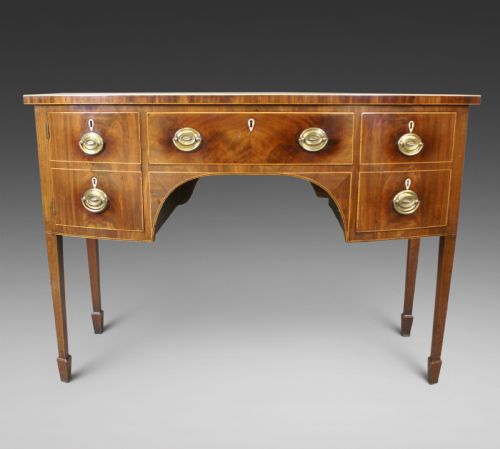
A classical sideboard table search brings up substantial timber serving furniture alongside neoclassical case pieces and heavy bronze or brass lighting. The serving tables and sideboards appear in mahogany and satinwood, often carrying inlay, brass galleries or carved details drawn from Georgian, Regency and Victorian eras.
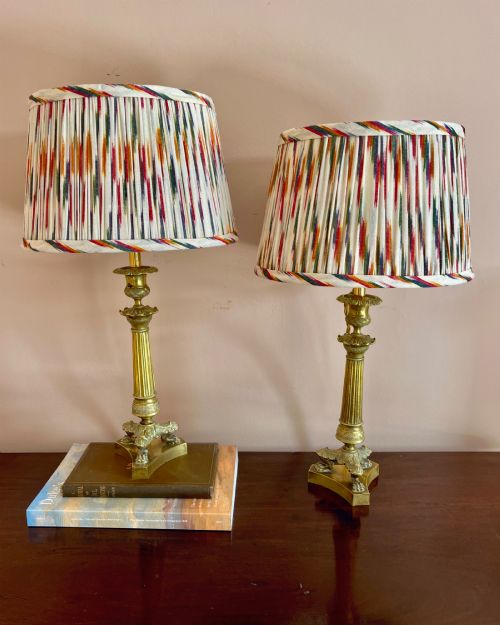
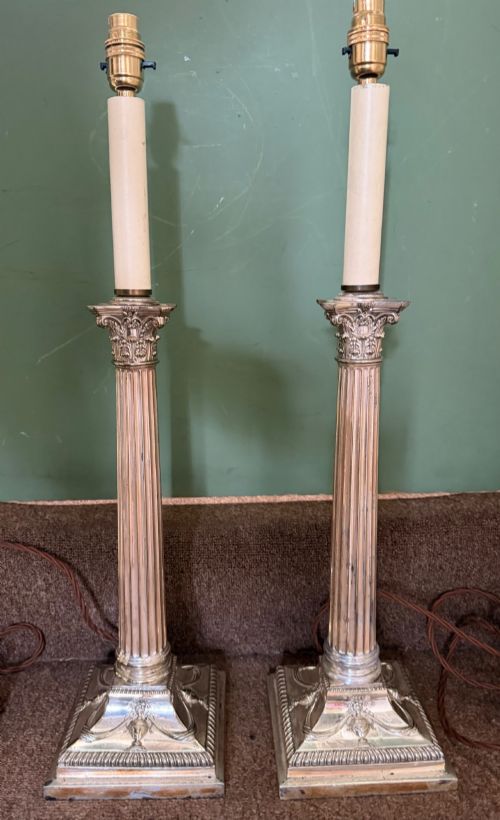
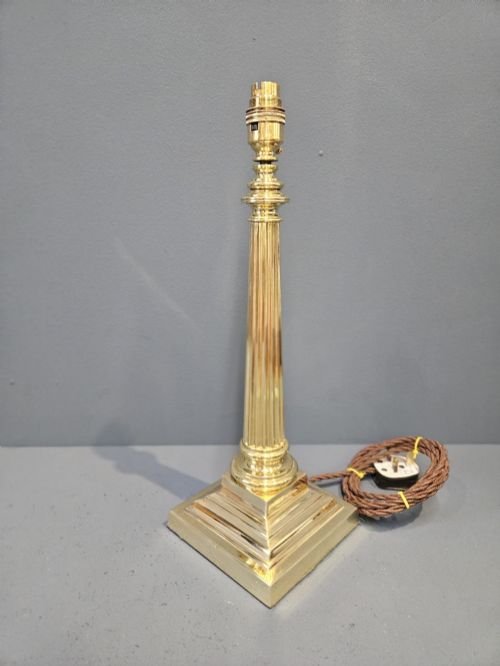
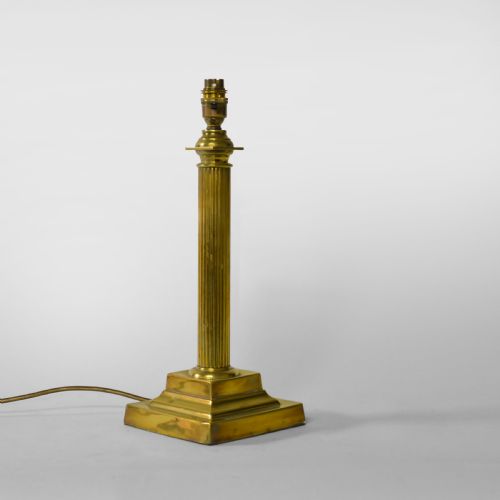
Alongside the larger serving tables, buyers meet smaller console tables, side cabinets and column lamps in brass, bronze and marble. The nineteenth-century examples dominate, running from Georgian proportions through to Edwardian and later interpretations.
How they were made
Cabinetmakers worked primarily in mahogany and satinwood, applying hand-carved details, timber veneers and contrasting string inlay to surfaces. Metalwork components utilise cast brass and gilt bronze, occasionally finished with ormolu mounts.
Secondary elements incorporate marble tops, glass shades and fabric components, particularly on the table lamps and urn adaptations. Structural joinery relies on traditional framing methods suited to heavy sideboards and console tables.
Classical Sideboard Table Retail Price Guide 2026
Typical asking prices for classical sideboard table among the pieces listed under this phrase on Sellingantiques today, from the lower quarter to the upper quarter. They describe what is for sale here now, not the wider market.
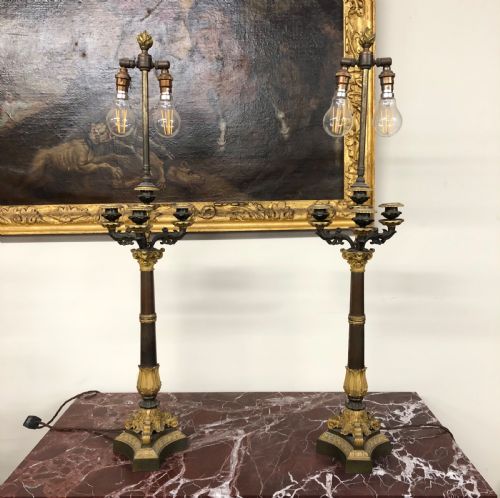
Electrified nineteenth-century bronze candelabra prove that historical lighting adapts happily to modern electricity.
What varies in quality
Quality rests in the crispness of the hand-carving on timber mouldings and the precision of the brass or bronze castings on lamps and gallery rails. Figured mahogany and well-chosen satinwood veneers show depth and careful grain matching across larger surfaces.
Attribution and the fidelity of the neoclassical styling also separate standard production from exhibition pieces. Heavier gauge metals and integrated marble elements indicate superior workshop execution.
Mack Williams And Gibton·Pietro Ferrario·Gillows
The Classical Sideboard Table Glossary
- Neoclassical
- A style drawing on classical Greek and Roman architecture, marked by clean lines and symmetrical proportions. It appears frequently in nineteenth-century furniture and lighting design.
- Satinwood
- A pale, lustrous timber native to India and Ceylon, utilised for fine veneers and stringing on eighteenth and nineteenth-century case pieces.
- Ormolu
- Gilded bronze used for decorative mounts and accents on furniture and lamps. The technique involves applying a mercury and gold amalgam to cast bronze.
- Column lamp
- A table lamp fashioned from a classical column, such as a Corinthian or ionic order, executed in brass or bronze.
- Console table
- A wall-mounted or freestanding table designed to stand against a vertical surface, frequently featuring a marble top and neoclassical supports.
Classical Sideboard Table: Frequently Asked Questions
What is a classical sideboard table?
A classical sideboard table is a heavy timber serving piece or console designed for dining rooms and halls, influenced by architectural styles from the Georgian and Regency periods.
These pieces often feature figured mahogany, satinwood veneers, and brass or bronze mounts that reflect neoclassical design principles.
How do I identify a Regency serving table?
Regency serving tables typically display clean architectural lines, dark mahogany timbers, and classical brass galleries or inlay work.
They often show restrained classical carving and proportions intended to complement formal dining spaces.
Where should I place a bronze column lamp?
Bronze column lamps suit side tables, desks, and sideboards where their vertical height adds balanced illumination and classical presence.
They pair well with timber furniture of similar nineteenth-century origin.
How do I care for mahogany sideboards?
Mahogay sideboards require gentle dusting with a dry cloth and occasional application of appropriate furniture wax to nourish the timber.
Keep them away from direct heat sources and strong sunlight to protect the polish and veneer.