




Classical Shelf Clock
A classical shelf clock sits with weight on timber furniture, bringing architectural presence and measured time into a room through stone, bronze, and glass.
Classical Shelf Clock
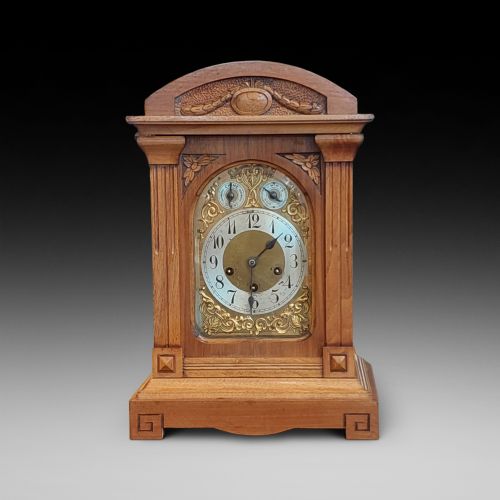
A classical shelf clock brings together solid mineral housings and precision mechanics designed to sit firmly on furniture rather than hang upon a wall. When exploring a classical shelf clock on this page, the visitor encounters primarily nineteenth-century examples spanning the Regency, Victorian, and late nineteenth-century periods.
The prevailing forms take shape as substantial mantel clocks, often rendered in architectural designs that draw on French Empire, Neoclassical, and Victorian classical revival styles. These objects originate predominantly from British and French makers, combining sturdy stone cases with visible metal ornamentation and enamel dials.
Materials and Construction
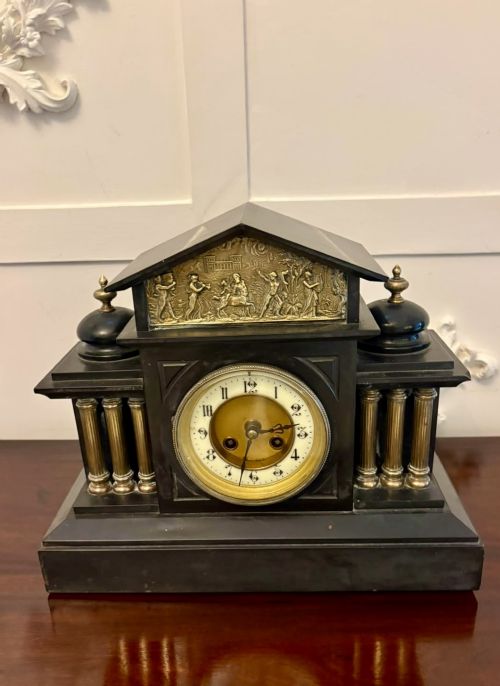
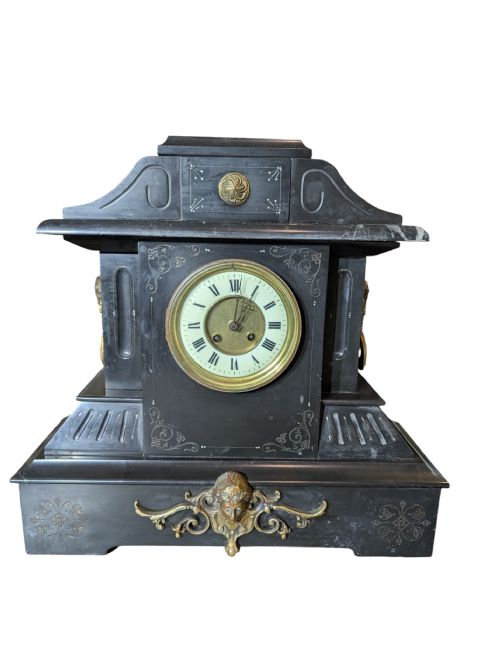
Makers built these heavy timepieces around durable mineral bodies, utilising black marble, rouge marble, sienna marble, onyx, slate, and faux marble variants. These substantial stone housings provided the stability necessary to support complex eight-day striking movements and fusee mechanisms.
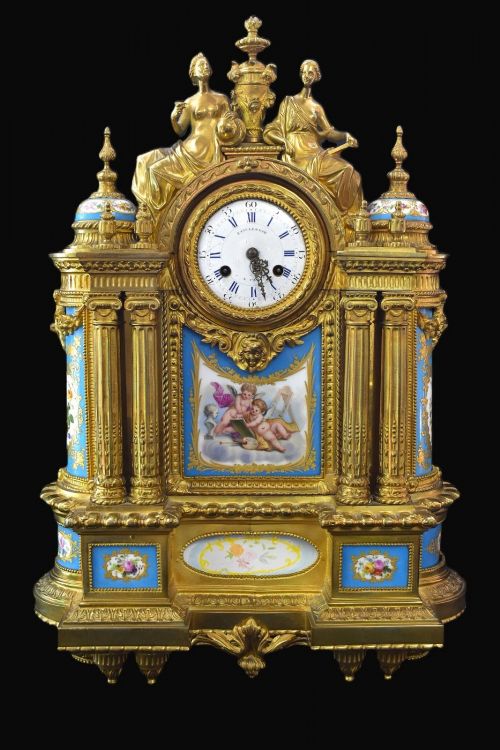
Surface enrichment relied heavily on cast metals, featuring ormolu, gilt bronze, patinated bronze, and gilt brass mounts applied to the stone structures. Dials incorporate white enamel paired with protective glass bezels, while selected pieces integrate decorative porcelain panels into the architectural composition.
Classical Shelf Clock Retail Price Guide 2026
Typical asking prices for classical shelf clock among the pieces listed under this phrase on Sellingantiques today, from the lower quarter to the upper quarter. They describe what is for sale here now, not the wider market.
William Shakespeare makes a bronze appearance alongside onyx, ensuring your shelf clock watches over you with literary authority.
Judging Quality and Execution
The upper tier of these timepieces is distinguished by the crispness of the bronze casting and the precision of the stone cutting, where architectural mouldings meet with absolute exactness. Maker attribution, such as works bearing the stamps of established French foundries or Paris clockmakers, elevates the standing of an individual piece.
Lower tiers exhibit simpler cast fittings and generic stone bodies with less refined surface polishing. The integration of specialised movements, including fusee mechanisms or detailed figural statuary depicting historical figures and symbolic motifs, separates standard utility pieces from masterwork examples.
Etienne Lenoir·Philippes Paris·Japy Freres·Baby and Jannings
The Classical Shelf Clock Glossary
- Mantel clock
- A portable clock designed to stand on a fireplace mantel or shelf. These pieces rely on flat bases for stability and often feature decorative architectural or figural cases.
- Ormolu
- Gilt bronze produced by applying a finely ground high-carat goldmercury amalgam to a bronze base and heating it. This technique creates a durable golden surface finish characteristic of fine nineteenth-century French metalwork.
- Fusee
- A conical pulley used in clock movements to maintain equal driving force as the mainspring unwinds. This mechanism improves timekeeping accuracy across the duration of the spring's power reserve.
- Enamel dial
- A clock face formed by fusing powdered glass to a metal substrate at high temperatures. The resulting glossy white surface displays painted numerals with enduring resistance to fading.
- Neoclassical
- An artistic style drawing inspiration from the classical art and architecture of ancient Greece and Rome. Objects in this manner emphasise symmetry, proportion, and classical motifs such as columns and friezes.
Classical Shelf Clock: Frequently Asked Questions
Where should I place a classical shelf clock?
These clocks require a level, stable surface capable of supporting considerable weight, particularly for marble and slate models.
Position them away from direct heat sources and damp environments to protect the internal metal movements and enamel dials.
How do eight day movements work?
An eight day movement requires winding approximately once a week using a matching key to tension the internal springs.
This mechanism drives both the timekeeping train and the striking train that sounds the hours and half-hours.
What distinguishes French classical clocks?
French examples from the nineteenth century frequently employ rich materials like ormolu, rouge marble, and porcelain panels alongside classical figural bronzes.
They often bear the stamps of prominent Paris workshops and feature sophisticated casting work.
How do I identify a fusee movement?
A fusee movement incorporates a distinctive conical pulley connected to the mainspring by a fine chain or cord.
This sophisticated mechanism appears more frequently in higher-grade Regency and nineteenth-century pieces designed for superior accuracy.