



Classical Settee
A classical settee brings a structured elegance to a room, offering the clean lines of Regency or nineteenth-century design.
Classical Settee
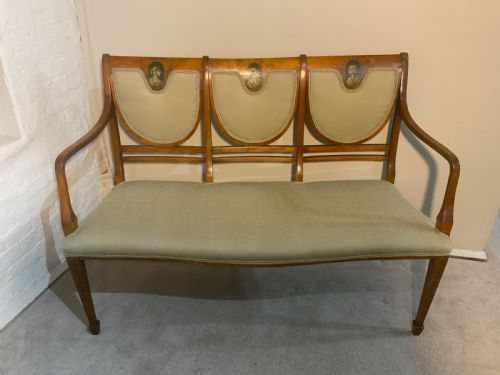
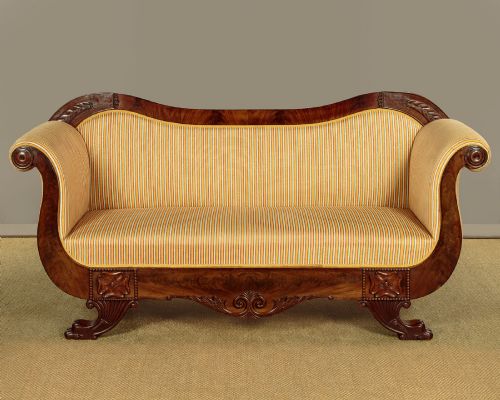
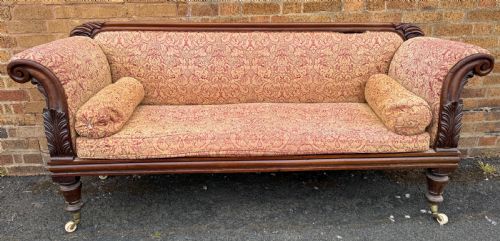
A classical settee provides seating rooted in Regency, William IV, and nineteenth-century traditions, often appearing as a scroll-end sofa or a chair back settee. These pieces range from grand mahogany frames to painted satinwood designs suited to country house or Edwardian interiors.
Buyers will most frequently encounter nineteenth-century interpretations on this page, particularly Regency scroll-end models and later Edwardian or painted satinwood variations. Forms vary from double scroll-ended sofas and chaise longues to three-seater styles like the Knowle sofa.
Materials and Construction
Cabinetmakers shaped these frames primarily from solid mahogany, satinwood, and simulated rosewood, often applying paint, brass details, or intricate inlay for decorative effect. Carved elements define the structural profile, particularly on scroll arms and framed backs.
Upholstery forms an essential part of the construction, utilising traditional fabrics, hessian, and floral materials alongside caning on lighter satinwood frames. These techniques balance rigid timber support with cushioned comfort.
Classical Settee Retail Price Guide 2026
Typical asking prices for classical settee among the pieces listed under this phrase on Sellingantiques today, from the lower quarter to the upper quarter. They describe what is for sale here now, not the wider market.
Several settees hide their serious architectural presence behind cheerful floral upholstery and playful painted satinwood.
Assessing Quality
Quality rests in the crispness of the carved woodwork and the deliberate selection of timber figure, such as rich mahogany or figured satinwood. Superior examples display balanced proportions and refined scrolling that integrate smoothly into the overall frame.
The sophistication of decorative additions, including painted motifs and fine inlay work, distinguishes finer pieces from simpler domestic seating. Construction integrity within the frame and arms dictates the enduring stability of the settee.
The Classical Settee Glossary
- Regency
- A British design period spanning the early nineteenth century, characterised by classical revival motifs and architectural symmetry.
- Scroll end
- A sofa arm or terminal curved outward in a continuous scroll shape, typical of nineteenth-century seating.
- Satinwood
- A pale, hard timber with a natural sheen, frequently used for veneering and decorative painted furniture.
- Biedermeier
- A Central European style from the nineteenth century focusing on utilitarian comfort and clean, restrained neoclassical lines.
- Caning
- Woven rattan material used to create light, open panels on the backs or seats of chairs and settees.
Classical Settee: Frequently Asked Questions
How do I date a classical settee?
Dating relies on examining the timber, construction methods, and stylistic markers such as Regency carving or Edwardian inlay work.
Comparing the primary wood, such as mahogany or satinwood, alongside the upholstery substrate helps narrow the period of origin.
Where should I place a settee?
A classical settee suits drawing rooms, large hallways, or living spaces where its architectural profile can be appreciated from multiple angles.
Placing the piece away from direct heat sources helps preserve vulnerable timber and traditional upholstery materials.
What is the difference between a sofa and a settee?
Historically, a settee often denoted a lighter wooden seat with an upholstered back, whereas a sofa implied a fully upholstered lounging form.
Over time these definitions overlapped, and nineteenth-century makers frequently used both terms interchangeably for multi-seater furniture.