



Classical Revival Lamp Base
These classical revival lamp base examples bring monumental architecture into domestic rooms through cast columns and mythological figures.
Classical Revival Lamp Base
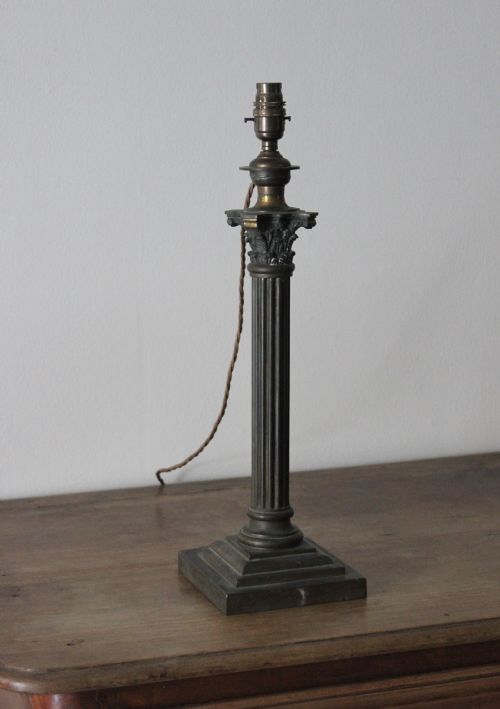
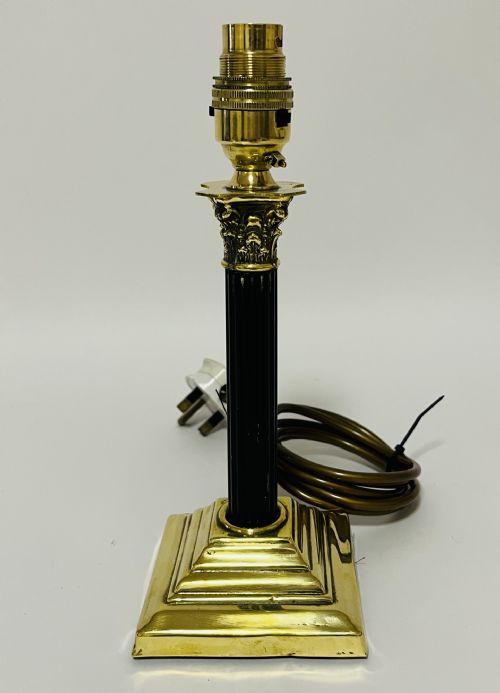
A classical revival lamp base takes architectural forms from antiquity and adapts them for domestic illumination, most commonly seen in table lamps shaped as Corinthian columns. These pieces draw directly from Victorian, Edwardian, and nineteenth-century design vocabulary, translating monumental stone orders into portable metal and ceramic objects.
The dominant subtype on this page is the column lamp, frequently rendered in silver plate or polished brass with stepped plinths and lion's paw feet. Alongside these architectural standards, French examples introduce figurative elements and mixed media such as rock crystal, marble, and gilt metal.
Materials and construction methods
Makers utilised cast brass, bronze, and ormolu to build sturdy structural cores, often finishing the surfaces with heavy silver plating or gilding to emulate solid precious metals. Column shafts and capitals required precise lathe-turning and detailed mould work to replicate ancient Greek and Roman architectural orders accurately.
Mixed media pieces incorporate natural minerals like rock crystal, onyx, and marble for the central column or base, mounted with metal collars and threaded internal rods. Porcelain elements, sometimes associated with specific nineteenth-century potteries, added hand-painted classical decoration to the ceramic bodies.
Classical Revival Lamp Base Retail Price Guide 2026
Typical asking prices for classical revival lamp base among the pieces listed under this phrase on Sellingantiques today, from the lower quarter to the upper quarter. They describe what is for sale here now, not the wider market.
Current listings feature silver plate, brass, ormolu, bronze, rock crystal, onyx, and marble across Victorian and Edwardian periods.
Judging quality and execution
Quality rests in the crispness of the casting detail across the acanthus leaves of a Corinthian capital or the relief work of a figurative base. Sharper definition and deeper chasing separate superior pieces from softer, more repetitive production runs.
The weight of the materials and the stability of the foundation dictate the calibre of the construction, with thicker gauge metals and genuine stone bases providing better balance. Finer examples display meticulous assembly where separate components meet flush without visible gaps.
Harrison Brothers & Howson·Samuel Alcock
The Classical Revival Lamp Base Glossary
- Corinthian column
- An architectural order featuring an ornate capital decorated with rows of carved acanthus leaves, frequently utilised for the shaft of a classical revival lamp base.
- Ormolu
- Finely ground high-carat gold-mercury amalgam applied to a bronze base, creating a rich golden surface finish seen on nineteenth-century French lighting.
- Silver plate
- A thin layer of pure silver bonded to a base metal core such as brass or copper, providing the appearance of solid silver.
- Plinth
- The heavy rectangular or stepped base block that supports the column shaft and provides stability to the table lamp.
Classical Revival Lamp Base: Frequently Asked Questions
What periods do these lamps come from?
The pieces span the Victorian and Edwardian eras, stretching from the late nineteenth century into the early decades of the twentieth century.
Design influences range from strict Greek Revival adaptations to more ornate French Beaux-Arts and Neoclassical styles.
How were these lamp bases originally used?
They served as formal illumination on side tables, desks, and mantlepieces in nineteenth-century drawing rooms and parlours.
Their substantial weight and classical motifs demonstrated the owner's cultural interests and financial standing.
How do I clean a silver plated base?
Silver plated surfaces require gentle cleaning with a soft cloth and a non-abrasive metal polish formulated specifically for plated items.
Harsh scrubbing or chemical dips can strip the thin silver layer entirely from the underlying brass or copper core.
Can modern bulbs fit these antique lamps?
Most of these bases have undergone rewiring over their lifespan to accommodate standard modern electrical fittings and plug types.
Internal threaded rods and conduits allow electricians to adapt the vintage mounts safely for contemporary domestic use.