



Classical Plaster Intaglios
Classical plaster intaglios are Neoclassical framed collections of miniature medallions that bring the scholarly spirit of the nineteenth-century Grand Tour into a room.
Classical Plaster Intaglios
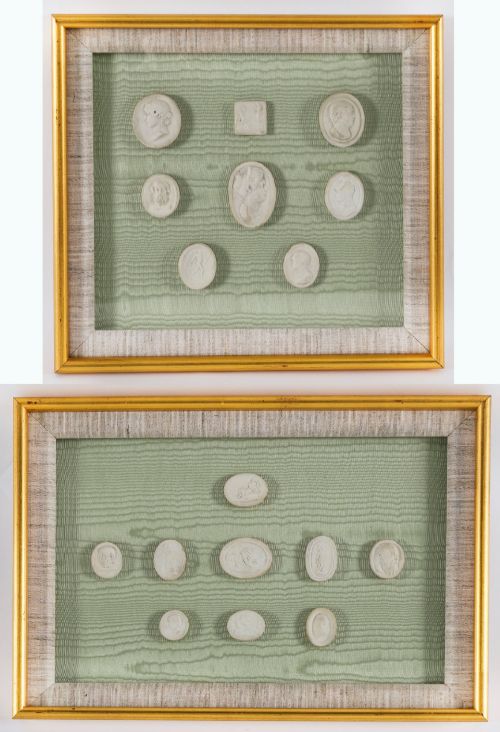
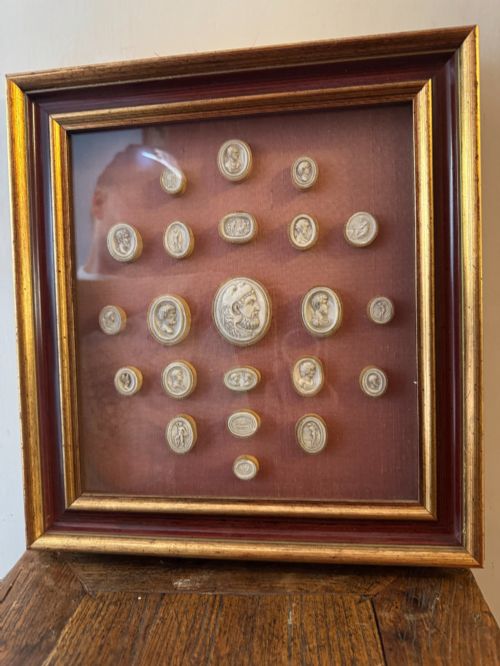
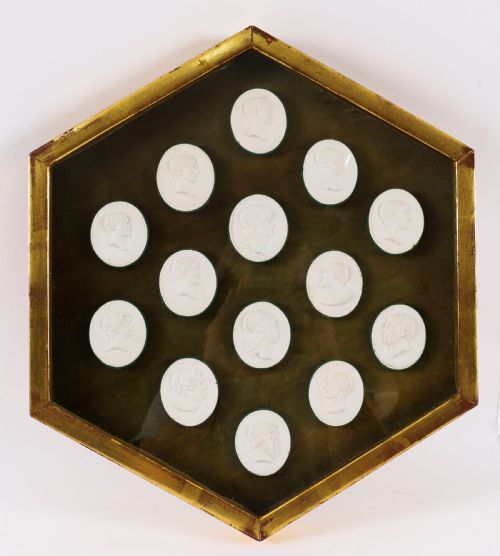
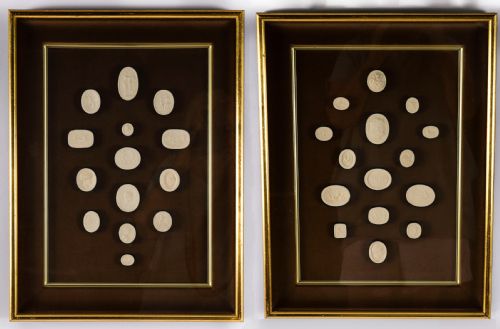
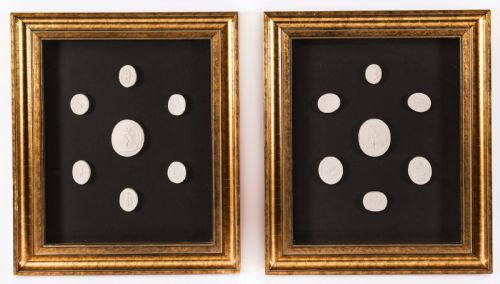
Classical plaster intaglios emerge as framed wall art and decorative panels that preserve the scale and subject matter of antique carved gems. These pieces typically take the form of collections arranged in pairs, sets, or large framed groupings under glass.
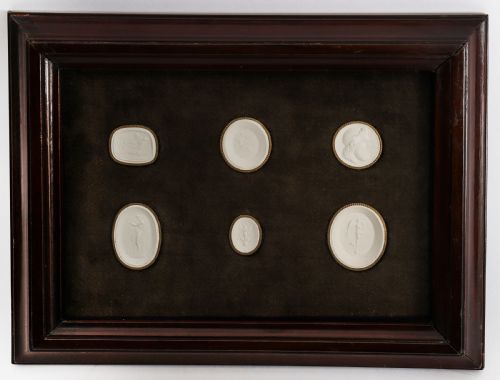
Most examples originate from the nineteenth century, reflecting the prevailing Neoclassical taste for classical antiquities among travellers on the Grand Tour. Buyers frequently encounter sets arranged against velvet or fabric backgrounds within giltwood or wood frames.
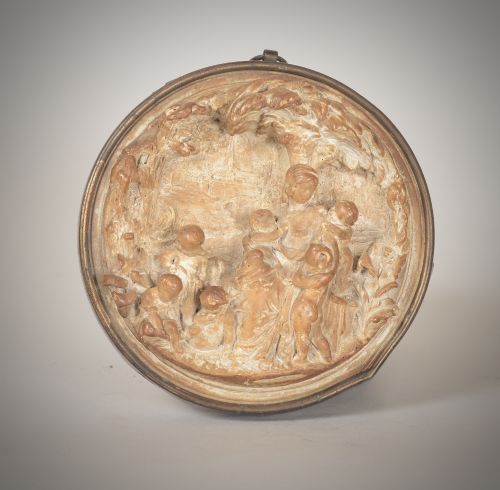
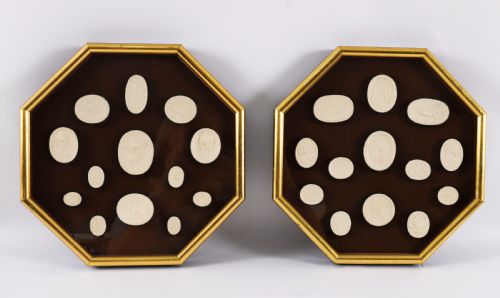
The format ranges from single octagonal panels to extensive boxed arrangements containing dozens of individual gypsum or plaster relief medallions. They serve primarily as wall plaques and framed artwork intended for scholarly display in studies and drawing rooms.
How classical plaster intaglios were made
The makers formed these reliefs using fine plaster and gypsum poured into moulds taken from ancient engraved gems and cameos. The resulting medallions were then mounted meticulously onto fabric or velvet backings to showcase the crispness of the relief work.
Presentation relied heavily on the framing traditions of the period, enclosing the plaster casts within carved giltwood, gold leaf, or simple wooden boxes. Glazing protected the delicate plaster surfaces from dust and handling while maintaining clear visibility of the miniature details.
Nineteenth-century travellers carried home tiny plaster Caesars in boxes so they could conquer the Roman Empire from a velvet-lined drawing room.
What varies in quality
The refinement of the individual plaster casts dictates the visual strength of the piece, with sharper impressions capturing the subtle musculature and lettering of the original carved gems. Artisans who maintained cleaner moulds produced crisper relief work that reads clearly from a distance.
Presentation and framing contribute significantly to the overall merit of an ensemble, particularly where velvet backgrounds and giltwood frames complement the tone of the plaster. Cohesion in the arrangement of the medallions within the frame reflects the care taken by the original maker or subsequent mounter.
Giovanni Liberotti·Pietro Bracci
The Classical Plaster Intaglios Glossary
- Intaglio
- A design carved into a material so that the impression sits below the surface, though the term is often applied loosely to the relief casts taken from them. In these collections, the plaster casts stand proud as cameos or sit as recessed impressions.
- Grand Tour
- A cultural journey through Europe undertaken by young upper-class scholars during the eighteenth and nineteenth centuries to study classical art. Travellers collected plaster casts and intaglios as portable evidence of their classical education.
- Gypsum
- A soft sulphate mineral used to create fine plaster mixes for casting miniature medallions. Its smooth texture allows for the capture of minute details from antique engraved gems.
- Giltwood
- Wood carved and treated with gold leaf or metallic paint to create a decorative gilded frame. It provides a rich border that contrasts with the stark white of the plaster intaglios.
Classical Plaster Intaglios: Frequently Asked Questions
What are classical plaster intaglios?
These pieces are nineteenth-century framed collections of miniature plaster and gypsum relief casts modelled after ancient carved gems. They were gathered by travellers as souvenirs of classical art during the Grand Tour.
Today they survive as decorative wall art, mounted on fabric or velvet and preserved within wood or giltwood frames.
How were intaglios displayed originally?
Travellers and collectors mounted their plaster casts inside custom wooden boxes, octagonal frames, or larger wall panels behind glass. This protected the delicate white plaster while allowing the owner to study the classical motifs at leisure.
The arrangements often grouped dozens of medallions systematically, reflecting the scholarly interests of the period.
How do I care for framed intaglios?
Keep the framed pieces away from direct sunlight and damp environments to protect the antique wood frames and fabric backgrounds. The plaster casts beneath the glass require no cleaning beyond dusting the exterior frame.
Avoid opening the sealed frames, as the plaster medallions are fragile and easily marked by direct contact.
How do I date a collection?
Dating relies on the style of the framing, the materials used in the backing such as velvet or antique fabric, and the characteristics of the paper labels or mounting techniques. Most examples date from the nineteenth century during the height of the Grand Tour.
Signed works or specific maker attributions within the frame can also narrow the period of production.