


Classical Nude Wall Art
Classical nude wall art brings figurative tradition into a room through drawn and painted studies, prints and carved relief.
Classical Nude Wall Art
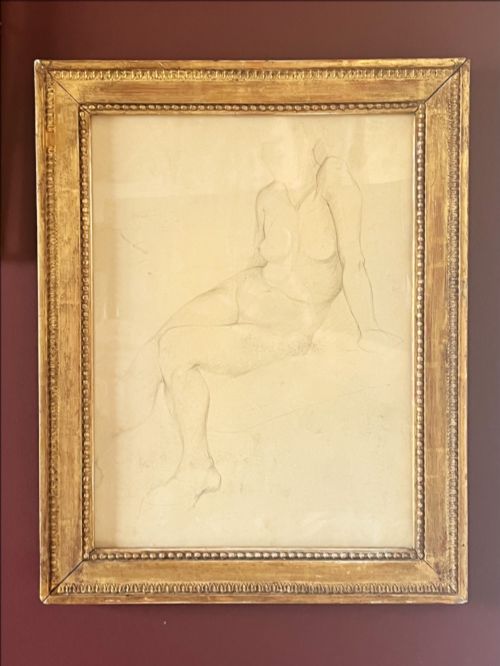
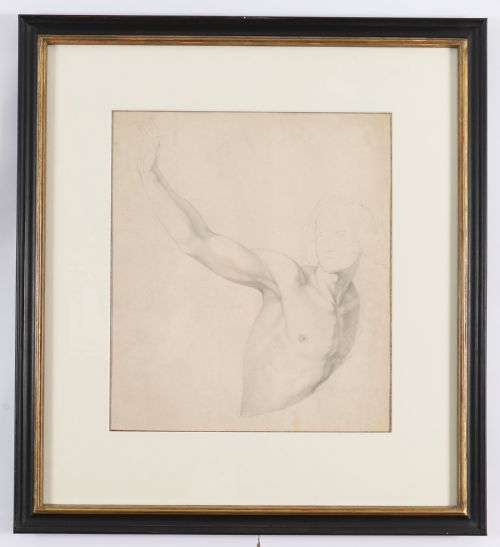
Classical nude wall art gathers figurative works spanning the eighteenth, nineteenth and twentieth centuries, including academic studies, prints and oil paintings. Buyers seeking classical nude wall art encounter original life drawings, period prints and framed engravings rooted in traditional training methods.
The selections range from early nineteenth century Grand Tour engravings and academic graphite drawings to Art Deco collotypes and mid-twentieth century lithographs. Most examples appear framed in wood or gilt frames, preserving works executed on paper, canvas and panel.
Subjects include mythological figures, life studies of male and female forms, and narrative scenes after earlier masters. These pieces reflect academic realism, neoclassical principles and later stylistic shifts such as Art Deco.
What varies in quality
Draftsmanship defines the upper tier of these works, where anatomical precision, sureness of line and tonal depth reveal the hand of a trained academic artist. Lesser examples show stiff proportions or hesitant hatching that lacks observational weight.
The quality of the medium and the preservation of the paper or canvas distinguish finer pieces from standard decorative prints. Original drawings in graphite or oil carry a directness of execution absent in mechanical reproductions.
Even a woodland bathers print cannot escape the watchful gaze of nearby deer.
James Clark·Fernand Jean Barbier·Arthur Hacker·Peter Paul Rubens·Pablo Picasso·Pierre Buillon·Henri Chatillon·James Basire
The Classical Nude Wall Art Glossary
- Academic Realism
- A style of painting and drawing produced under the influence of European academies of art, prioritising accurate anatomy and traditional subjects. It follows strict rules of composition derived from classical sculpture.
- Collotype
- A planographic printing process using gelatin, capable of producing continuous tone reproductions with photographic detail. It was widely utilised in the early twentieth century for fine art prints.
- Grand Tour
- A traditional trip of Europe undertaken by upper-class young European men of means in the eighteenth and nineteenth centuries. Travellers collected classical engravings and antiquities as tokens of education.
- Neoclassical
- A Western cultural movement drawing inspiration from the art and culture of classical antiquity. It emphasises austere lines, heroic subjects and balanced compositions.
- Relief
- A sculptural technique where the sculpted elements remain attached to a solid background of the same material. White marble was frequently utilised for classical relief panels.
Classical Nude Wall Art: Frequently Asked Questions
How do I date an academic drawing?
Dating relies on the paper watermark, the framing style, and the character of the graphite or ink work. Academic institutions trained artists in specific anatomical conventions that shifted between the eighteenth and twentieth centuries.
Comparative study of student submissions, such as Grand Tour engravings or academy life studies, often reveals the precise decade of execution through costume, technique and inscriptions.
Are these pieces original works or prints?
The selection includes both unique original works and period prints. Original art encompasses graphite life drawings, oil paintings on canvas, and hand-painted miniatures.
Prints comprise nineteenth-century engravings, collotypes and lithographs produced after classical sculptures or master paintings.
How should I frame and display paper works?
Works on paper require framing behind glass to protect the medium from dust, moisture and handling. Acid-free mounts prevent the paper from discolouring over time.
Positioning the artwork away from direct sunlight preserves the graphite, ink and watercolour pigments within the paper fibres.
What distinguishes academic art from later styles?
Academic art adheres strictly to classical proportions, mythological themes and rigorous life drawing traditions taught in official academies. Artists spent years mastering the human form through repetitive study of plaster casts and live models.
Later styles, such as Art Deco, introduce stylised contours, decorative woodland settings and modern printing techniques while retaining figurative subjects.