


Classical Mantle Clock
A classical mantle clock brings architectural presence and mechanical precision to a room, driven by heavy marble, ormolu, and bronze forms.
Classical Mantle Clock
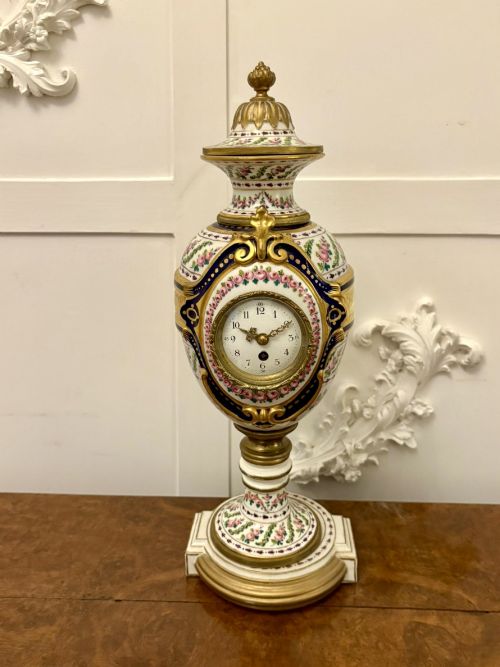
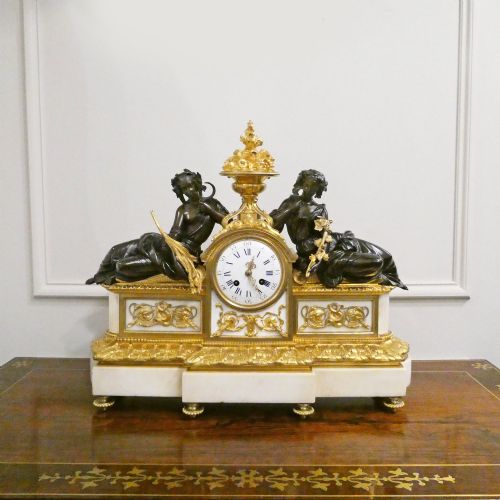
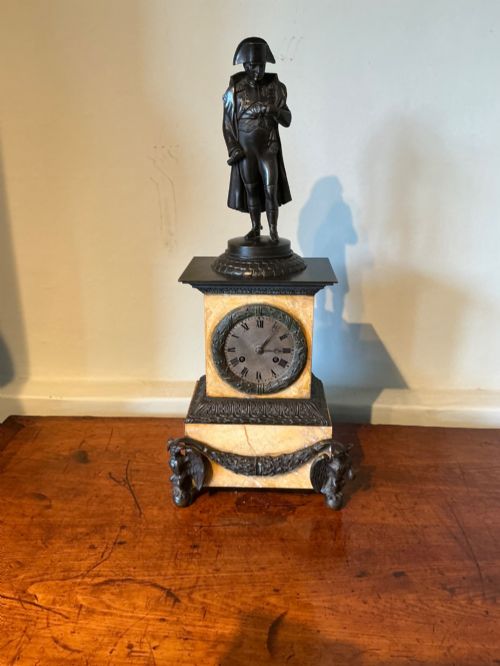
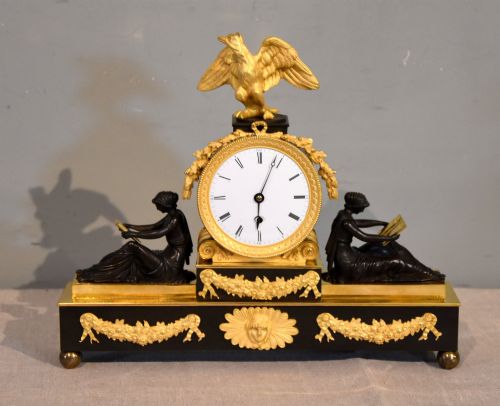
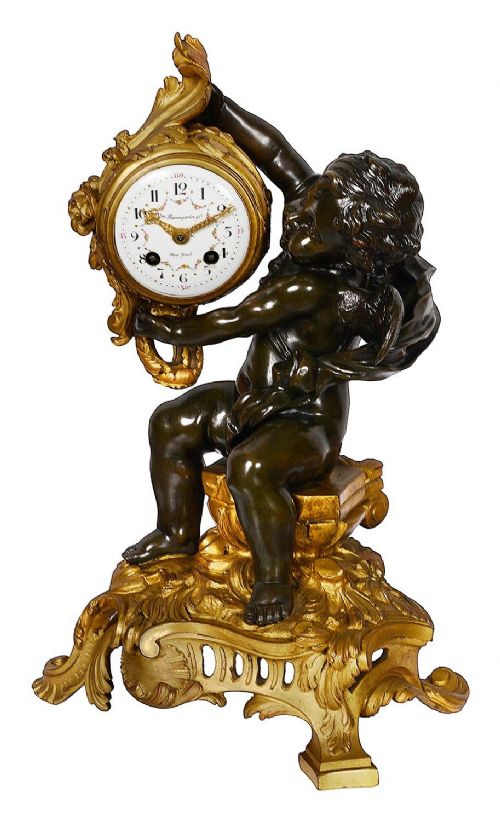
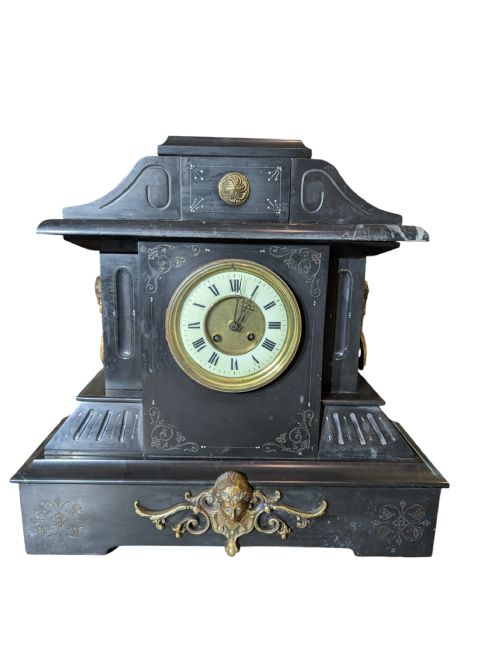
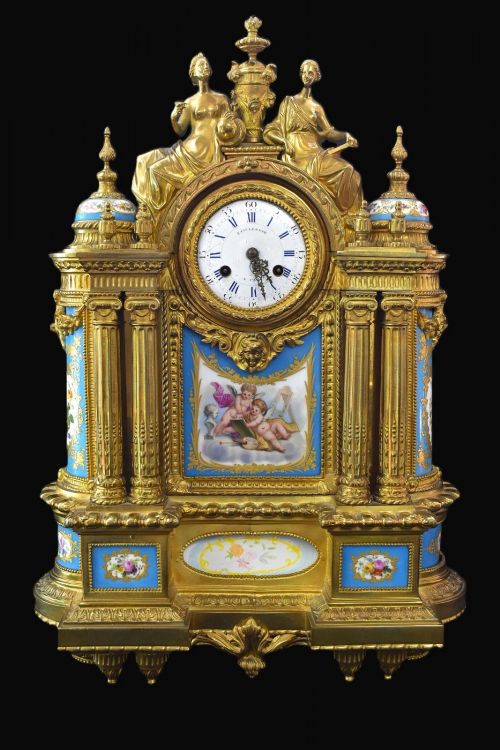
A classical mantle clock sits heavily on a shelf or sideboard, marking time through mechanical movements housed within architectural or sculptural cases. These objects range from severe neoclassical marble designs to ornate French gilt bronze and porcelain garniture sets.
Most pieces encountered here date from the nineteenth century, spanning the Victorian era, the Regency period, and the various French revivals including Louis XVI and Napoleon III. Buyers frequently meet substantial marble or slate bodies accompanied by matching side urns or candelabras.
The form developed from simple timepieces into complex eight-day striking mechanisms featuring enamel dials, bronze figures, and decorative inlays. They anchor a room with both functional timekeeping and sculptural weight.
Materials and Construction
Makers utilised dense natural stones such as black slate, white marble, sienna marble, and green onyx to build stable, heavy housing for the clock movements. These stone bodies were frequently polished to a high sheen, carved with classical motifs, or inlaid with contrasting coloured marbles.
Gilt bronze, ormolu, and patinated brass provide the decorative highlights and sculptural figures that adorn the stone and porcelain chassis. Foundry workers cast these metal elements separately before applying fire gilding or dark patination to create sharp contrast against the polished marble.
Several classical mantle clock models feature small bronze doves perched atop the case, serving as quiet romantic tokens cast directly into the gilt metal.
Assessing Design and Execution
Quality rests heavily on the crispness of the bronze casting and the depth of hand-chasing applied to the ormolu mounts after they leave the mould. Finer examples display sharp architectural details and animated figural bronzes, whereas lesser pieces rely on softer, shallower casts.
The integration of materials also defines the hierarchy, distinguishing clocks where bronze, marble, and porcelain are harmoniously proportioned from those assembled with generic components. Signed movements by known makers further elevate a piece above standard workshop production.
Vincenti·Baetens London·Etienne Lenoir·Philippes Paris·Baby and Jannings·Auguste Moreau
The Classical Mantle Clock Glossary
- Garniture
- A set consisting of a central clock flanked by matching decorative objects such as urns or candelabras. These balanced groupings were designed to be displayed together on a mantelpiece.
- Ormolu
- Finely chopped or ground high-karat gold mercury-gilded onto a bronze base. This technique produces a durable, warm metallic lustre characteristic of luxury nineteenth-century French pieces.
- Portico clock
- A clock featuring a distinct architectural case supported by four columns resembling a classical portico. The pendulum often swings visibly within the open central space.
- Striking movement
- A mechanical system containing a train of gears that sounds the hours and sometimes the halves on a bell or gong. Most better nineteenth-century examples run for eight days between windings.
- Enamel dial
- A clock face made by fusing powdered glass onto a copper plate at high temperatures. The resulting glossy white surface provides a crisp, permanent background for painted numerals.
Classical Mantle Clock: Frequently Asked Questions
How do eight day movements work?
An eight day movement uses a coiled spring or hanging weights to power the gear train continuously for roughly a week before requiring manual winding with a key. This mechanism drove both the timekeeping hands and the striking train.
Owners wind the clock through dedicated arbors on the dial face using a matched square-drive key. Care must be taken not to over-wind the mainspring.
Where should a heavy marble clock be placed?
These clocks require a very sturdy, level surface such as a solid wood sideboard, a slate mantelpiece, or a reinforced shelf. Their substantial stone and bronze weight demands stable support.
Placing the clock on a level plane ensures the pendulum swings evenly and the escapement ticks with a regular rhythm without stalling.
How are clock garniture sets displayed?
A garniture set is arranged symmetrically, placing the large clock centrepiece in the middle with the matching urns or side pieces positioned evenly on either side. This creates a balanced architectural focal point for a room.
Traditionally, the set decorates the mantel above a fireplace or sits atop a large credenza where the matching pieces can frame the central dial.
What is the difference between ormolu and brass?
Ormolu is a costly fire-gilded bronze finish where gold amalgam is bonded to the metal surface through intense heat, creating a deep, warm yellow hue. Brass is a bright copper and zinc alloy that shows a simpler golden metallic colour without the heavy gold layer.
Antique ormolu retains a softer, richer lustre over centuries, whereas plain brass tends to brighten aggressively when polished.