



Classical Lion Figures
Classical lion figures bring sculptural majesty and neoclassical discipline to a room, offering both quiet dignity and fierce architectural presence.
Classical Lion Figures
Classical lion figures encompass sculptural representations drawing on ancient, neoclassical, and grand tour traditions. When you search for classical lion figures, you encounter forms ranging from heavy doorstops to substantial garden statues and desk-sized cabinet bronzes.
The pieces on this page span the nineteenth and twentieth centuries, utilising periods from the Georgian era through to the nineteen-fifties. Common manifestations include grand tour Medici lions, winged guardians, and mythological scenes such as Una and the lion.
Stylistically, these items cross regency, Victorian, Edwardian, and art deco interpretations. Whether rendered as cast iron porters or carved solid marble sculptures, they serve as commanding focal points in domestic interiors and gardens.
How they were made
Materials span durable stones and metals, including reconstituted stone, cast stone, carved marble, bronze, cast iron, pewter, and carved wood. Stone items are typically cast or hand-carved to withstand exterior placement or provide substantial interior weight.
Metal versions utilise casting techniques, from traditional bronze foundry work to iron and pewter casting. Many pieces feature surface treatments such as applied paint or natural patination developed over decades of exposure.
Classical Lion Figures Retail Price Guide 2026
Typical asking prices for classical lion figures among the pieces listed under this phrase on Sellingantiques today, from the lower quarter to the upper quarter. They describe what is for sale here now, not the wider market.
Several lions keep company with literary and mythological companions, guarding figures from Spenser's epic poetry to ancient Roman arenas.
What varies in quality
Quality rests primarily in the anatomical precision of the carving or casting, particularly in the rendering of musculature, manes, and facial expressions. Superior examples display anatomical realism and sharp detail, whereas lower tiers show softer, more generalised forms.
The choice of material and finish also dictates distinction, with solid carved marble or finely chased bronze representing greater artistic investment than mass-produced reconstituted stone or utilitarian cast iron doorstops.
Octave Galliard-Sansonetti
The Classical Lion Figures Glossary
- Medici lion
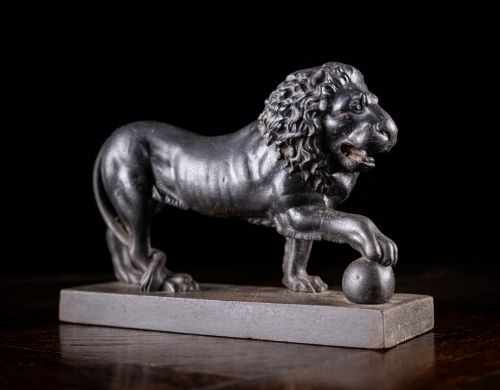
- A representation of the marble lion statues in Florence, historically replicated on the Grand Tour. These figures typically depict a male lion resting one paw upon a sphere.
- Grand tour
- A cultural journey undertaken by wealthy young Europeans in the eighteenth and nineteenth centuries to collect art and antiquities. Figures acquired during these travels often served as desk ornaments or cabinet pieces.
- Neoclassical
- A Western cultural movement drawing inspiration from the art and culture of classical antiquity. This style informs the restrained proportions and dignified postures seen in many nineteenth-century sculptures.
- Reconstituted stone
- A composite material made from crushed stone and a binder, cast in moulds to replicate natural carved stone. It provides durability for garden statuary and architectural ornaments.
- Door porter
- A heavy doorstop designed to keep doors open using its substantial weight. In metal or iron, these often took the form of heraldic or classical animals.
Classical Lion Figures: Frequently Asked Questions
Where should I place a heavy stone lion?
Stone lion figures, particularly reconstituted stone or cast stone pairs, are traditionally suited for placement on gate piers, garden paths, or terrace entrances. Their weight and weather-resistant materials allow them to withstand outdoor environments.
For interior placement, smaller stone or marble examples anchor heavier furniture arrangements or sit well upon sturdy pedestals and entry hall tables.
What is a Medici lion?
A Medici lion is a replica of the two marble sculptures of lions guarding the Villa Medici in Rome. One lion gazes straight ahead while the other rests its paw upon a spherical ball.
This specific motif became immensely popular during the nineteenth-century grand tour, inspiring numerous bronze, iron, and stone interpretations across Europe.
How do I care for bronze lion sculptures?
Bronze figures require minimal intervention, usually benefiting only from gentle dusting with a soft brush or dry cloth. Avoid using harsh chemical cleaners or abrasive polishes that might strip the historic patination.
Applying a very thin coat of microcrystalline wax periodically helps protect the metal surface from atmospheric moisture and handling oils.
Are these figures solid or hollow?
Construction varies entirely by the material and intended function of the piece. Doorstops and cabinet bronzes are cast solid to provide the necessary weight for their purpose.
Larger garden statues and architectural figures in stone or metal are often cast with hollow interiors to reduce overall weight while maintaining structural integrity.