




Classical Intaglio Cast
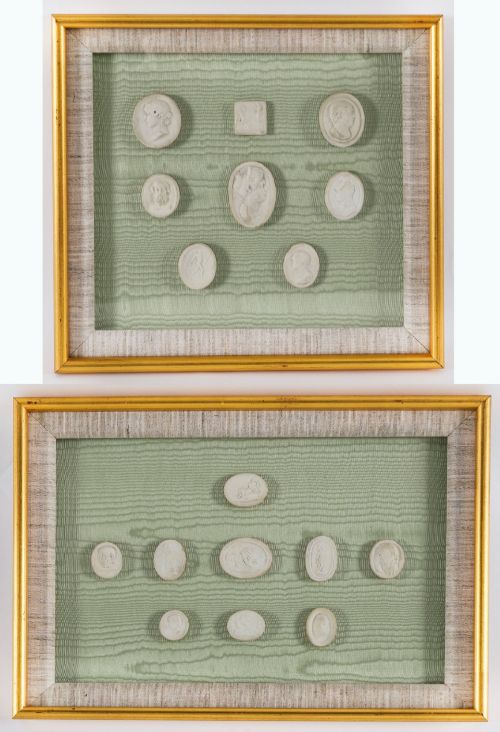
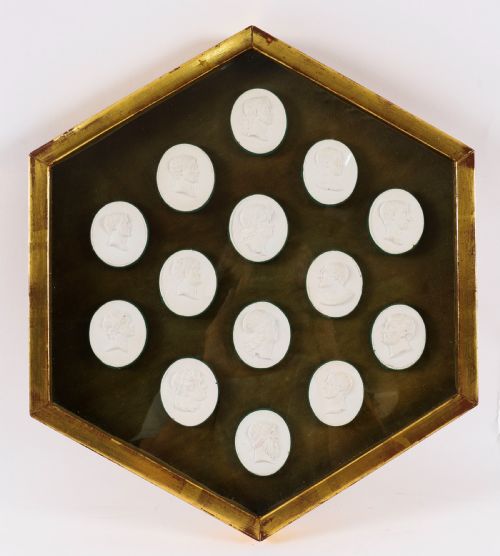
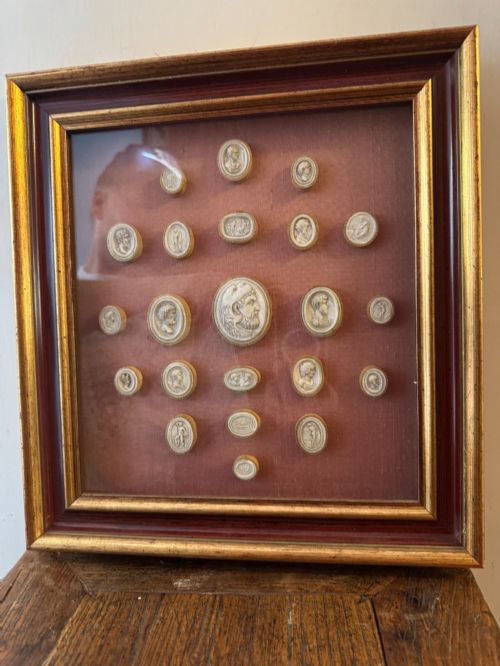
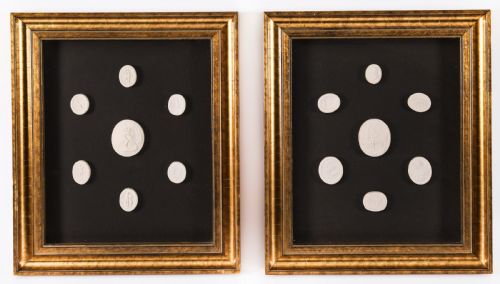
A classical intaglio cast captures the solemn grace of antiquity, offering collectors miniature relief portraits framed for wall display.
Classical Intaglio Cast
A classical intaglio cast brings home the refined taste of the Grand Tour, presenting miniature relief panels mounted for wall display. These decorative objects replicate ancient carved gems and medallions that travellers collected across Italy during the eighteenth and nineteenth centuries.
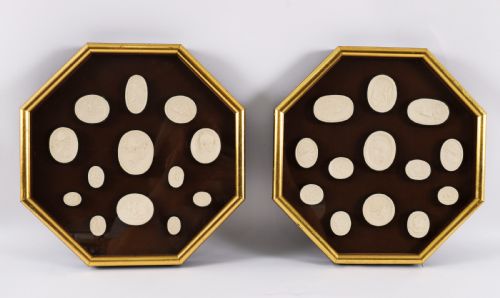
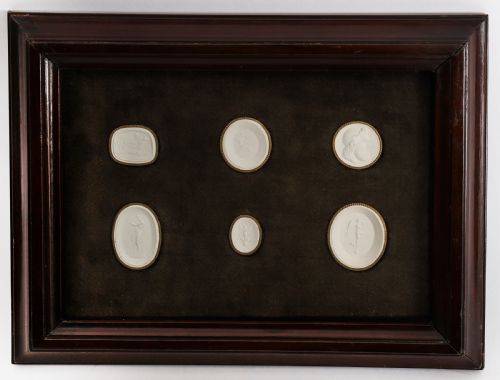
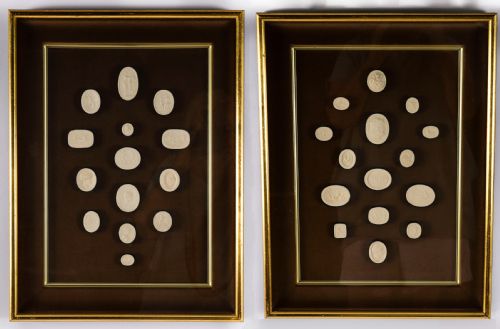
Most examples found here date from the nineteenth century or the Edwardian period, appearing as single framed wall plaques or grouped collections within shadow boxes. Makers arranged these miniature casts on velvet, fabric, or backing boards, then enclosed them within giltwood frames.
The aesthetic is strictly Neoclassical, reflecting a European fascination with classical mythology and archaeology. Buyers encounter octagonal frames, box frames, and large multi-piece panels designed to hang as striking wall art.
How they were made
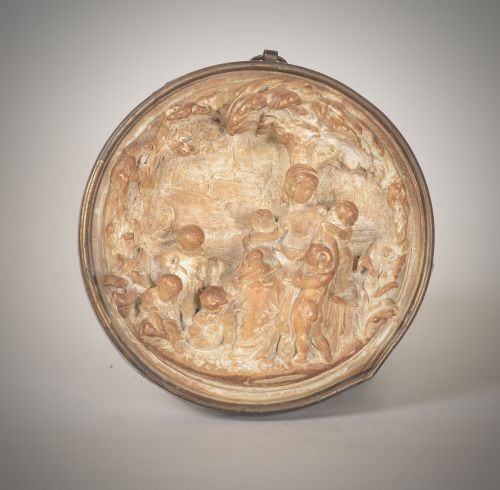
Plaster and gypsum formed the primary medium for these casts, allowing makers to capture minute details from ancient and Renaissance carved gems. Workers poured these fine materials into moulds to create crisp relief medallions that imitated stone or terracotta.
Makers set the completed plaster casts against backgrounds of velvet or fabric inside wooden enclosures. Giltwood, gold leaf, and glass protected the delicate medallions while adding a decorative border suitable for domestic display.
Classical Intaglio Cast Retail Price Guide 2026
Typical asking prices for classical intaglio cast among the pieces listed under this phrase on Sellingantiques today, from the lower quarter to the upper quarter. They describe what is for sale here now, not the wider market.
Listings feature works from the nineteenth century and the Edwardian period, utilising plaster, glass, velvet, and giltwood within Neoclassical wall art.
What varies in quality
The quality of the framing and mounting elevates certain sets above others. Elaborate giltwood frames, uniform groupings, and well-preserved velvet backings distinguish master studio output from simpler domestic arrangements.
Giovanni Liberotti·Pietro Bracci
The Classical Intaglio Cast Glossary
- Intaglio
- A design carved into a material so that the impression sits below the surface. In these collections, the casts are positive impressions taken from such carved stones.
- Grand Tour
- An extended journey through Europe undertaken by wealthy young men in the eighteenth and nineteenth centuries to study classical art. Travellers bought plaster casts and cameos as portable proof of their cultural education.
- Giltwood
- Wood that has been coated with gold leaf or gold paint. Frames utilising this finish provide a bright, reflective border for dark fabric backgrounds.
- Neoclassical
- A style spanning the eighteenth and nineteenth centuries that drew direct inspiration from the art and architecture of classical Greece and Rome. This aesthetic governs the subject matter of every relief panel shown here.
- Plaster cast
- A positive reproduction made by pouring liquid plaster into a mould. In this context, it replicates ancient gems for study and decoration.
Classical Intaglio Cast: Frequently Asked Questions
What is a classical intaglio cast?
A classical intaglio cast is a small plaster or glass reproduction of an ancient carved gem, usually mounted behind glass in a decorative frame. These pieces served as portable art collections for travellers returning from Italy.
Today, they function as sophisticated wall art that brings historical depth and academic charm to interior spaces.
How were these casts displayed originally?
Travellers and collectors mounted their plaster casts in custom wooden frames, often lining the backing boards with velvet or coloured fabric to make the white relief stand out. Workshops arranged them individually, in pairs, or in large symmetrical grids.
These framed groupings hung in libraries, studies, and drawing rooms as conversation pieces that signaled the owner's classical education.
How do I date a nineteenth-century cast?
Dating relies on examining the construction of the frame, the type of wood, and the materials used for the backing board. Nineteenth-century examples often feature giltwood frames with hand-carved details and period backing papers or fabrics.
Signatures or stamps on the reverse, such as those associated with studio makers like Giovanni Liberotti, also help establish a precise timeline.
How should I care for framed intaglios?
Keep framed plaster casts away from direct sunlight and damp environments to protect the delicate plaster and the fabric backings. Dust the giltwood frames gently with a dry, soft cloth without applying liquid cleaners.
Because the interior glass protects the fragile plaster reliefs from physical touch, minimal handling ensures the pieces remain well preserved.