


Classical Gilt Wall Lights
Classical gilt wall lights bring warmth and architectural rigour to an interior through gilded metal surfaces and formal symmetry.
Classical Gilt Wall Lights
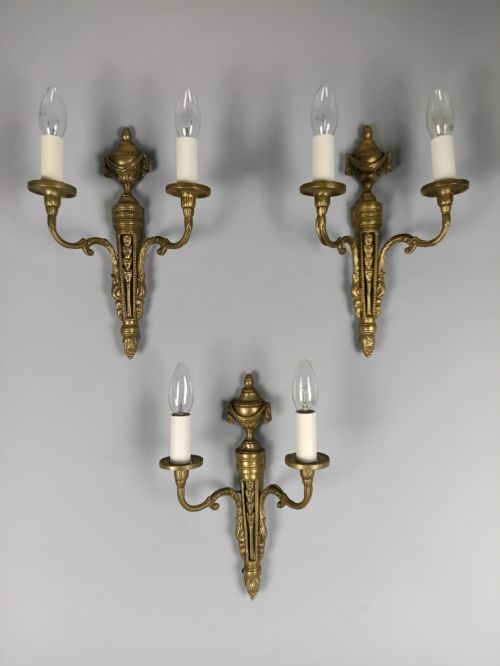
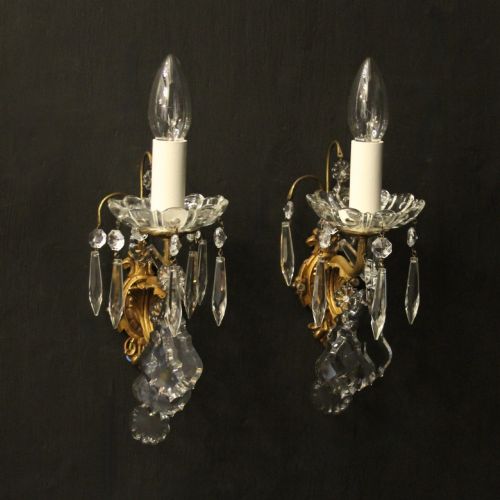
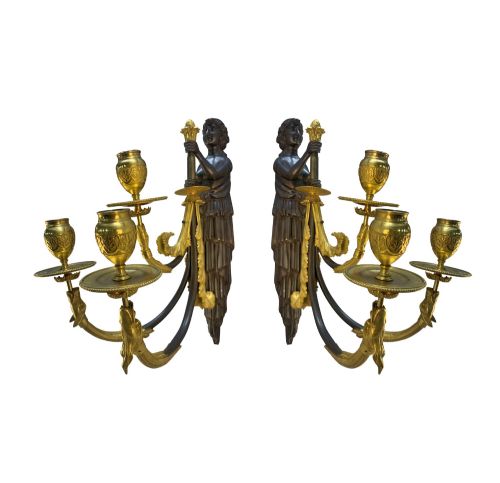
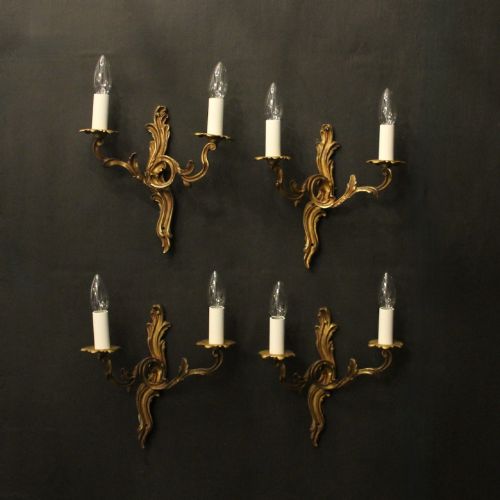
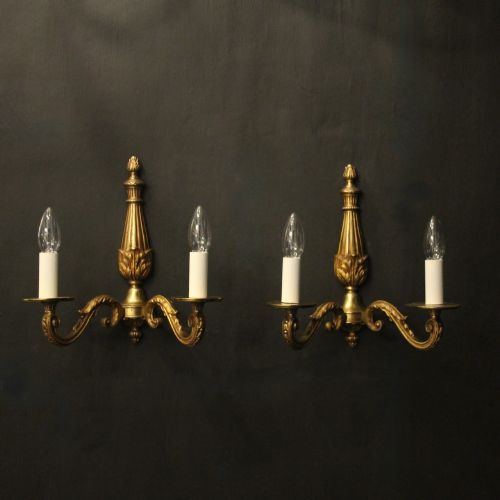
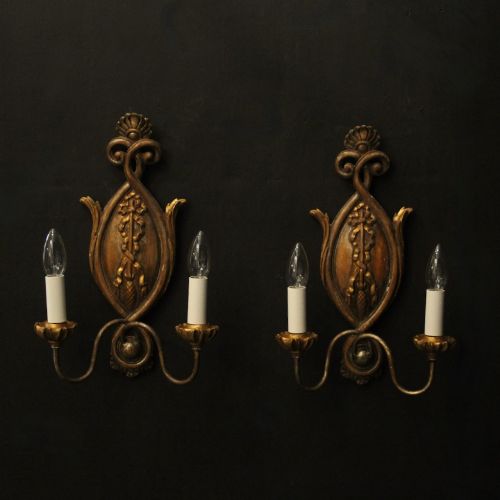
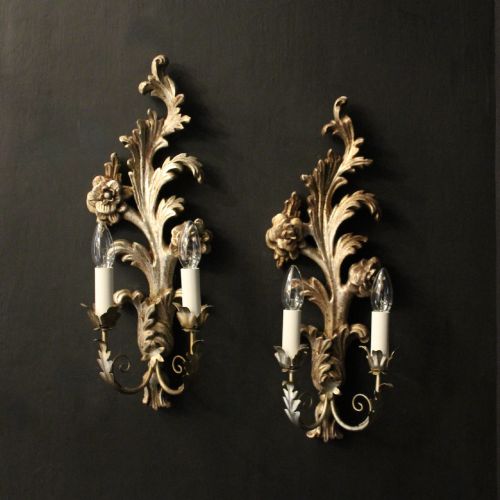
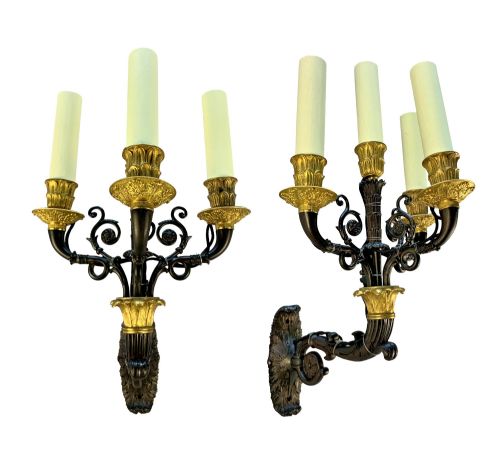
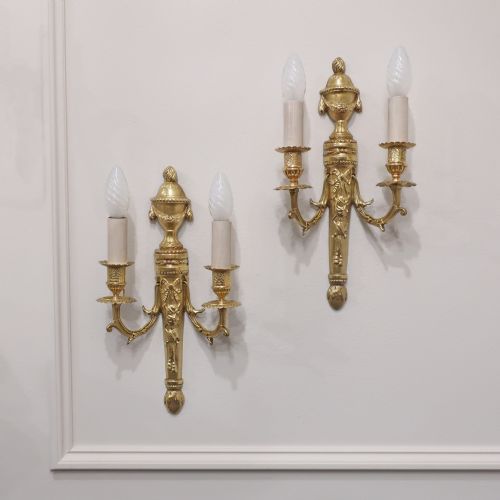
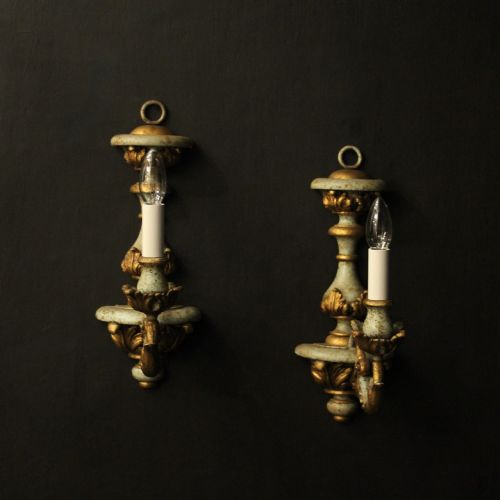
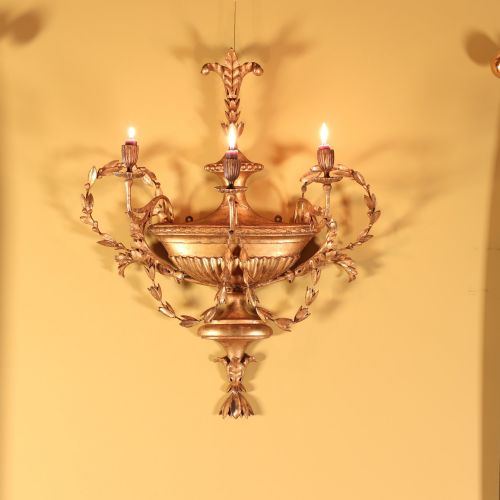
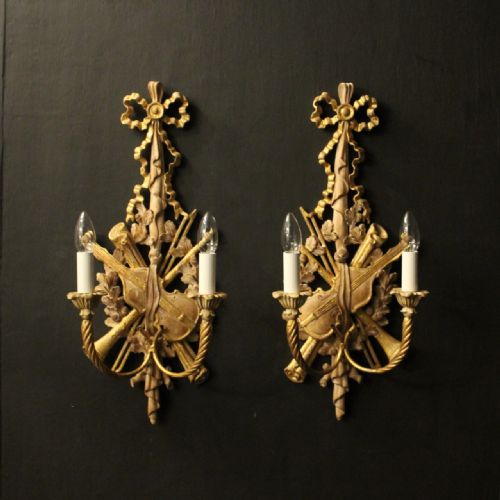
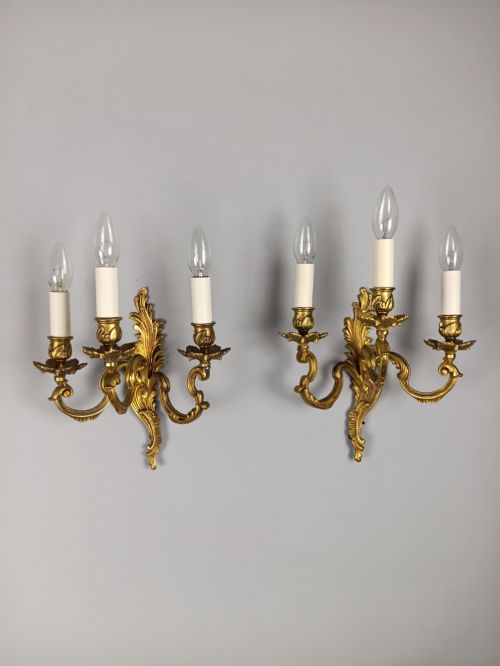
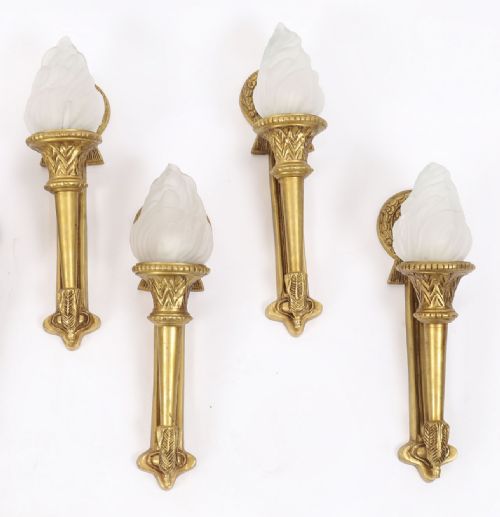
When searching for classical gilt wall lights, a buyer encounters wall sconces and brackets designed to illuminate interiors while adding decorative presence. The pieces available span French Neoclassical, Louis XVI style, and Florentine designs originating across the nineteenth and early twentieth centuries.
Sets of four or six sit alongside pairs, featuring twin or triple arms intended to flank mirrors, fireplaces, or doorways. Materials range from gilt bronze and ormolu to giltwood and brass, reflecting historical domestic lighting needs.
How they were made
Maker workshops employed cast bronze, brass, and ormolu, applying gold leaf or gilding to metal and carved wood bases. Many examples integrate glass elements or carved gesso details.
The construction relies on sturdy backplates supporting multiple candle arms, secured with structural fixings designed to mount directly onto interior walls.
Classical Gilt Wall Lights Retail Price Guide 2026
Typical asking prices for classical gilt wall lights among the pieces listed under this phrase on Sellingantiques today, from the lower quarter to the upper quarter. They describe what is for sale here now, not the wider market.
Several pairs feature ram's head masks staring steadfastly from the backplate, keeping watch over the parlour through the centuries.
What varies in quality
The definition of the casting and the depth of the hand-chased detail distinguish finer examples from standard production. Crispness in motifs such as ram's heads, urns, and acanthus leaves indicates superior craftsmanship.
The intactness and warmth of the original gilding or gold leaf surface determine the visual coherence of the fixture, whereas worn or poorly restored surfaces alter the piece's character.
Casier
The Classical Gilt Wall Lights Glossary
- Ormolu
- Gilded bronze, where a finely ground gold-mercury amalgam is applied to a bronze base and heated to leave a gold layer. This technique produces a characteristic metallic lustre found on nineteenth-century French sconces.
- Giltwood
- Timber carved and subsequently coated with gold leaf or powder over a preparation layer. It appears frequently in Florentine and George III wall lights.
- Sconce
- A wall-mounted lighting fixture designed to carry candles or electric bulbs. The term is often used interchangeably with wall lights in historical inventories.
- Neoclassical
- A style drawing inspiration from classical antiquity, characterised by symmetry, straight lines, and motifs like urns and swags. It dominates the design vocabulary of these wall lights.
Classical Gilt Wall Lights: Frequently Asked Questions
How do I wire antique wall lights for modern use?
Professional electricians adapt these fixtures by running modern internal wiring through the original backplates and arms without damaging the structure. Many pieces have already been updated for contemporary electrical standards while retaining their historical fittings.
Buyers should consult a specialist to ensure that the mounting brackets and weight distribution safely support the metal or wood frames on domestic walls.
Where should I place wall sconces in a room?
These lights sit effectively at eye level on either side of a fireplace, mirror, or large piece of furniture to create balanced ambient illumination. Placing them symmetrically enhances the architectural proportions of a formal room.
Consider the projection of the arms and the number of light branches when positioning them in narrower hallways or smaller spaces.
How do I clean gilded bronze and giltwood?
Dust surfaces gently with a soft, dry brush or microfibre cloth to prevent accumulation without disturbing the delicate gold leaf or ormolu. Avoid water, abrasive cloths, and chemical cleaning products entirely, as these strip the historical finish.
Professional conservation is recommended if deeper cleaning is required to address tarnishing or grime on antique metalwork.
How do I tell Louis XVI style from Rococo?
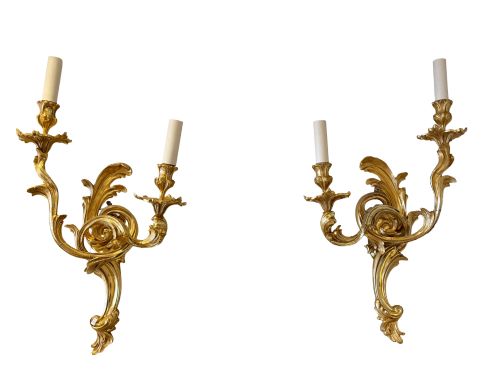
Louis XVI style wall lights rely on straight lines, symmetry, and classical motifs such as urns, fluting, and ribbons. Rococo designs feature asymmetrical curves, scrolling foliage, and exuberant naturalistic shell forms.
Examining the backplate and arm contours immediately reveals whether the maker followed geometric restraint or organic fluidity.