





Classical French Console
A classical french console brings architectural presence and refined design to a room, uniting timber and stone.
Classical French Console
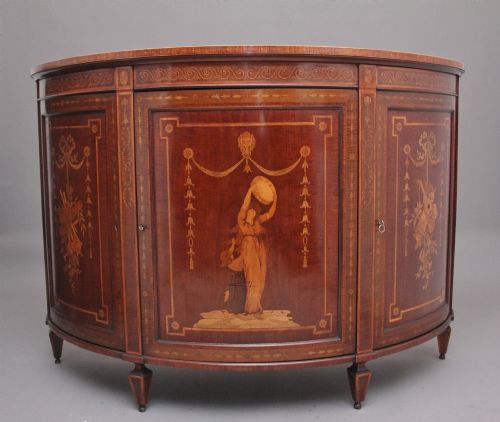
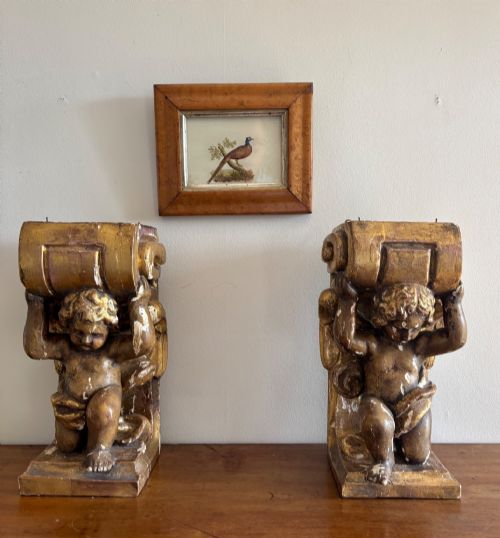
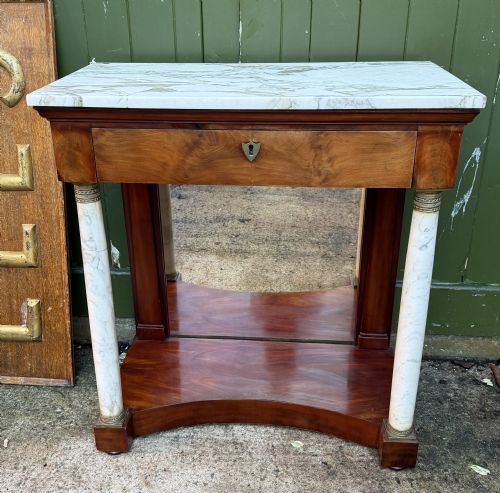
A classical french console is a table designed to sit flat against a wall, frequently paired with a mirror or topped with marble. The examples gathered under this heading span the 19th Century, taking forms such as console tables, side cabinets, wall brackets, centre tables, mirrors, and overmantel mirrors.
The most common iterations you will encounter here draw on French Empire, Louis XVI, Neo-classical, Baroque, and Neoclassical styles. They showcase the enduring appeal of traditional continental design through decorative woodwork and stone surfaces.
Makers and workshops utilised robust construction methods suited to formal interiors, producing furnishings that function as both practical surfaces and decorative focal points. These pieces reflect the aesthetic priorities of their respective periods, from the structured symmetry of the Empire style to the ornate carvings of the Baroque Revival.
Distinctions in quality
Quality rests in the crispness of the carved details and the depth of the gilding or timber finish. Pieces exhibiting sharply defined ornamentation on gesso and wood separate themselves from simpler executions.
The integration of materials dictates the standard of the object, particularly the selection and fitting of the marble top. Well-matched wood grains and secure joints beneath the surface indicate higher workshop standards.
Classical French Console Retail Price Guide 2026
Typical asking prices for classical french console among the pieces listed under this phrase on Sellingantiques today, from the lower quarter to the upper quarter. They describe what is for sale here now, not the wider market.
Keep an eye out for mythical rams and maiden heads staring out from the woodwork.
JACOB
The Classical French Console Glossary
- Console table
- A table designed to be fixed against a wall, often supported by front legs or brackets. They frequently feature marble tops and decorative aprons.
- Giltwood
- Wood that has been coated with gold leaf or a gold-coloured substance. This finish catches the light and adds richness to classical furniture.
- Marble top
- A slab of polished limestone fitted to the upper surface of a table or cabinet. It provides a hardwearing and decorative finish.
- Pier glass
- A tall mirror designed to fit the wall space between windows. These mirrors were often paired with console tables placed directly beneath them.
- Flame mahogany
- Mahogany timber cut to reveal a flamelike pattern in the grain. It was utilised for prominent panels on fine furniture.
Classical French Console: Frequently Asked Questions
What is a classical french console?
A classical french console is a wall-mounted or heavily wall-reliant table originating from or inspired by French design traditions. They are characterised by decorative woodwork, stone tops, and styles ranging from Empire to Baroque.
These pieces were built to anchor formal rooms, often positioned beneath large mirrors to create a balanced architectural feature within a nineteenth-century interior.
How were these consoles used historically?
Historically, these tables served as decorative surfaces in entrance halls, formal reception rooms, and parlours. They held decorative objects, lighting, or porcelain rather than heavy domestic items.
Piers and console tables were frequently placed between windows beneath tall mirrors to reflect natural light and enhance the sense of space in a room.
Where should I place a console table?
A console table suits an entrance hallway, a living room wall, or a dining room as a serving surface. Because they are shallow and sit flush against the wall, they do not obstruct walkways.
Pairing a console with a matching mirror or wall bracket completes the traditional arrangement seen in period interiors.
How do I identify the style?
Style identification relies on examining the decorative motifs and timber treatments. Empire and Neo-classical pieces favour symmetry and classical restraint, while Baroque and Rococo revivals display heavier, more ornate carvings.
Materials such as flame mahogany, parcel gilt, and marble help narrow down the period of manufacture to the nineteenth century.