





Classical Dining Server
A classical dining server provides noble form and deep storage, uniting refined woods and neoclassical proportion for the dining room.
Classical Dining Server
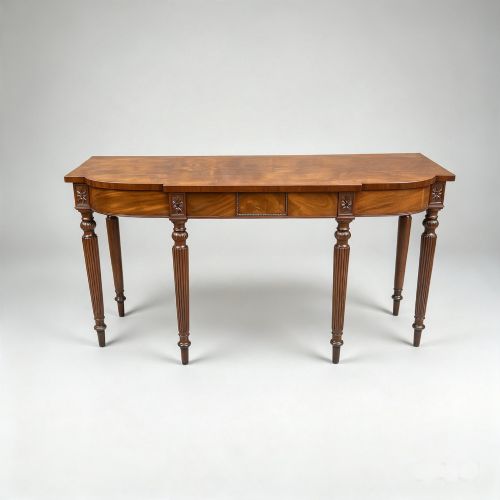
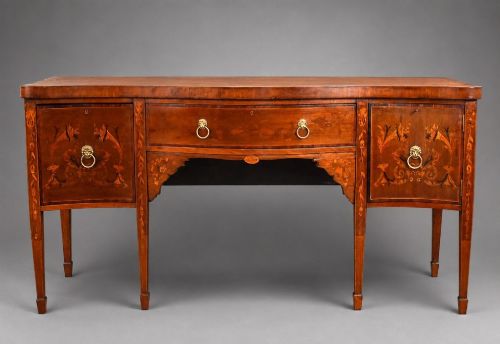
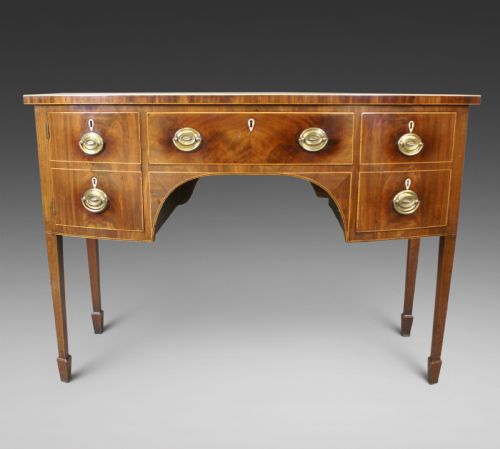
A classical dining server stands as a substantial piece of furniture designed for the dining room to assist with service and display. Buyers seeking a classical dining server will find forms spanning sideboards, serving tables, and pedestals from the Georgian, Regency, and Edwardian eras. These pieces function as both practical storage and focal points of interior decoration.
The most common versions met on this page are mahogany sideboards and serving tables shaped by Regency and Georgian design principles. Makers often incorporated serpentine fronts, drop wells, and brass galleries to enhance both utility and visual grace. Every piece reflects the ordered symmetry characteristic of neoclassical furniture making.
How they were made
Cabinet makers constructed these servers using solid mahogany and flame mahogany veneers over secondary timbers to achieve rich figuring and depth. Skilled artisans applied delicate boxwood and satinwood inlay to outline drawers and doors with precise geometric lines.
Metalwork played a structural and decorative role, featuring cast brass galleries and mounts fitted securely to the wooden frames. The joinery relied on traditional methods designed to support heavy plate and silverware during grand dining occasions.
Classical Dining Server Retail Price Guide 2026
Typical asking prices for classical dining server among the pieces listed under this phrase on Sellingantiques today, from the lower quarter to the upper quarter. They describe what is for sale here now, not the wider market.
Listings feature mahogany, boxwood, satinwood, and brass, spanning the Georgian, Regency, 19th Century, Edwardian, and 1890 periods.
What varies in quality
Quality separates ordinary storage from distinguished cabinet work through the choice of timber and the precision of the veneer matching. Superior examples display carefully selected flame mahogany grain paired with crisp, well-defined boxwood inlay.
The sophistication of the design and the attribution to notable workshops elevate the standing of a piece within the field. Finely cast brass galleries and original hardware indicate a higher standard of manufacture than replaced or secondary fittings.
George Hepplewhite·Mack Williams and Gibton·Gillows
The Classical Dining Server Glossary
- Flame mahogany
- A highly figured wood veneer displaying characteristic flickering flame patterns caused by the way the timber was cut from the tree. This material was favoured for principal drawer fronts and cabinet doors on formal dining furniture.
- Pedestal sideboard
- A form comprising distinct side cabinets or pedestals flanking a central serving surface, often joined by a low backboard or equipped with a brass gallery. It provides substantial storage space while maintaining a balanced architectural facade.
- Serpentine
- A front profile that curves outward in the centre and concavely toward the ends, creating a flowing, graceful line. This shape demands high skill from the cabinet maker to fit drawers and doors precisely.
- Marquetry inlay
- Decorative patterns formed by fitting contrasting pieces of fine wood veneer into a prepared recess on the surface. Boxwood and satinwood were commonly utilised for this contrasting detail.
- Drop well
- A lowered central section within the top surface of a sideboard designed to hold serving platters or prevent items from rolling off. It adds a distinctive stepped profile to the silhouette.
Classical Dining Server: Frequently Asked Questions
What is a classical dining server used for?
These servers provide a surface for presenting food and beverages during meals, alongside enclosed storage for dining linen and silver.
They act as architectural anchors in the dining room, combining practical utility with formal display.
How do I identify a Regency server?
Regency pieces often display strong neoclassical influence, featuring architectural motifs, brass galleries, and rich mahogany timbers.
Look for symmetrical pedestal arrangements and precise stringing lines in boxwood and satinwood.
Where should I place a server?
Position the piece against a primary dining room wall where it can serve as a functional sideboard or serving table.
Ensure adequate clearance around the piece to appreciate its serpentine curves or pedestal proportions.
How do Georgian and Edwardian servers differ?
Georgian servers rely on strict proportion and fine mahogany veneers following designs by leading makers of the eighteenth century.
Edwardian interpretations often draw inspiration from these earlier Georgian and Regency models while reflecting the craftsmanship of the later period.