

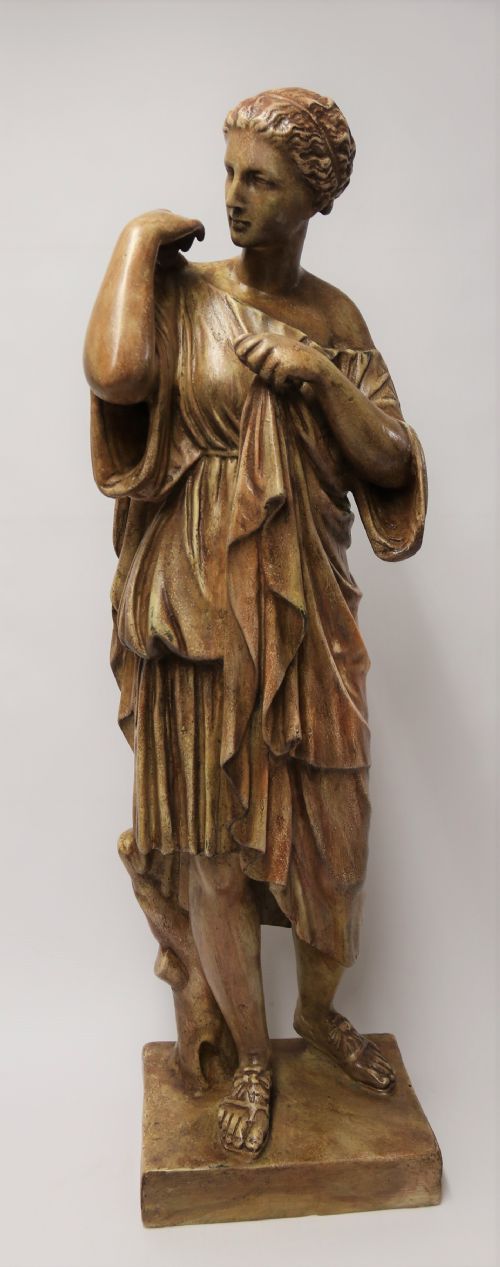


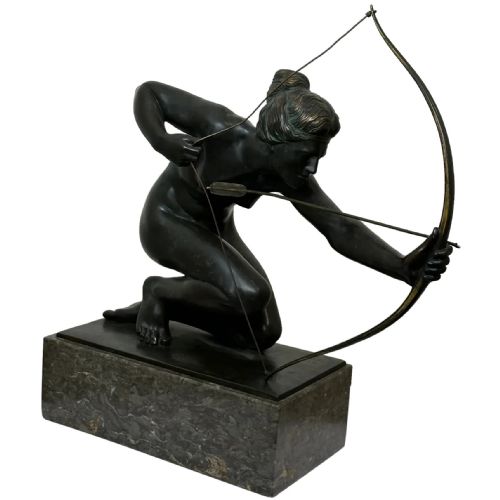


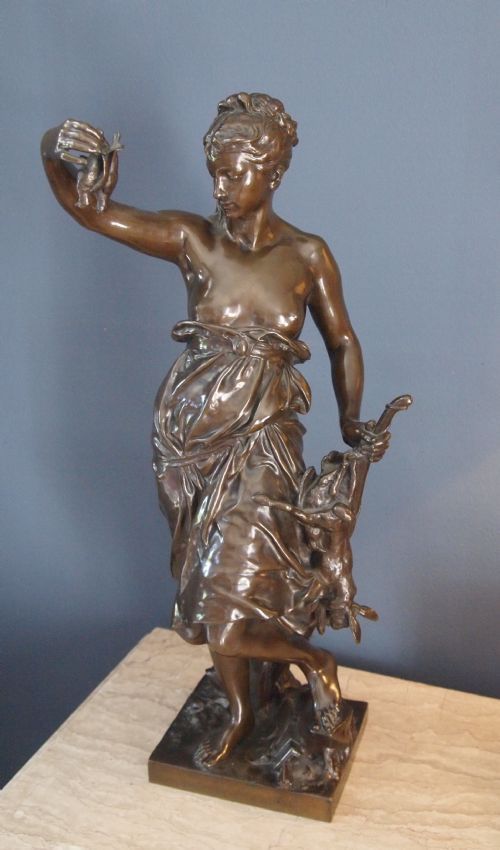

Classical Diana Statue
A classical diana statue captures the mythological huntress in marble, bronze, and porcelain, offering timeless neoclassical elegance for a refined interior.
Classical Diana Statue
A classical diana statue depicts the ancient goddess of the hunt, often shown with her bow, quiver, or hounds. These pieces draw heavily on classical mythology and archaeological discoveries of antiquity.
Buyers will encounter various forms on this page, ranging from grand tour souvenir bronzes to delicate porcelain figurines and substantial white marble busts. The selections span the eighteenth, nineteenth, and early twentieth centuries.
Styles include neoclassical, french academic, and art deco interpretations of the goddess. Each piece reflects the aesthetic priorities of its specific period of manufacture.
Materials and Techniques
Sculptors utilised traditional casting methods for bronze figures, often applying patinas to enhance surface detail and depth. Marble pieces demonstrate skilled hand-carving, capturing the drapery and facial expressions associated with the antique models.
Ceramic works such as soft-paste porcelain utilise specialised moulding and glazing techniques, sometimes accented with enamel and gilt. Plaster and terracotta also appear, providing different textures and finishes for the sculptural form.
Listings feature materials ranging from white marble and cast bronze to soft-paste porcelain and terracotta.
Distinctions in Quality
Material selection plays a primary role, with flawless white marble and rich, stable bronze patinas commanding greater appreciation. Signed works bearing the names of recognised artists or foundries demonstrate documented provenance that elevates the piece.
R. Mattei·Antonio Frilli·Pierre Le Faguays·Mercié·Bulio·Louis Ernest Barrias
The Classical Diana Statue Glossary
- Grand Tour
- A cultural journey undertaken by wealthy young Europeans in the eighteenth and nineteenth centuries to study classical antiquities. Souvenirs purchased on these trips heavily influenced nineteenth-century sculpture production.
- Neoclassical
- An artistic movement drawing inspiration from the art and culture of classical antiquity. This style emphasises symmetry, proportion, and mythological subjects like Diana.
- Soft-paste porcelain
- A ceramic material composed of clay and glass frit, fired at lower temperatures than hard-paste porcelain. It allows for soft glazes and delicate figurine modelling.
- Patina
- The surface coloration and sheen developed on bronze through age or chemical treatment. Artists manipulate this finish to accentuate shadows and highlights on the sculpture.
- Gilt
- A thin layer of gold applied to the surface of porcelain, bronze, or wood to provide decorative highlights. This technique often emphasises garments or attributes in sculptural figures.
Classical Diana Statue: Frequently Asked Questions
How do I identify a Grand Tour bronze?
Grand Tour bronzes were produced as souvenirs for travellers visiting classical sites in Italy during the nineteenth century. They typically reproduce famous antique sculptures on a smaller scale.
Look for rich patination and quality casting that reflects the academic standards of nineteenth-century European foundries.
What is the significance of Diana the Huntress?
Diana is the Roman goddess of the hunt, wild animals, and the woodlands, usually identified by her bow and quiver. In sculpture, she represents grace, independence, and classical proportion.
Artists across centuries utilised her image to demonstrate technical skill in depicting movement and drapery.
How should I care for a marble bust?
White marble requires gentle dusting with a soft, dry cloth to prevent accumulation in the carved crevices. Avoid using water or chemical cleaners, which can damage the porous surface.
Keep the sculpture away from direct heat sources and sudden temperature fluctuations to preserve the stone.
What distinguishes Art Deco Diana figures?
Art Deco interpretations from the early twentieth century simplify classical lines into sleek, modern geometries. Sculptors like Pierre Le Faguays adapted the traditional huntress to reflect contemporary tastes.
These pieces often feature stylized stances and distinct metallic finishes characteristic of the interwar period.