

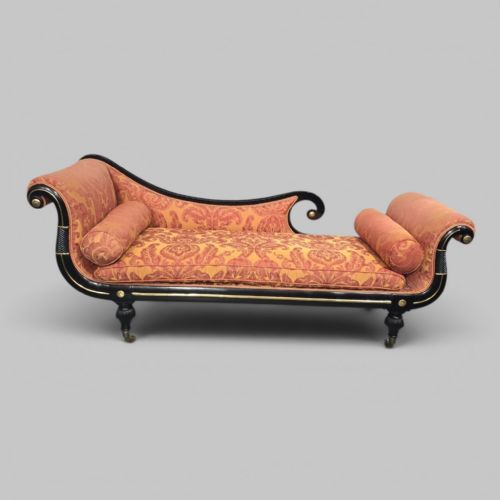


Classical Daybed
A classical daybed brings the graceful lines of the Regency and Victorian eras into a modern room, offering a versatile resting place.
Classical Daybed
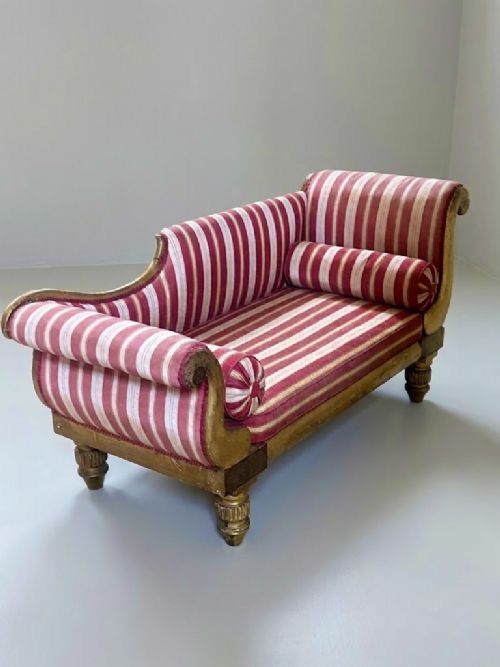
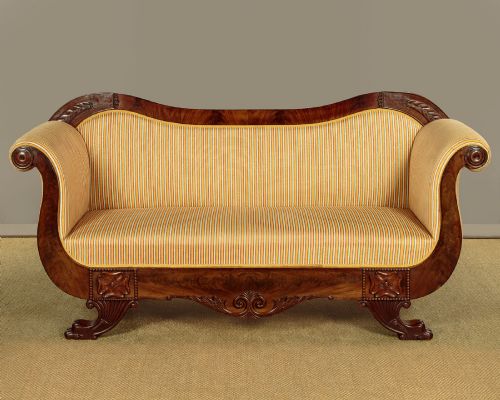
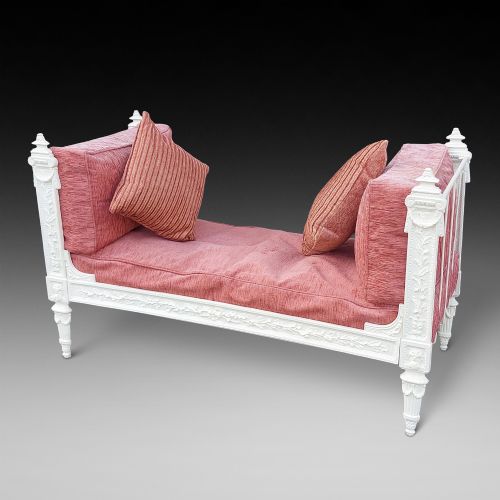
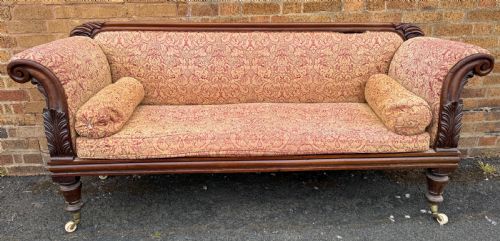
A classical daybed is a form of furniture designed for reclining, drawing upon historical styles such as Regency, William IV, and Empire Revival. The selections on this page span the nineteenth century and the early twentieth century, taking the form of couches, settees, and chaise longues.
The versions most commonly met here feature carved mahogany frames, scroll ends, and upholstered seats covered in silk, velvet, or fabric. These pieces bridge the gap between seating and sleeping, functioning as decorative focal points in sitting rooms or studies.
Makers and craftsmen of these periods utilised classic forms, including double scroll-ended sofas and simulated rosewood frames, to project an air of restrained elegance. The range includes items described as fine Regency giltwood sofas and late Victorian cast iron daybeds.
How they were made
Construction relies heavily on timber framing, predominantly using mahogany, ebonised wood, and giltwood, alongside cast iron in later examples. Carved details define the wooden frames, particularly around the scroll arms and feet.
Upholstery forms an essential part of the construction, employing traditional fabrics such as antique striped silk, velvet, and standard upholstery material over sprung or padded bases. Painted finishes also appear, notably on Scandinavian pieces from the twentieth century.
Classical Daybed Retail Price Guide 2026
Typical asking prices for classical daybed among the pieces listed under this phrase on Sellingantiques today, from the lower quarter to the upper quarter. They describe what is for sale here now, not the wider market.
The listings on this site span the Regency, Victorian, and early twentieth-century periods, showing a strong presence of mahogany and upholstered silk.
What varies in quality
The refinement of the timber carving separates standard examples from finer pieces, particularly in the crispness of the scrolls and the proportion of the frame. Mahogany pieces with well-figured grain and deep patination sit at a higher level than simpler constructions.
The choice and execution of upholstery materials, from plain fabrics to antique striped silk, influence the overall presentation of the piece. Superior examples maintain balance between the structural woodwork and the soft furnishings.
The Classical Daybed Glossary
- Scroll end
- A sweeping, curved wooden terminal on a sofa or daybed that rolls outwards, characteristic of Regency furniture. This shape mimics ancient classical seating forms.
- Chaise longue
- A long chair for reclining, structurally similar to a daybed or settee with a raised back and one or two raised ends. It allows the user to stretch out fully while remaining partially seated.
- Giltwood
- Timber that has been coated with a thin layer of gold leaf or gilt paint to give a luxurious metallic finish. It appears on high-status decorative items from the Regency period.
- Simulated rosewood
- Painted or stained wood designed to imitate the rich, dark grain of genuine rosewood. Craftsmen used this technique to achieve an expensive look using more accessible timbers.
- Empire Revival
- A nineteenth and early twentieth-century design movement drawing inspiration from the neoclassical style of the French Empire. It favours strong architectural lines and classical motifs.
Classical Daybed: Frequently Asked Questions
What is a classical daybed?
A classical daybed is a long reclining piece of furniture inspired by historical designs from periods such as the Regency and Victorian eras. These items combine the functions of a sofa and a bed.
They typically feature wooden frames with scroll arms and are upholstered in fabrics like silk, velvet, or traditional textiles.
How were daybeds used historically?
Historically, daybeds served as versatile seating during the day and occasional resting places for daytime naps. They sat in parlours, drawing rooms, and studies.
Their dual function made them popular for social hosting and quiet reading alike.
How do I identify a Regency daybed?
Regency pieces often display characteristic mahogany frames, scroll-end arms, and clean architectural lines reflecting ancient classical influences. Many examples incorporate carved details and polished wood surfaces.
Checking for period timber characteristics helps distinguish them from later revival pieces.
What materials are used in these daybeds?
The listings show a reliance on hardwoods such as mahogany and giltwood, alongside ebonised wood and occasional cast iron frames. Upholstery materials include silk, velvet, and various woven fabrics.
Some twentieth-century examples also feature painted wooden structures.
How do I style a daybed today?
A classical daybed works well as a statement piece placed against a wall in a living room, bedroom, or large hallway. Its architectural silhouette provides visual weight and an inviting place to sit.
Pairing the upholstery with complementary cushions can tie the historical design into a contemporary interior.