

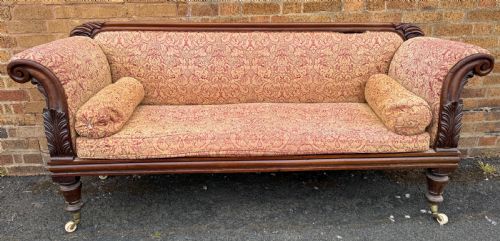


Classical Couch
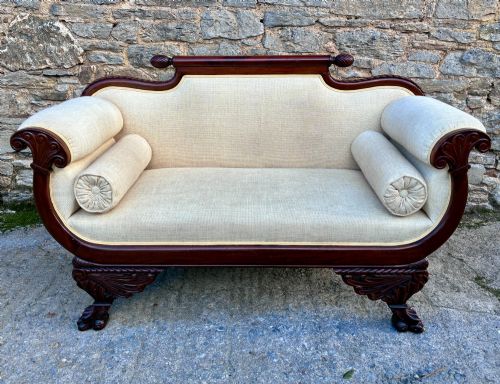
A classical couch anchors a room with monumental proportion, bringing together scroll arms and mahogany frames from the Regency period and nineteenth century.
Classical Couch
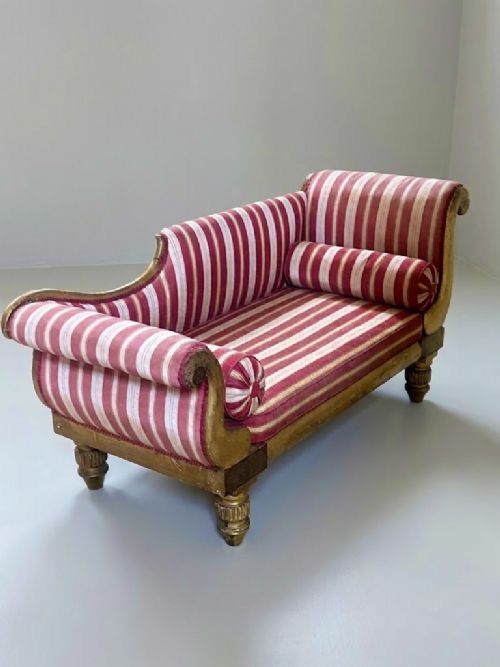
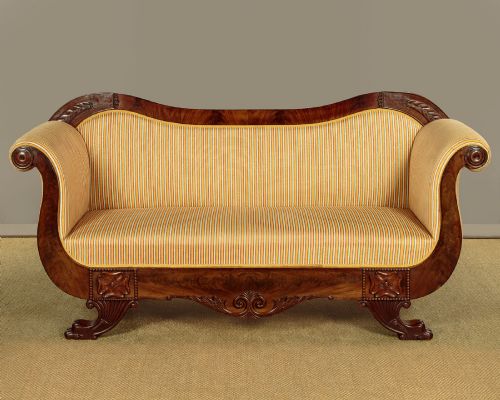
A classical couch combines architectural forms with comfortable seating, drawing on Regency, William IV, and Empire Revival styles. These pieces range from grand scrolled daybeds to substantial mahogany and simulated rosewood settees.
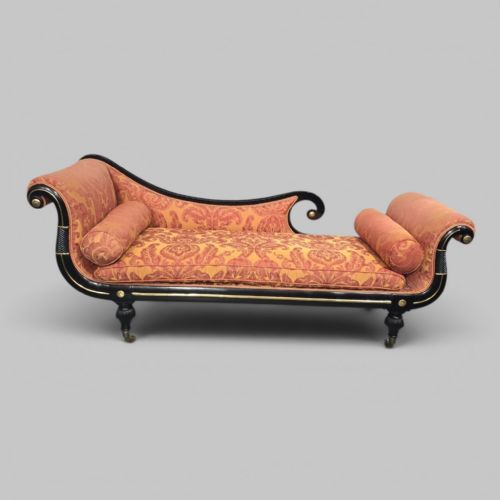
Most examples found here date from the nineteenth century, including crisp Regency scroll-end designs and decorative satinwood or ebonised variations. Buyers will also encounter later nineteenth-century interpretations alongside early twentieth-century Biedermeier and Scandinavian day beds.
Forms vary from single-ended chaise longues to three-seater sofas and coordinated suites. Each object utilises traditional textiles like silk, hessian, and contemporary upholstery fabric to complement the carved woodwork.
How they were made
Cabinetmakers constructed the structural frames of a classical couch using dense hardwoods such as mahogany, satinwood, and ebonised wood. Simulated rosewood finishes demonstrate the period skill for graining and surface trickery.
Scroll ends and arms relied on steam bending and skilled carving to achieve sweeping profiles. Brass mounts, giltwood accents, and traditional upholstery techniques completed the construction, securing fabrics over internal webbing and stuffing.
Classical Couch Retail Price Guide 2026
Typical asking prices for classical couch among the pieces listed under this phrase on Sellingantiques today, from the lower quarter to the upper quarter. They describe what is for sale here now, not the wider market.
Listings feature mahogany, brass, and ebonised wood across Regency and nineteenth-century periods.
What varies in quality
The distinction between ordinary and exceptional pieces rests upon the crispness of the timber carving and the architectural balance of the scroll arms. Superior examples exhibit finely figured mahogany veneers or precise gilding that enhances the structural lines.
Proportion and execution define the hierarchy of these seating forms, where restrained classical restraint outweighs heavy or clumsy revival proportions.
The Classical Couch Glossary
- Regency
- A stylistic period spanning the early nineteenth century defined by classical restraint, Grecian motifs, and architectural symmetry. It forms the backbone of classical couch design.
- Scroll end
- A sweeping, curved wooden terminal on a sofa or daybed that rolls outward at the arm or head. This profile is typical of nineteenth-century seating.
- Simulated rosewood
- A painted or grained surface finish applied to a lesser timber to imitate the rich grain and colour of genuine rosewood. It was widely utilised during the Regency period.
- Biedermeier
- A Central European style from the nineteenth century prioritising clean lines, utilitarian comfort, and minimal ornamentation over lavish display.
- Giltwood
- Timber treated with a thin layer of gold leaf or gesso to produce a metallic gold surface. It frequently highlights the carved details on formal sofas.
Classical Couch: Frequently Asked Questions
What defines a classical couch?
A classical couch is a nineteenth-century seating form influenced by ancient Greek and Roman design, typically featuring scroll ends and mahogany or simulated rosewood frames.
These pieces range from daybeds and chaise longues to substantial settees suited to formal reception rooms.
How do I care for antique upholstery?
Antique upholstery requires gentle vacuuming with a soft attachment and protection from direct sunlight to preserve delicate silk and woven fabrics.
Professional conservation helps maintain the underlying stuffing and structural integrity without harming period textiles.
Where should I place a daybed?
A daybed or scroll-end couch suits placement against a focal wall or floating within a large drawing room where its profile remains visible from multiple angles.
Ensure adequate clearance around the piece to showcase the curved wooden terminals and carved framework.
How can I identify a Regency sofa?
Regency sofas are characterised by classical proportions, scroll ends, and the use of solid mahogany, satinwood, or simulated rosewood finishes.
They often incorporate restrained carved details rather than heavy Victorian ornamentation.