


Classical Carved Brooch
A classical carved brooch brings mythological scenes and ancient profiles into miniature relief, prized for meticulous hand-carving and precious metal mounts.
Classical Carved Brooch
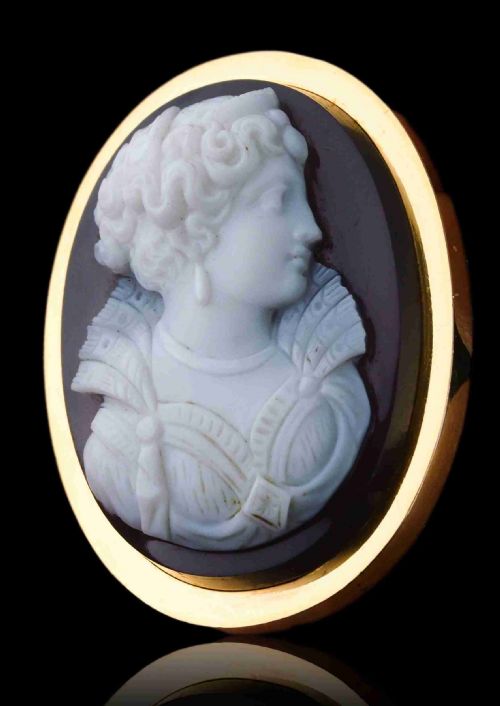
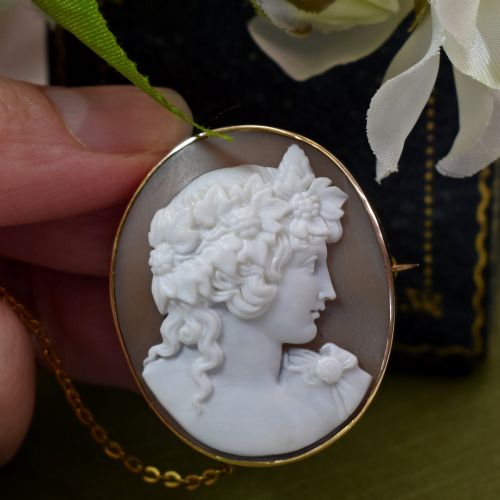
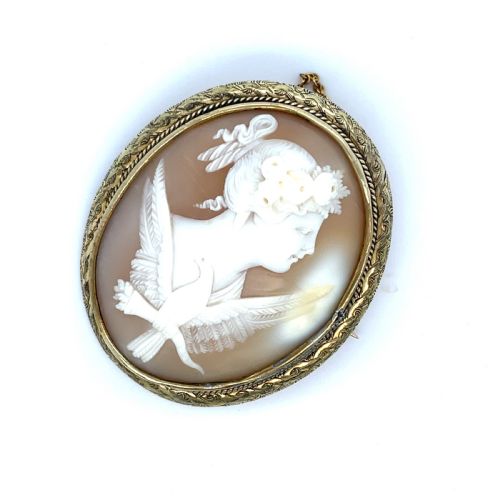
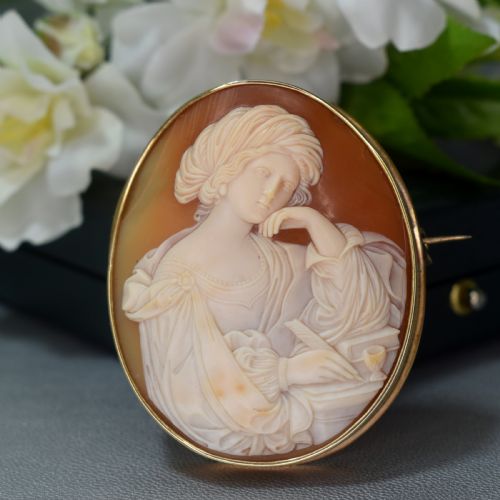
A classical carved brooch is a wearable relief sculpture depicting mythological figures, deities, and classical subjects such as Aphrodite, Demeter, and Psyche. These ornaments emerge predominantly from the Victorian era, alongside Georgian and Edwardian examples, reflecting a profound fascination with antiquity during the nineteenth century.
The version most commonly met on this page is the shell or hardstone cameo mounted in gold or silver. Pieces range from intimate portraits of deities in profile to elaborate chariot scenes, often shaped by Italian carvers catering to travellers on the Grand Tour.
Materials and techniques
Carvers utilise natural materials with contrasting layers, predominantly conch or helmet shells and banded hardstones like agate, allowing the relief to stand out against a darker background. Volcanic lava stone also appears as a matte medium for sculptural depth.
Mounts are fashioned from silver, pinchbeck, and gold ranging from nine to eighteen carats, frequently featuring ornate wirework, bezels, and secure pin-and-c-catch fixings suited to securing the substantial weight of stone and shell.
Listings feature items from the Victorian, Georgian, and Edwardian periods, utilising shell, lava stone, agate, and gold.
Distinctions in quality
The metalwork of the frame contributes significantly to the overall standard, distinguishing simple bezels from heavy, articulated gold mounts enriched with detailed chasing, repoussé, or accompanying diamond accents.
R Pernice
The Classical Carved Brooch Glossary
- Cameo
- A method of carving an object such as a carved gemstone, rolled shell, or piece of-layer mineral. The design is raised above the background.
- Hardstone
- A term for semi-precious stones used in carving, including agate and onyx. These minerals provide durable strata for detailed miniature sculpture.
- Grand Tour
- A cultural journey of Europe undertaken by wealthy young men and women in the eighteenth and nineteenth centuries. It generated a strong demand for Italian souvenir carvings.
- Pinchbeck
- An alloy of copper and zinc developed to imitate gold. It offers a warm metallic lustre without the precious metal cost.
Classical Carved Brooch: Frequently Asked Questions
What is a classical carved brooch?
A classical carved brooch is an ornamental pin featuring a hand-carved relief scene, typically depicting figures from Greek and Roman mythology.
These pieces were especially popular during the Victorian period, serving as both personal adornment and miniature works of art.
How do I care for a shell brooch?
Shell cameos require gentle handling because the material is organic and sensitive to harsh chemicals, perfumes, and direct moisture.
Store them safely away from harder jewellery pieces to prevent scratching the delicate raised surface.
Are hardstone cameos different from shell?
Hardstone cameos are carved from layered minerals like agate, offering greater durability and sharper detail than organic shell.
Shell brooches rely on the natural colour strata of conch shells to create contrast between the figure and the background.
How can I tell the period of a brooch?
Dating relies on examining the metal mount styles, pin mechanisms, and the specific subjects chosen by the carver.
Victorian and Georgian pieces often display specific backings and frame constructions that reflect the manufacturing techniques of their respective decades.