

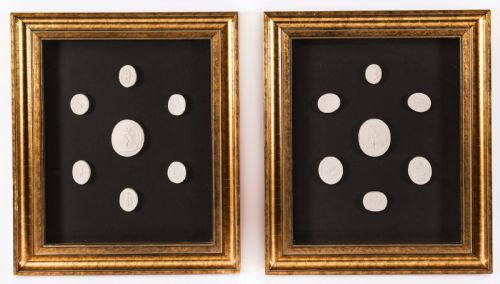


Classical Cameo Collection
A classical cameo collection brings the sculptural grace of antiquity into the home through arranged plaster casts and intaglios.
Classical Cameo Collection
A classical cameo collection comprises framed groupings of relief casts or intaglios that record ancient sculptures, gems, and coins. These assemblages were gathered by travellers on the Grand Tour during the late eighteenth and nineteenth centuries to document the art of Italy and Greece.
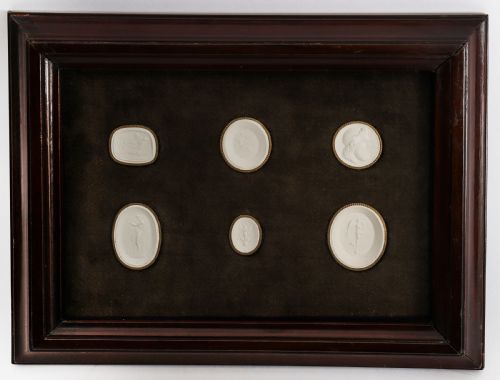
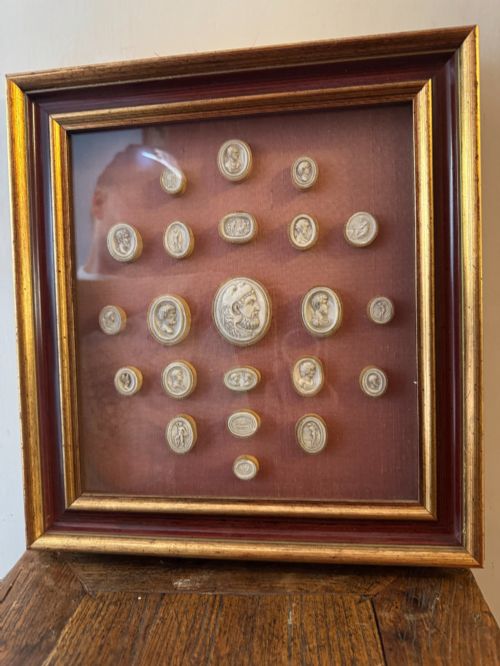
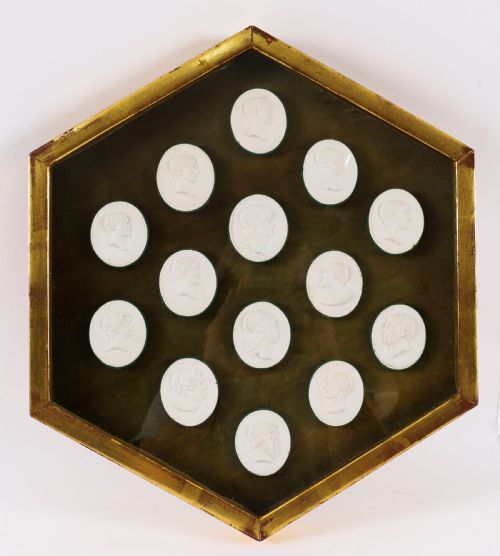
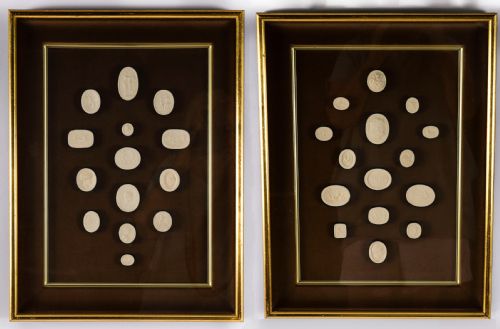
The pieces on this page appear as framed wall art and decorative panels, often arranged in sets within wooden, giltwood, or fabric-lined boxes. They range from small pairs to extensive framed cabinets containing dozens of individual gypsum or plaster medallions.
Examples stem from the Edwardian period, the Victorian era, and the wider nineteenth century, reflecting a sustained British and European appetite for neoclassical decoration. Collectors encounter both modest domestic groupings and substantial archival sets bearing the signatures of prominent Italian modellers.
How they were made
Makers formed the individual casts using fine plaster or gypsum poured into moulds taken directly from antique gems and carved stones. These crisp white medallions stand out sharply against dark velvet, fabric, or paper backgrounds designed to showcase the classical profiles.
The resulting cameos and intaglios were secured within custom wooden frames, many finished in giltwood or gilt wood to suit formal nineteenth-century interiors. Box frames and glazed wall panels protected the delicate plaster surfaces from dust and handling while allowing them to be displayed on walls.
The documented objects span framed wall art, box-framed panels, and decorative collections originating across the nineteenth century.
What varies in quality
Quality rests upon the crispness of the moulding and the depth of detail visible in each miniature relief. Sharp casts preserve the fine lettering and subtle musculature of the original carved gems, whereas worn moulds produce soft, indistinct edges.
The presentation elevates the individual casts, distinguishing simple arrangements from masterworks housed in elaborate giltwood frames with tailored velvet mounts. Signed sets attributed to skilled modellers carry greater documentary importance than anonymous domestic groupings.
Giovanni Liberotti·Pietro Bracci
The Classical Cameo Collection Glossary
- Intaglio
- A gem or medallion carved into the surface so that the design sinks below the plane. This technique produces a raised impression when pressed into wax or cast in plaster.
- Grand Tour
- The traditional journey of Europe undertaken by upper-class young men and collectors to absorb classical art and antiquities. Souvenirs from these travels included framed plaster casts of famous sculptures.
- Gypsum
- A soft sulphate mineral used to create fine plaster casts of ancient intaglios and cameos. It accepts intricate detail from moulds before hardening into a durable white relief.
- Jasperware
- A type of fine stoneware developed in the eighteenth century, characterised by a matte surface and contrasting relief figures in classical styles. These pieces were frequently framed for wall display.
- Neoclassical
- The dominant artistic style of the late eighteenth and nineteenth centuries inspired by the classical art of ancient Greece and Rome. It prioritises symmetry, proportion, and mythological subject matter.
Classical Cameo Collection: Frequently Asked Questions
What is a classical cameo collection?
A classical cameo collection is a framed grouping of plaster or gypsum casts reproducing antique gems and intaglios. These sets were assembled as decorative and educational art during the nineteenth century.
Travellers brought these framed panels home from Italy to display their classical learning and appreciation for ancient sculpture within their domestic interiors.
How were these collections displayed?
These pieces were typically mounted behind glass inside wooden or giltwood frames designed to hang upon walls. Many feature contrasting velvet or paper backings to highlight the crisp white plaster.
Some sets take the form of box frames or hinged cases that protect the delicate medallions while allowing close inspection of the individual reliefs.
Which periods do these pieces date from?
The listings span the late eighteenth century, the Victorian era, and the Edwardian period. The majority reflect nineteenth-century Grand Tour production.
Neoclassical revivals during these decades sustained the demand for accurate plaster casts of ancient Roman and Greek intaglios.
Who made these plaster casts?
Skilled modellers and specialist workshops in Italy produced these casts for foreign travellers. Prominent figures like Giovanni Liberotti and Pietro Bracci supplied signed sets of intaglios.
Later Victorian and Edwardian manufacturers also created similar framed neo-classical cameos to satisfy domestic demand for classical interior decoration.