



Classical Brass Clock
A classical brass clock brings heavy metal and gleaming enamel into a room, anchoring the mantelpiece with time-honoured weight and steady motion.
Classical Brass Clock
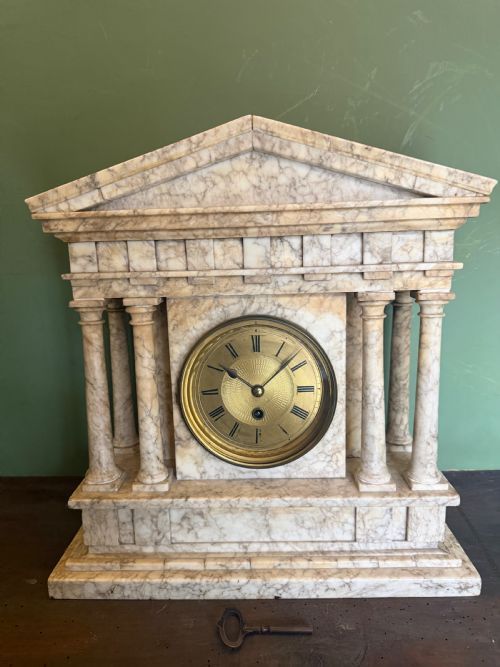
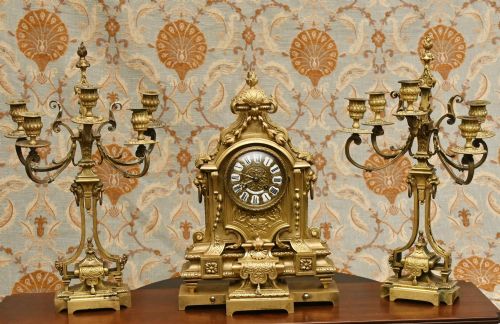
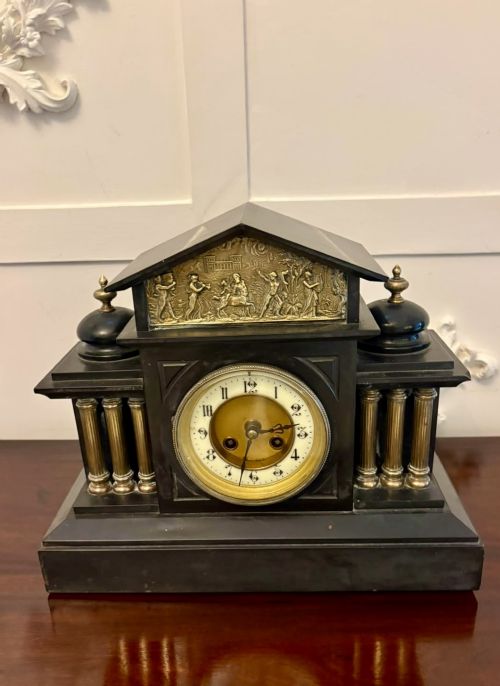
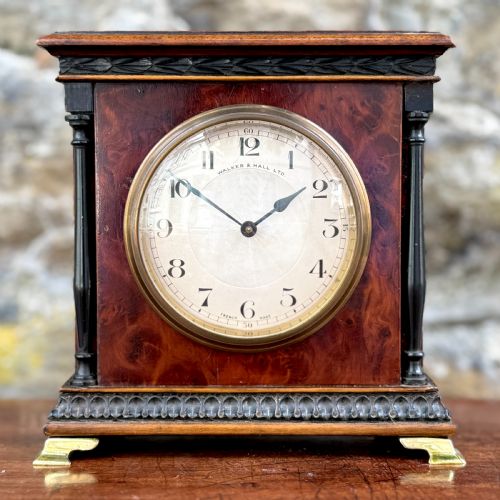
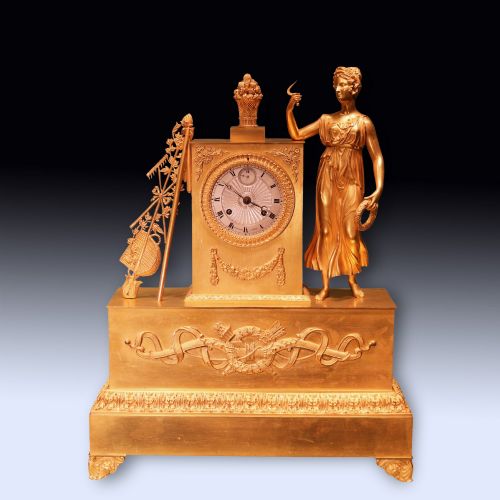
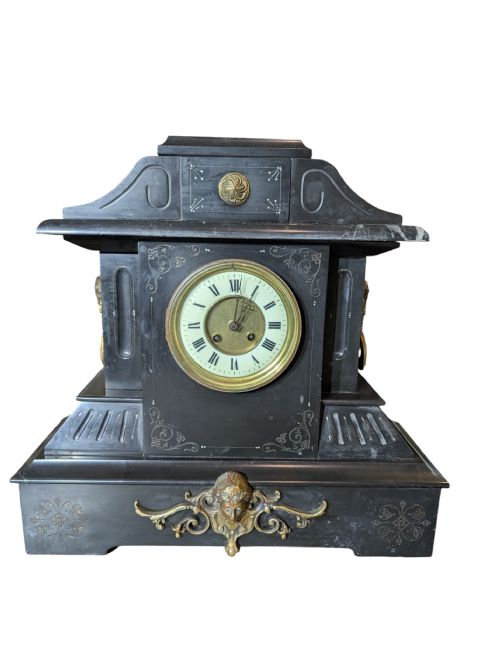
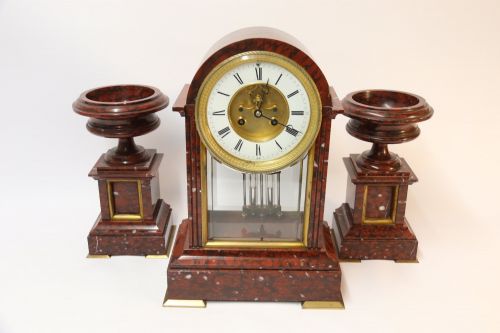
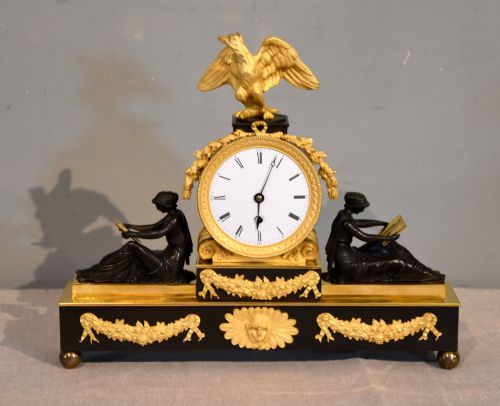
A classical brass clock stands as a sturdy centrepiece, taking the form of mantel clocks, wall pieces, and grand clock garnitures set with matching urns or sidepieces. The examples gathered here emerge primarily from nineteenth-century workshops, drawing on Victorian and Regency aesthetics alongside French Empire and Louis XVI revivals.
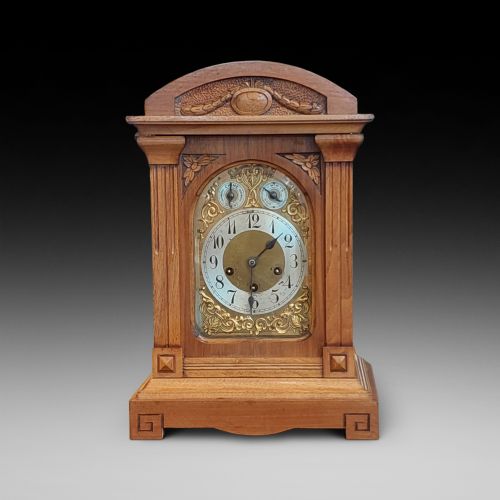
Buyers encounter architectural column designs, drum head timepieces, and portico clocks alongside bracket and longcase formats. These domestic timekeepers serve both a practical function and a decorative role, often combining polished metal housings with visible dials and striking movements.
Materials and construction methods
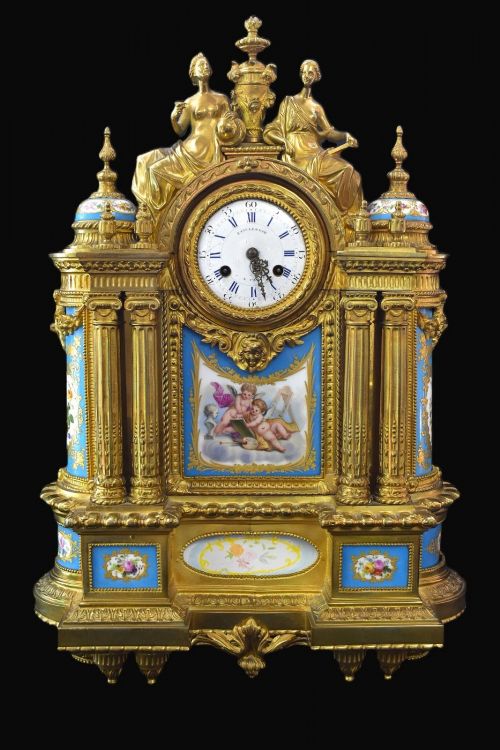
Makers shaped these objects using heavy foundations of brass, ormolu, and gilt bronze, frequently pairing the metallic elements with contrasting blocks of black, sienna, or white marble and slate. Dial faces often utilise white enamel with painted numerals, protected behind bevelled glass covers.
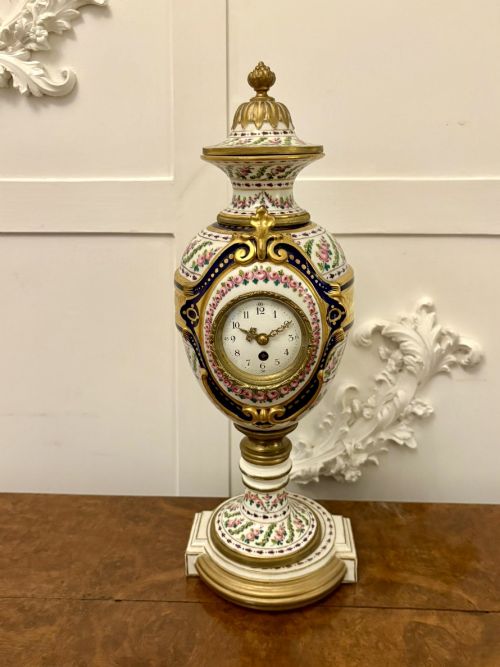
Movements rely on precision engineering housed within the heavy metal frames, utilising eight-day striking mechanisms and chain fusee systems. Cast bronze ornaments, hand-painted porcelain panels, and carved stone plinths demand skilled foundry work and stonemasonry.
Classical Brass Clock Retail Price Guide 2026
Typical asking prices for classical brass clock among the pieces listed under this phrase on Sellingantiques today, from the lower quarter to the upper quarter. They describe what is for sale here now, not the wider market.
Materials span brass, gilt bronze, ormolu, slate, marble, onyx, glass, and enamel.
Separating standard pieces from exceptional examples
The distinction between standard workshop output and top-tier pieces rests upon the crispness of the bronze casting and the depth of the gilding. Master founders achieved sharp relief in architectural motifs and figural mounts, whereas lesser examples show softened edges and superficial plating.
Movement sophistication also separates grades, with signed French mechanisms and single chain fusee escapements representing higher precision. Furthermore, the selection of solid marble blocks and intact hand-painted porcelain plaques elevates the visual coherence of the entire object.
Walker and Hall·Samuel Marti·Japy Freres·Philippes Paris·A.D Mougin
The Classical Brass Clock Glossary
- Ormolu
- Gilded bronze produced by applying a mixture of mercury and gold to a metal base and firing it. This hazardous historic technique yielded a rich, enduring golden lustre.
- Fusee
- A conical pulley used in mechanical clocks to maintain even tension on the chain as the mainspring unwinds. It ensures consistent timekeeping power.
- Garniture
- A set consisting of a central clock flanked by matching decorative objects such as urns or vases. These sets created symmetry on nineteenth-century mantelpieces.
- Spelter
- A zinc alloy frequently utilised as a cheaper alternative to bronze for casting figural components and decorative mounts. It is typically painted or bronzed to imitate heavier metals.
Classical Brass Clock: Frequently Asked Questions
How do I wind an antique clock?
Most mechanical clocks require a key inserted into the dial holes to turn the springs gently until resistance is felt. Care must be taken not to overwind the mechanism.
Striking clocks should be allowed to finish their sequence before any adjustments are made to the minute hand. Moving hands backwards can disrupt the internal striking train.
Where should I place a heavy marble clock?
Marble and slate timepieces demand a strong, level surface such as a sturdy mantelpiece or a low sideboard. Their considerable weight requires solid structural support.
Placing them away from direct sunlight and damp walls protects both the marble finish and the internal steel components from rust and thermal shock.
How do I identify the period of a clock?
Stylistic clues such as Regency restraint, Victorian ornamentation, or Louis XVI revival details offer initial dating markers. Case materials and dial typography further narrow the decade of production.
Makers' stamps cast into the brass backplates provide definitive evidence of workshop origins and operational dates. Comparing these marks with known registry records confirms the timeline.
What maintenance do these brass movements need?
A thorough professional service every few years keeps the gear train free of old dried oils and dust accumulation. Regular cleaning ensures the escapement functions without undue friction.
Keeping the exterior glass clean and lightly dusting the brass and marble surfaces preserves the finish. Environmental stability prevents the metal from tarnishing prematurely.