


Classical Architectural Landscape Painting
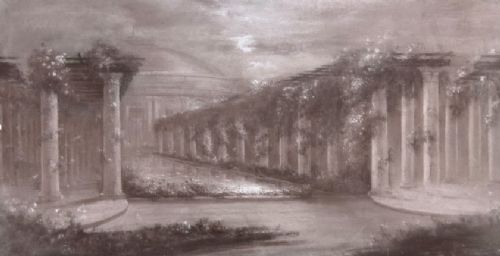
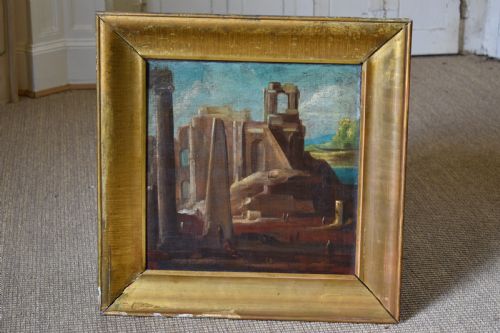
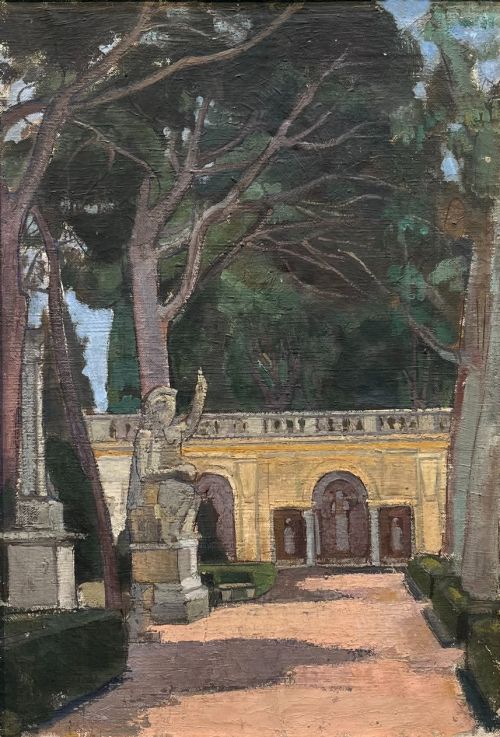
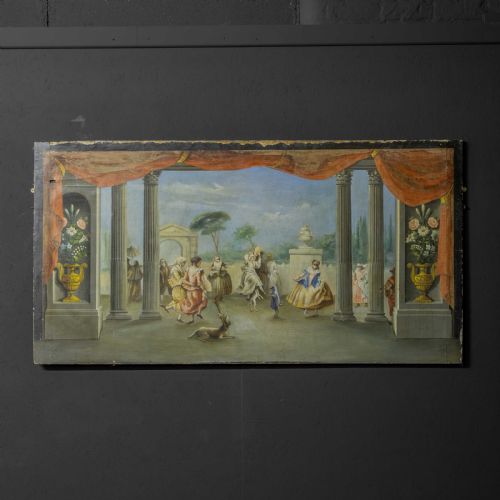
A classical architectural landscape painting brings antiquity into the room, setting ruined temples and Italianate vistas against expansive skies.
Classical Architectural Landscape Painting
A classical architectural landscape painting depicts structured scenes of classical ruins, ancient monuments, and serene vistas, often populated by small figures. These works draw heavily on the Grand Tour tradition, capturing the enduring appeal of Roman architecture and Italian scenery.
The pieces on this page span several centuries, including works from the seventeenth, eighteenth, and nineteenth centuries, alongside later nineteenth and early twentieth-century interpretations. Forms range from oil on canvas and oil paintings to detailed watercolours and framed artwork, reflecting both grand academic traditions and naive perspectives.
Buyers will encounter Italianate landscapes featuring ancient structures like the Forum of Nerva or the Arch of Titus, alongside broader coastal scenes and urban landscapes. The variety encompasses both expansive canvases intended as focal points and intimate watercolours produced for travellers abroad.
Materials and techniques
Oil on canvas forms a core material group, allowing artists to build deep, luminous skies and detailed masonry through layered brushwork. Gold leaf and giltwood frequently appear in the framing or structural elements, enhancing the warmth of the palette.
Watercolour on paper is another prominent medium, particularly for works tied to the Grand Tour where portability and immediacy were valued by artists recording specific sites in Rome and Pompeii. Wood and glass support and protect these varied works, often housed within period frames.
Listings span from the seventeenth century through to the mid-twentieth century, employing oil on canvas, watercolour, and charcoal on paper.
Distinguishing quality
Quality rests in the precision of the architectural perspective and the atmospheric depth of the surrounding landscape, separating routine decorative works from those with accomplished handling of light and shadow. The integration of classical ruins into the natural scenery demands a skilled composition that balances the solidity of stone with organic foliage.
The distinction also lies in the historical context and the fidelity of the rendering, whether executed by an established school or through an individual's distinct brushwork. Materials such as fine canvas preparation and the retention of original framing further elevate the standing of a piece.
The Classical Architectural Landscape Painting Glossary
- Grand Tour
- A traditional trip through Europe undertaken by upper-class Europeans, particularly in the eighteenth and nineteenth centuries, to study the arts and antiquities of Italy. Works originating from this practice often capture specific classical sites and ruins.
- Giltwood
- Wood that has been treated with gold leaf or gold paint to give a metallic, reflective finish. It frequently appears on the frames accompanying these classical works.
- Triptych
- A picture or relief carving on three panels, sometimes hinged together. In this context, it describes multi-panelled decorative formats such as overmantel mirrors.
- Naive art
- Art produced by a person lacking professional training, often characterised by a charming simplicity in perspective and proportion. Examples on this page show figures integrated into architectural scenes with a direct, unacademic approach.
Classical Architectural Landscape Painting: Frequently Asked Questions
What is a classical architectural landscape painting?
These works are traditional artworks depicting ancient Roman or Greek structures, such as temples, arches, and forums, set within idealised natural scenery or coastal views. They emerged strongly from the Grand Tour tradition where travellers sought visual records of antiquity.
The style blends imaginative composition with observed detail, often reflecting the romanticised view of Italy held by artists across the seventeenth to nineteenth centuries.
How were these paintings displayed?
Historically, such works hung in the reception rooms, libraries, and galleries of large houses to signal the owner's classical education and cultured travel. They served as conversation pieces that bridged the gap between nature and ancient history.
Today, they function similarly in domestic interiors, providing a sense of depth, history, and academic grounding to a room.
Are watercolours different from oil paintings here?
Watercolours on paper were frequently produced on location during travels abroad, offering a direct and portable record of specific sites like the Forum of Nerva or Pompeii. Oil paintings on canvas, by contrast, allowed for richer layering and larger formats intended for permanent interior display.
Both mediums capture the same architectural fascination but serve different aesthetic weights within a collection.
How do I date a classical landscape?
Dating relies on stylistic clues, the materials used, and the framing, as well as signatures or inscriptions relating to specific schools like the 18th century Italian or British School in Rome. Nineteenth-century works often reflect a more romantic or tourist-focused sensibility compared to earlier compositions.
Examining the canvas preparation, paper type, and stretcher construction also helps narrow the period of creation.