
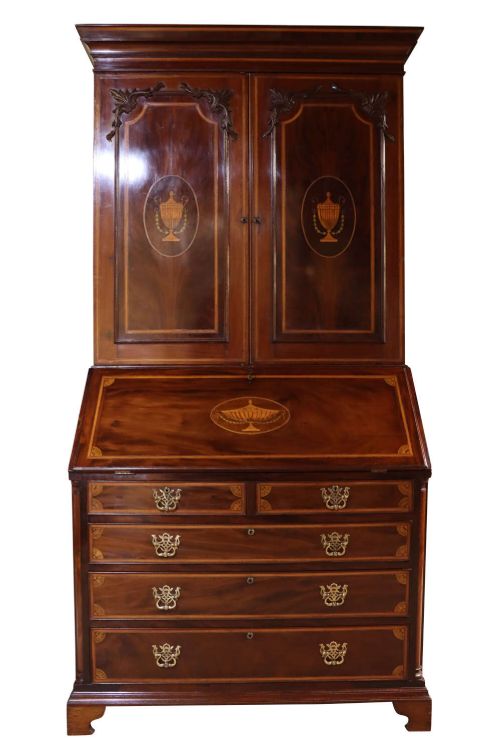

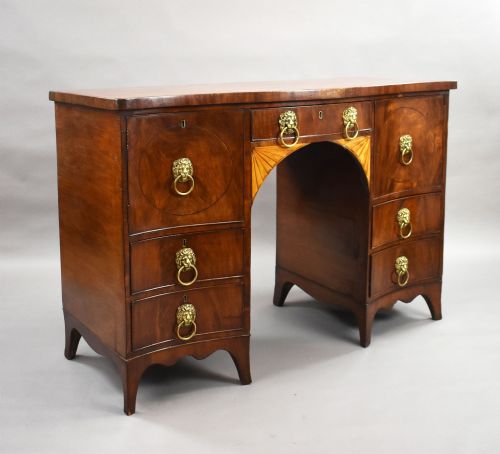


Classic Wooden Desk
A classic wooden desk brings warmth and history to a study, built from rich timbers designed to last generations.
Classic Wooden Desk
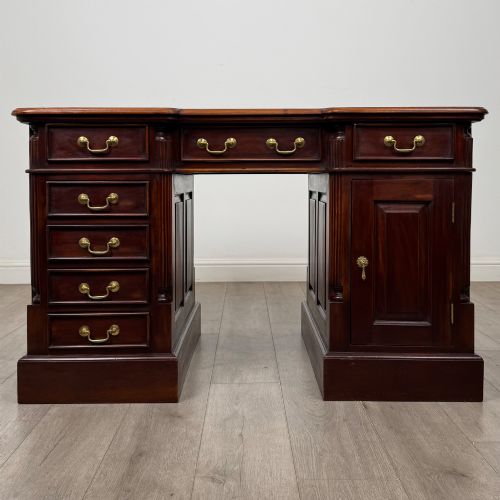
A classic wooden desk encompasses functional writing furniture spanning the Georgian, Victorian, and Edwardian periods, typically constructed from solid timber.
These pieces range from formal Georgian tambour and pedestal designs to practical Edwardian home office variations and late nineteenth century golden oak examples.
Materials and construction
Makers utilised dense timbers such as mahogany, oak, and satinwood as the primary structural foundations for these writing pieces.
Decorative elements frequently include brass hardware, leather writing surfaces, and intricate satinwood inlay to enhance the visual depth of the wood.
Traditional joinery techniques ensured structural integrity across pedestals, drawers, and writing compartments built during the eighteenth and nineteenth centuries.
Listings feature mahogany, oak, and satinwood across Georgian, Victorian, and Edwardian periods.
Markers of distinction
Superior examples demonstrate thoughtful proportions and practical working scales, combined with refined timber selection and balanced grain patterns across the primary surfaces.
The integration of secondary materials, such as finely tooled leather inserts and well-cast brass mounts, separates standard utilitarian pieces from exceptional commissions.
The Classic Wooden Desk Glossary
- Pedestal desk
- A heavy freestanding writing table supported by two separate stacks of drawers beneath the work surface. These units provide substantial storage capacity alongside a central workspace.
- Tambour
- A flexible sliding shutter formed from narrow strips of wood glued to canvas, used to enclose pigeonholes and small drawers on writing furniture. This technique allowed makers to conceal desktop compartments neatly.
- Bureau bookcase
- A dual-purpose piece combining a sloping hinged writing flap above drawer storage with an upper shelved cabinet for books. These tall items were staples of Georgian and Victorian libraries.
- Satinwood
- A lustrous golden-yellow hardwood native to Ceylon and India, prized for its reflective grain. Cabinetmakers utilised veneers of this timber for contrasting inlay work and borders.
Classic Wooden Desk: Frequently Asked Questions
What periods do these desks date from?
The pieces span multiple eras including the Georgian, Regency, Victorian, and Edwardian periods.
Each era brings distinct proportions, stylistic touches, and timber selections to the furniture.
Are these desks suitable for modern home offices?
Many of these writing tables offer practical proportions and functional drawer configurations well suited for daily use.
Pedestal and roll-top variants provide ample surface area and storage for contemporary workspace requirements.
Which woods were commonly used?
Mahogany remains the dominant timber across the selection, often accompanied by oak and satinwood.
Inlay work frequently introduces contrasting light and dark woods to highlight drawer fronts and borders.
How do I identify a Georgian desk?
Georgian pieces often feature formal architectural lines, solid mahogany construction, and traditional brass drawer pulls.
Design elements from this era prioritize symmetry, sturdy proportions, and restrained decorative carving.