



Classic Wood Desk
A classic wood desk brings lasting character to a room, offering warm timber tones and practical drawers for daily writing.
Classic Wood Desk
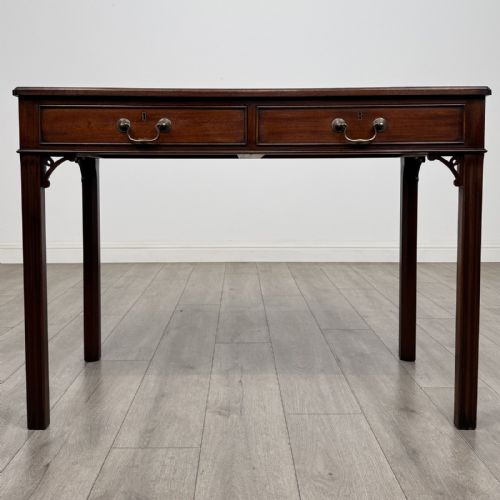
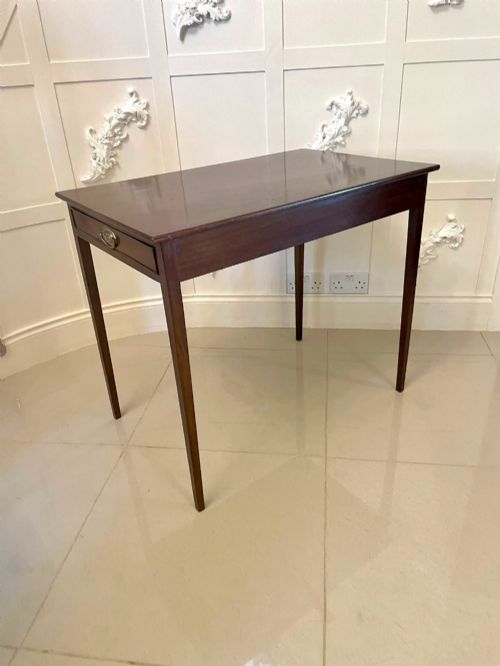
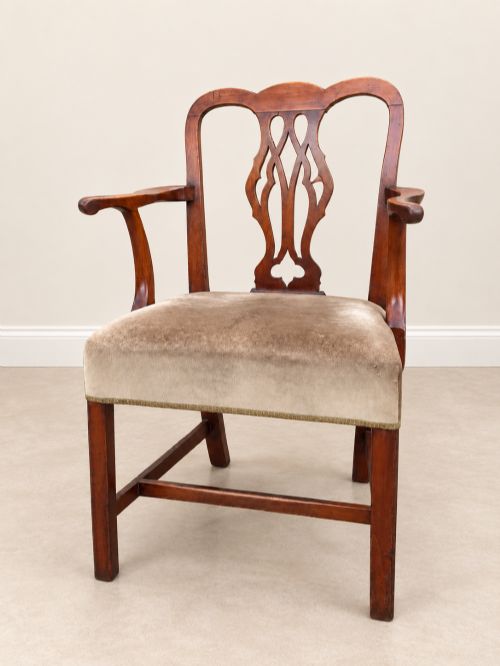
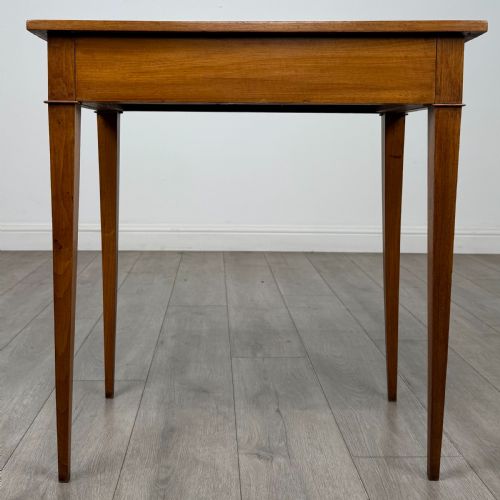
When you search for a classic wood desk, you encounter substantial writing furniture built to serve as the centrepiece of a study or home office. The pieces seen here span periods from the Georgian era through the Victorian period and into the Edwardian years.
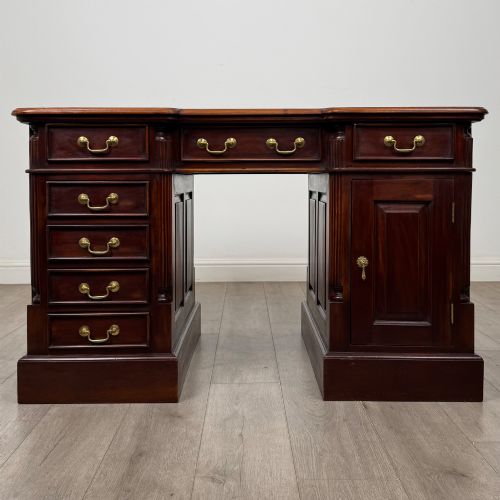
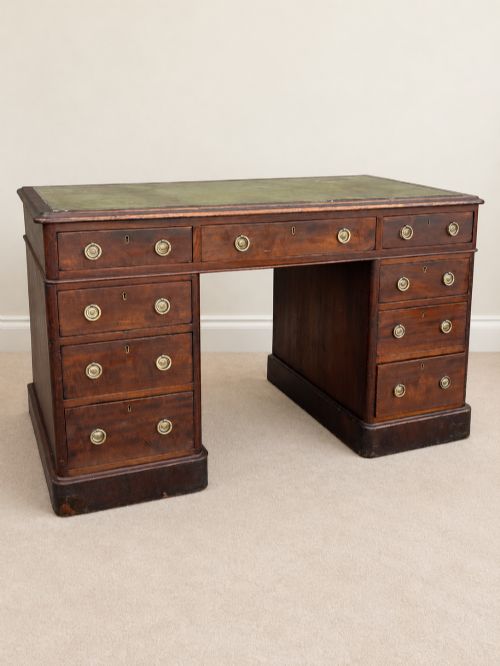
Pedestal desks dominate the selection, featuring banks of drawers beneath a writing surface, alongside tambour top versions and fitted secretaire cabinets. Mahogany is the predominant timber, often accompanied by walnut, yew wood and satinwood details.
Materials and construction
Cabinet makers relied primarily on solid mahogany and walnut, frequently selecting flame veneers to accentuate the natural grain of the wood. Brass hardware such as drop handles and key escutcheons punctuate the dark timber surfaces.
Writing surfaces are commonly inset with tooled leather, whilst interior compartments incorporate satinwood inlay and hidden drawers. Carved pillars and panelled pedestals demonstrate the structural carpentry of nineteenth-century workshops.
Classic Wood Desk Retail Price Guide 2026
Typical asking prices for classic wood desk among the pieces listed under this phrase on Sellingantiques today, from the lower quarter to the upper quarter. They describe what is for sale here now, not the wider market.
Listings feature mahogany, walnut, satinwood, and yew wood across Georgian, Victorian, and Edwardian periods.
Judging quality in timber desks
Quality rests in the selection of figured timber veneers and the crispness of any hand-carved detailing on pillars or drawer edges. Superior examples display careful matching of grain patterns across the front drawers and sides.
Internal construction reveals the maker's hand through dovetailed drawer joints and secondary timbers used for drawer linings. Desks finished on all sides to stand free in a room require greater joinery skill than those meant to sit against a wall.
The Classic Wood Desk Glossary
- Pedestal desk
- A heavy writing table supported by two banks of drawers flanking a central kneehole. This form provides substantial storage beneath the leather-insets top.
- Secretaire
- A cabinet or desk incorporating a drop-front writing flap that conceals small drawers and pigeonholes. It combines storage with a dedicated writing surface.
- Tambour
- A flexible shutter made of narrow vertical strips of wood glued to canvas, allowing a desk lid to slide open along a curved track.
- Satinwood
- A pale, hard wood with a lustrous sheen, frequently utilised for contrasting inlay banding and stringing on dark mahogany furniture.
Classic Wood Desk: Frequently Asked Questions
How do I identify a Georgian desk?
Georgian desks typically display restrained proportions, solid mahogany construction, and hand-cut dovetails on the drawer interiors. Brass handles are often cast in simpler drop or swan-neck patterns.
Secondary woods like oak or pine are frequently found inside the drawer linings on pieces from this period.
What is a pedestal desk?
A pedestal desk consists of a rectangular top resting on two separate drawer pedestals with a central opening for the chair. This design maximises storage capacity while maintaining a formal appearance.
Freestanding versions feature finished panelling on the reverse side so they can sit in the middle of a room.
How should I care for an antique wood desk?
Keep wooden surfaces away from direct heat sources and strong sunlight to prevent the timber and leather from drying out. Regular dusting with a soft cloth preserves the polish.
Apply a microcrystalline wax occasionally to nourish the wood without building up heavy layers.
What is a tambour top desk?
A tambour top desk uses a slatted wooden shutter that slides back along tracks to reveal the writing surface and pigeonholes. This mechanism keeps the workspace tidy when closed.
Cabinet makers used this clever design from the late eighteenth century onwards to conceal paperwork efficiently.