

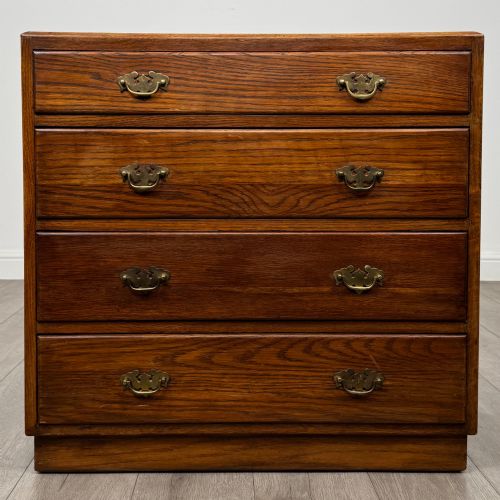
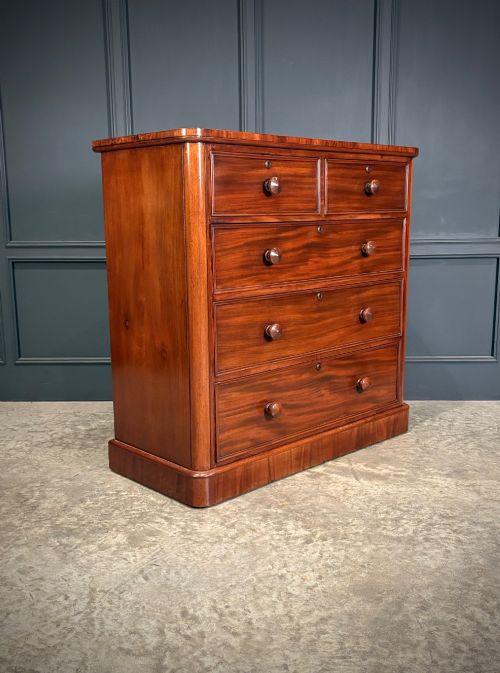
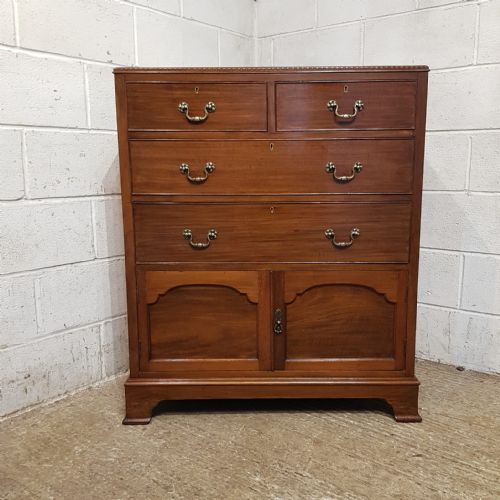
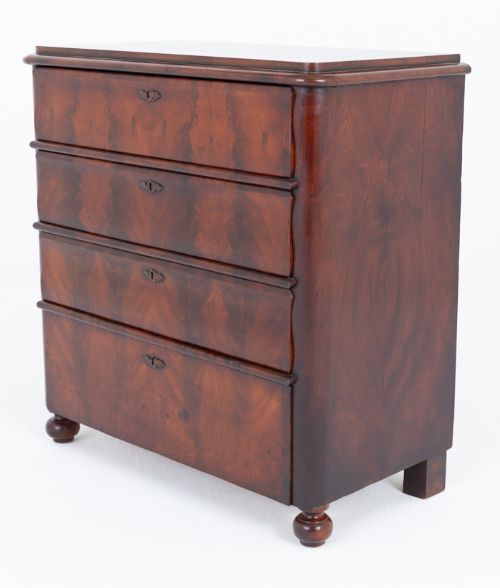


Classic Tallboy Chest
A classic tallboy chest delivers substantial storage with a vertical footprint, rising through Georgian and Victorian periods in rich timber.
Classic Tallboy Chest
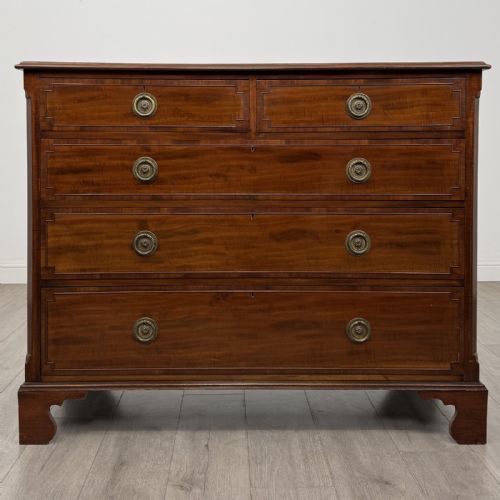
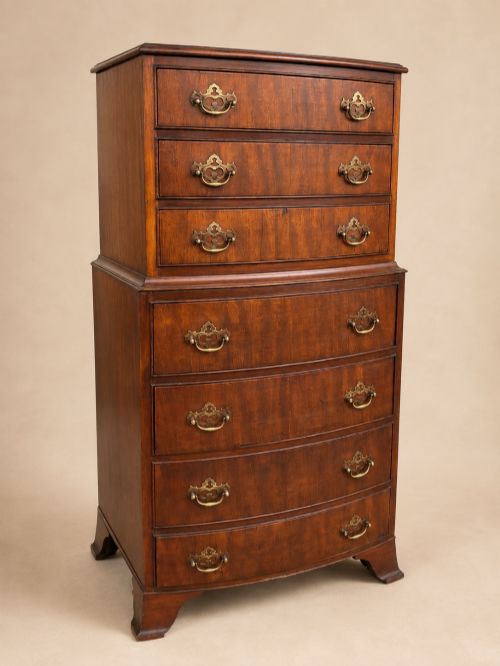
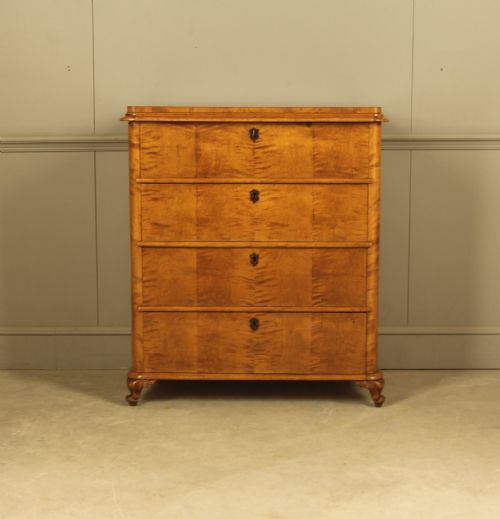
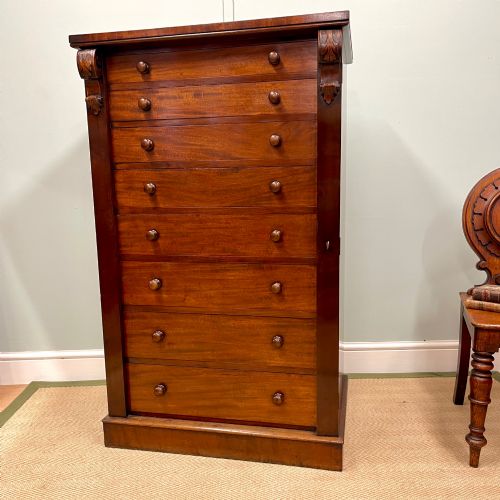
A classic tallboy chest stands as a commanding vertical storage piece, frequently taking the form of a chest on chest or a dedicated tallboy design. These pieces provide deep drawer capacity while occupying minimal floor space in a room.
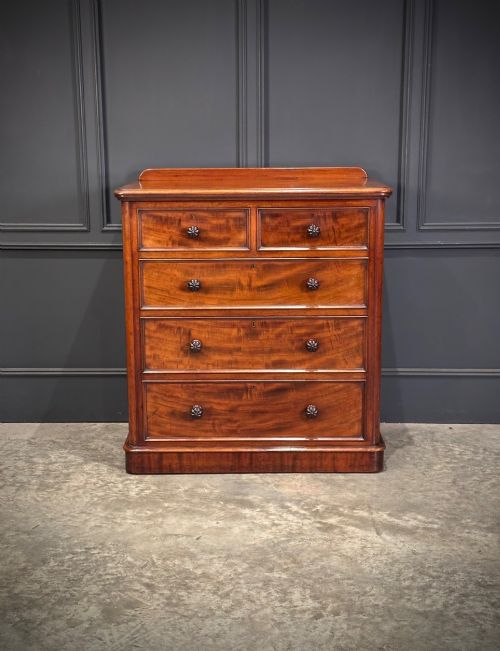
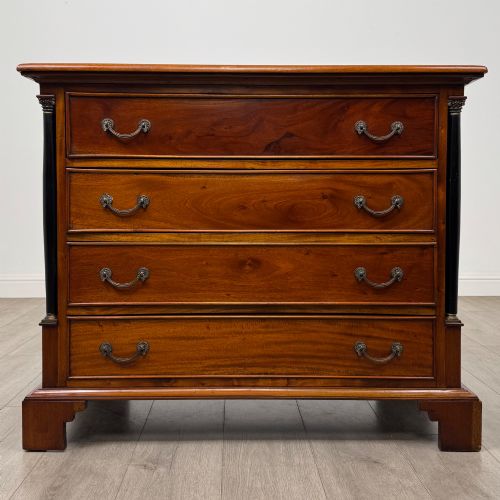
Most examples encountered here originate from the Georgian and Victorian eras, alongside Edwardian revivals and later twentieth-century interpretations. Mahogany dominates the selection, joined by walnut, pine, and flame birch veneers.
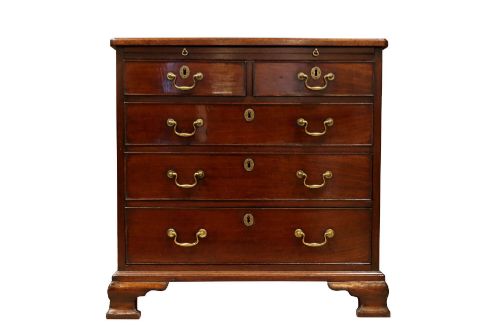
Forms range from simple multi-drawer configurations to specialised variations featuring brushing slides, secretaire compartments, or raised galleries. Buyers select these tall chests to anchor a bedroom or hallway with period presence.
Materials and construction
Cabinet makers utilised solid timber carcasses of mahogany, oak, and pine, often embellishing drawer fronts with figured flame mahogany veneer or walnut inlay. Secondary softwoods like pine typically formed the internal drawer linings and structural backs.
Joinery relied on tight dovetail joints for drawer construction, ensuring durability across stacked sections like the traditional chest on chest. Brass handles and bracket feet completed the exterior, alongside specialised hardware such as brass drop handles and escutcheons.
Classic Tallboy Chest Retail Price Guide 2026
Typical asking prices for classic tallboy chest among the pieces listed under this phrase on Sellingantiques today, from the lower quarter to the upper quarter. They describe what is for sale here now, not the wider market.
Some tall chests require a small step stool just to reach the top drawer, turning ordinary sock selection into a minor mountaineering expedition.
Judging quality in tall chests
Superior execution shows in the careful matching of wood grain across drawer tiers, particularly where flame mahogany veneer or walnut is deployed. The crispness of bracket feet, the fidelity of inlay work, and the weight of cast brass handles distinguish finer workshop output.
Structural integrity through the vertical height dictates lasting value, with well-fitted drawers running smoothly within solid carcase frames. Originality of surfaces, patination on the timber, and intact period hardware separate standard production from exceptional examples.
T & G Seddon·C Hindley
The Classic Tallboy Chest Glossary
- Tallboy
- A tall chest of drawers, often constructed as one chest stacked upon a second larger base section, maximising vertical storage.
- Brushing slide
- A pull-out wooden shelf integrated above the drawers, historically used for folding garments or grooming.
- Secretaire chest
- A chest of drawers featuring a dedicated fall-front drawer that conceals a fitted writing desk with small pigeonholes and drawers.
- Bracket foot
- A structural foot supporting the corners of a case piece, shaped like a bracket and frequently seen on Georgian furniture.
- Flame mahogany veneer
- A thinly sliced section of mahogany exhibiting a fiery, undulating grain pattern applied to primary display surfaces.
Classic Tallboy Chest: Frequently Asked Questions
How tall is a typical tallboy chest?
These vertical storage pieces typically rise well above standard chest height, often standing between five and six feet tall to accommodate multiple tiers of drawers.
This generous height provides substantial clothing storage while maintaining a relatively compact footprint against a bedroom wall.
What is the difference between a tallboy and a chest on chest?
A chest on chest specifically comprises two distinct carcass sections stacked one directly upon the other, creating a very tall tower of drawers.
Traditional tallboys share this vertical emphasis and multi-drawer arrangement, though cabinet makers historically used the terms with regional variations.
How do I care for a antique mahogany tallboy?
Maintain the timber by keeping the piece away from direct heat sources and strong sunlight, which can dry out old veneer and fade the rich polish.
Apply a traditional beeswax polish occasionally to nourish the wood and preserve the natural patinated surface built up over generations.
Where should I place a tall chest in my home?
Bedrooms and dressing rooms offer natural placement for tall chests, providing deep drawer space for garments without overwhelming floor areas.
Their vertical proportions also suit high-ceilinged hallways or landings where standard low furniture would lack sufficient visual presence.