
Classic Storage Chest
A classic storage chest organises a room with deep drawers and timber facades shaped by Georgian and Victorian hands.
Classic Storage Chest
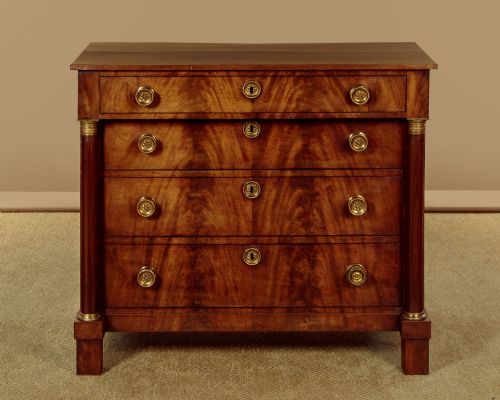
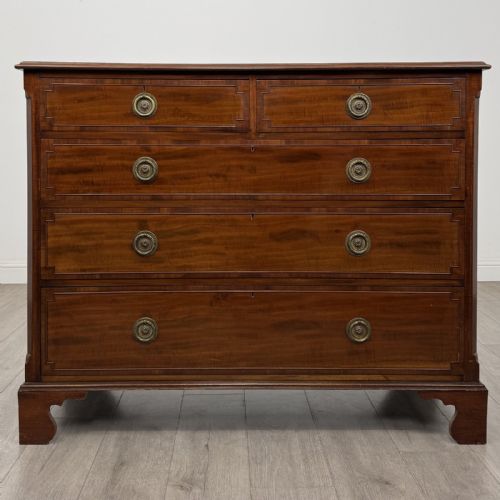
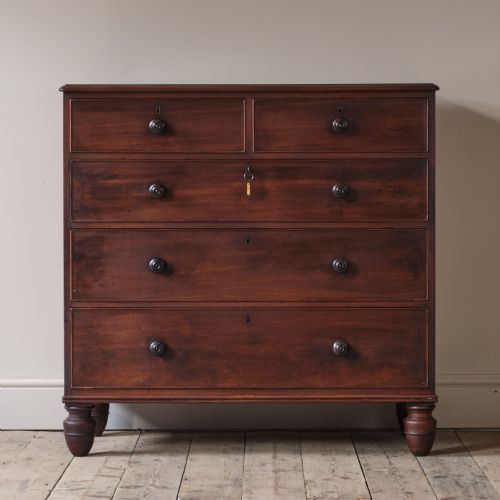
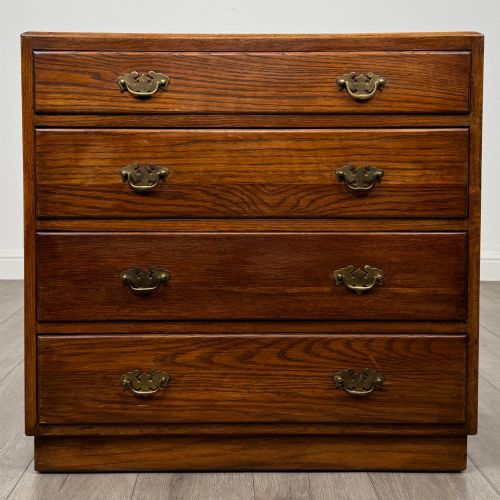
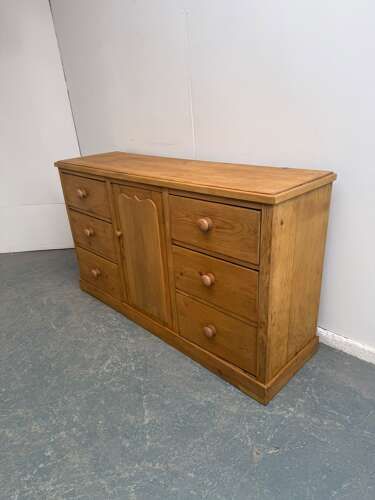
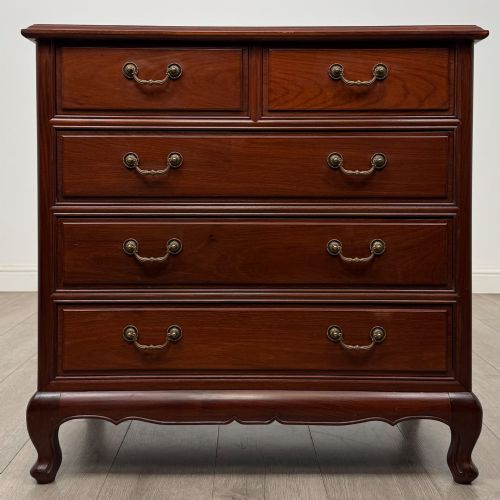
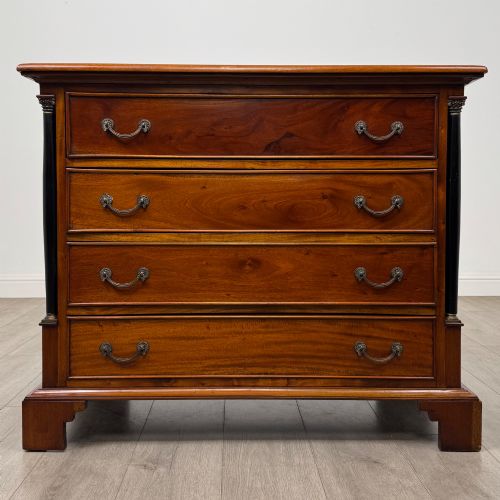
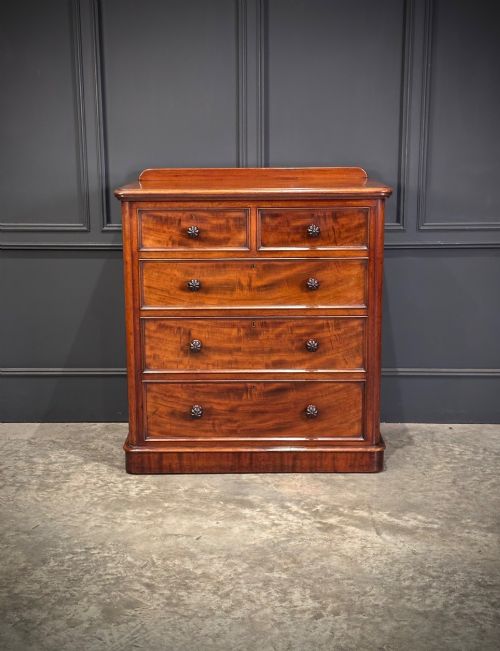
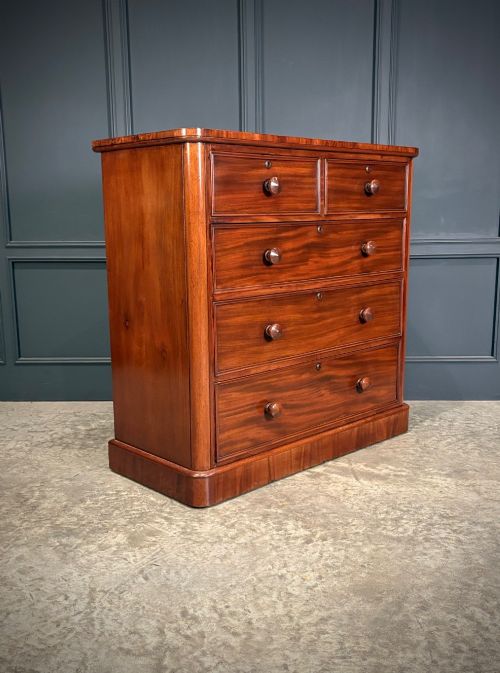
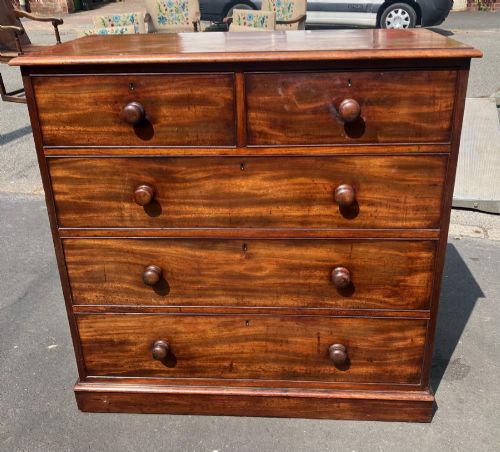
A classic storage chest most frequently appears on this page as a mahogany or pine chest of drawers dating from the eighteenth, nineteenth, or early twentieth centuries. These pieces function primarily as bedroom or parlour furniture, offering stacked compartments arranged in two-over-three or taller formats.
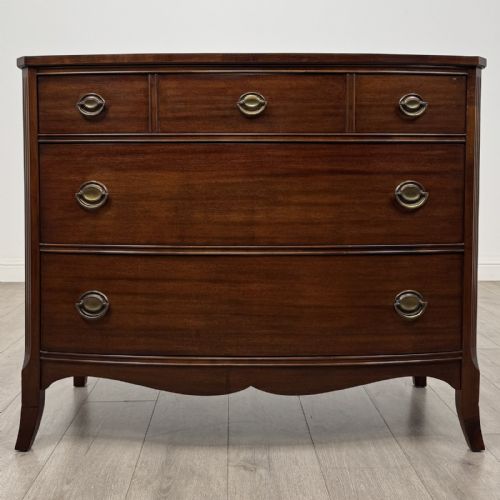
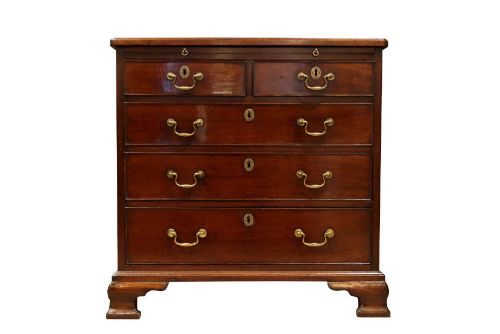
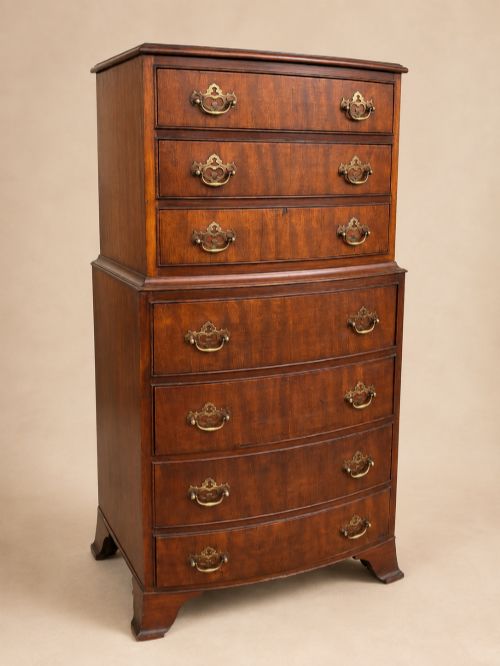
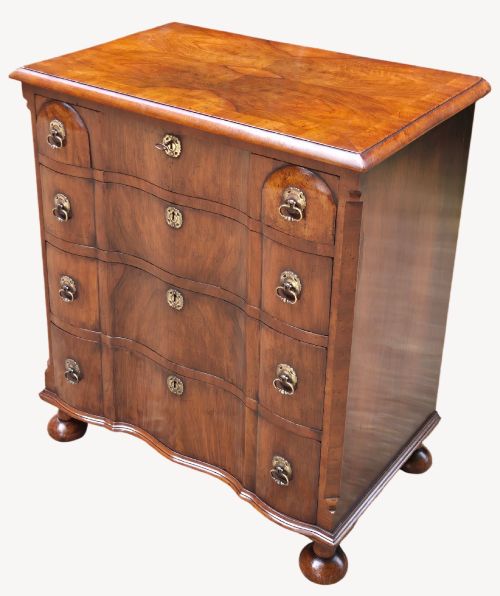
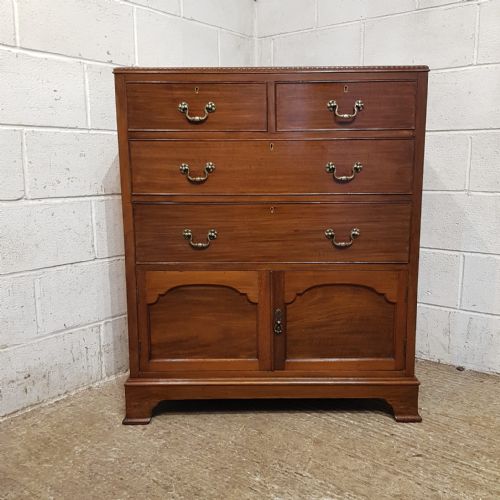
The inventory includes specialised variations such as bow-fronted commodes, tallboys, chests on stands, and multi-drawer collectors cabinets fitted with brass handles and bracket feet. Pieces originating from Georgian, Victorian, and Edwardian eras dominate the selection, spanning simple country pine models to refined flame mahogany designs.
How they were made
Cabinet makers constructed these pieces using solid timbers like mahogany, oak, walnut, and pine, frequently applying flame mahogany veneer to primary display surfaces. Drawer construction relies on traditional joinery methods, paired with brass drop handles, key escutcheons, and occasional marble tops on continental commodes.
Surface finishes rely heavily on wax, polish, and tongue-and-groove planking, particularly on utilitarian pine kitchen dresser bases and country workshop items. Inlaid banding and contrasting wood veneers appear on Regency and eighteenth-century examples to frame drawer fronts and top edges.
Listings feature mahogany, pine, walnut, and oak across Georgian, Victorian, and Edwardian periods.
What varies in quality
Quality rests in the selection of timber figures, such as highly figured flame mahogany or choice walnut veneers, alongside the crispness of edge mouldings and bracket feet. Superior examples retain original brass hardware, smooth-running drawer interiors, and uncompromised structural timbers without extensive replacement parts.
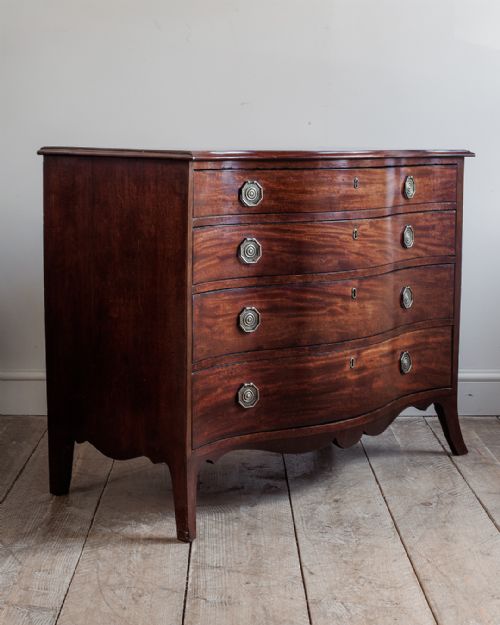
The refinement of proportions and the subtlety of curved facades, such as serpentine or bow-front shapes, separate standard workshop output from exceptional cabinet work. Original surface patination and untouched structural integrity elevate a piece far above heavily restored alternatives.
T G Seddon·Brady·C Hindley
The Classic Storage Chest Glossary
- Bow front
- A convex curved cabinet front that swells outward in the centre. This configuration requires skilled carpentry to shape the timber drawers and matching frame.
- Brushing slide
- A pull-out shelf integrated into the upper section of a chest, historically used for folding clothes or writing. It sits discreetly above the topmost primary drawer.
- Tallboy
- A tall chest of drawers constructed in two stacked sections, often placing a smaller chest upon a larger base. This form maximises vertical storage capacity.
- Flame mahogany veneer
- Thin slices of timber cut from mahogany forks where branches meet the trunk, revealing a dramatic flame-like grain pattern. Cabinet makers applied these veneers to prominent drawer faces.
- Bracket foot
- A simple structural foot formed by two mitred pieces of wood shaped like a bracket, supporting the corners of Georgian and Victorian chests.
Classic Storage Chest: Frequently Asked Questions
What is a brushing slide used for?
A brushing slide provides a temporary horizontal surface that pulls out from beneath the top drawer. Historically, owners used it for sorting garments or inspecting items without occupying table space.
In modern rooms, it serves as a subtle architectural detail that distinguishes better eighteenth and nineteenth-century chests from standard utility models.
How do I date a mahogany chest?
Dating relies on examining construction methods, drawer dovetails, handle styles, and timber choice. Georgian pieces often feature hand-cut dovetails and oak drawer linings, while Victorian versions incorporate machine-sawn elements and different secondary woods.
Secondary characteristics like bracket feet, cornice details, and veneer patterns further anchor the piece to a specific design decade.
Where should I place a tallboy?
A tallboy requires a wall space with adequate vertical clearance, making it suitable for bedrooms, dressing rooms, or wide hallways. Because these units rise higher than standard chests, securing them to the wall prevents tipping.
Their narrow footprint delivers substantial drawer capacity without dominating the floor area of a compact room.
What is the difference between a commode and a chest?
A commode typically refers to a decorative low chest of continental European origin, frequently featuring marble tops and serpentine or bombé facades. English chests of drawers generally present a more upright, rectangular profile intended for utilitarian storage.
Both terms describe multi-drawer storage furniture, but continental commodes often emphasise display surfaces and decorative veneers.