

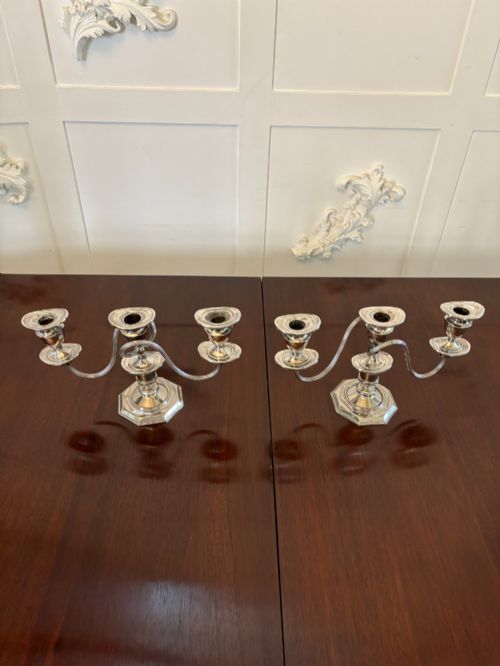
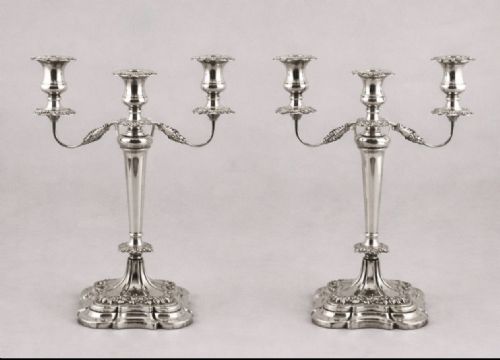


Classic Silver Dining Centrepiece
These classic silver dining centrepieces command a table, bringing height and gleam to formal rooms.
Classic Silver Dining Centrepiece
A classic silver dining centrepiece sets the scene for formal gatherings, anchoring the table with sculptural presence and polished light. When searching for a classic silver dining centrepiece, you encounter substantial candelabras and pairs of candlesticks designed to hold multiple taper candles. These items arrive from various eras, spanning Victorian and Edwardian workshops up through mid-century revivals.
How they were made
The construction methods rely on solid sterling silver, high-grade 916 silver, or durable base metals coated with silver plate, including Sheffield plate and electroplated nickel silver. Workshops utilised copper cores or weighted internal bases to provide stability for tall, multi-armed branches without tipping.
Silversmiths employed casting, soldering, and plating techniques to build complex candelabra frames, often incorporating detachable nozzle inserts and multi-light arms. Detail work involved classical revival motifs, crisp fluting, and structural joints designed to bear the weight of several candles securely.
Classic Silver Dining Centrepiece Retail Price Guide 2026
Typical asking prices for classic silver dining centrepiece among the pieces listed under this phrase on Sellingantiques today, from the lower quarter to the upper quarter. They describe what is for sale here now, not the wider market.
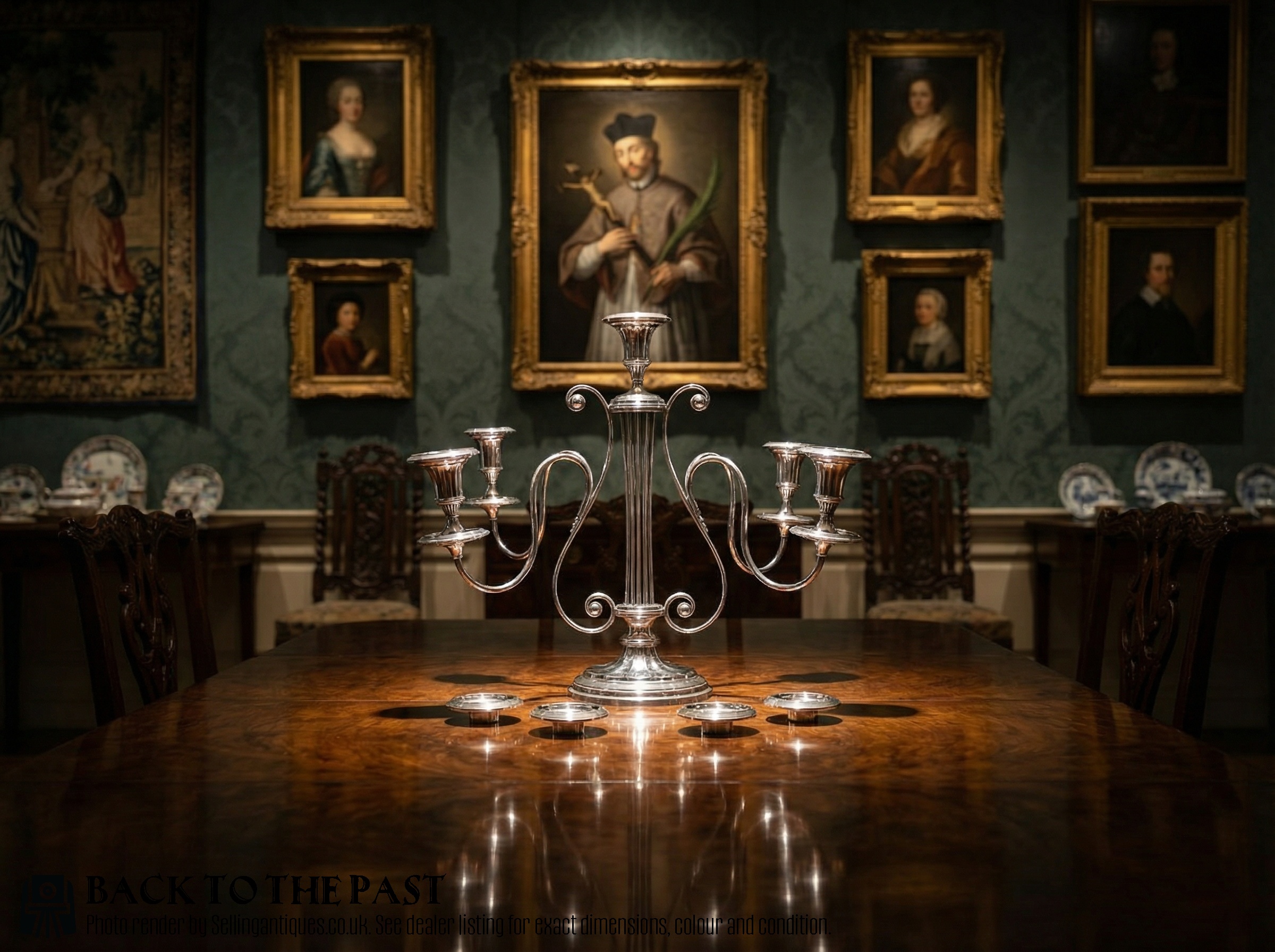
Some candelabras arrive with lyre-shaped centre supports, quietly bringing the spirit of a nineteenth-century music room straight to the dining table.
What varies in quality
Quality reveals itself in the heft of the metal, the crispness of the revival ornament, and the integrity of the structural joints supporting the candle arms. Superior examples demonstrate balanced proportions, clean casting lines, and heavy plating that endures through decades of polishing.
Lesser items show thinner gauge metal that flexes under pressure, clumsy solder repairs at the branch junctions, or worn plating that exposes the underlying copper and base alloys. The distinction lies in whether the maker prioritised solid architectural stability or lightweight decorative effect.
Barker Ellis·Garrard & Co Ltd
The Classic Silver Dining Centrepiece Glossary
- Candelabra
- A branched candlestick holding multiple candles on separate arms. These pieces serve as the primary vertical centrepieces on dining tables.
- Sterling Silver
- A silver alloy containing 92.5 percent pure silver and 7.5 percent other metals, usually copper. This standard ensures both durability and a deep lustre.
- Silver Plate
- A thin layer of silver bonded to a base metal such as copper or nickel silver. It offers the visual richness of solid silver at a different scale of weight and cost.
- EPNS
- Electroplated Nickel Silver, a common base metal composition for plated tablewares. It provides a sturdy, corrosion-resistant core beneath the silver coating.
- Neoclassical Revival
- A decorative style reviving classical Greek and Roman motifs like urns, fluting, and swags. This aesthetic dominates the formal lines of these centrepieces.
Classic Silver Dining Centrepiece: Frequently Asked Questions
How tall should a centrepiece be?
The height of a candelabra is chosen to ensure guests can converse across the table without obstruction. Tall branches lift the flame above eye level.
Most formal dining tables accommodate pieces standing between twelve and twenty inches high, depending on the room scale.
What is the difference between sterling and plate?
Sterling silver consists of solid precious metal throughout the entire piece, hallmarked to guarantee its fineness. Silver plate utilises a base metal core coated with a superficial layer of silver.
Over time, plated items may reveal the underlying copper or nickel if polished aggressively, whereas sterling maintains its material composition straight through.
How do I clean silver candelabras?
Cleaning requires a soft cloth and a gentle silver polish formulated to remove tarnish without stripping thin plating layers. Brushes should be avoided on delicate revival details.
Regular, light dusting prevents heavy tarnish accumulation in the crevices of neoclassical chasing and cast ornament.
Are multi-arm candelabras adjustable?
Most antique and vintage candelabras feature fixed arms secured tightly during manufacturing to support the weight safely. Some models include removable branch sections to convert them into simple candlesticks.
Forcing fixed joints is discouraged to prevent strain on the historical solder and structural alignment.