





Classic Mahogany Sideboard
A classic mahogany sideboard brings solid timber, rich grain and understated dining room utility into a modern interior.
Classic Mahogany Sideboard
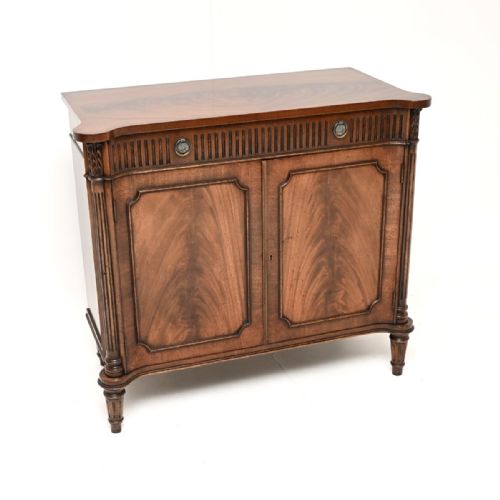
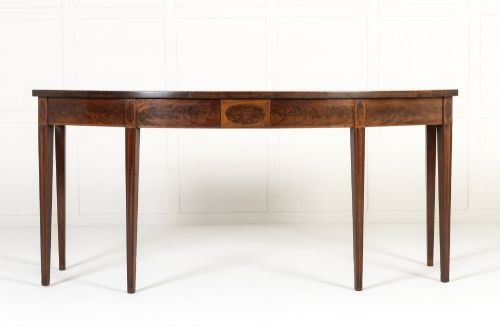
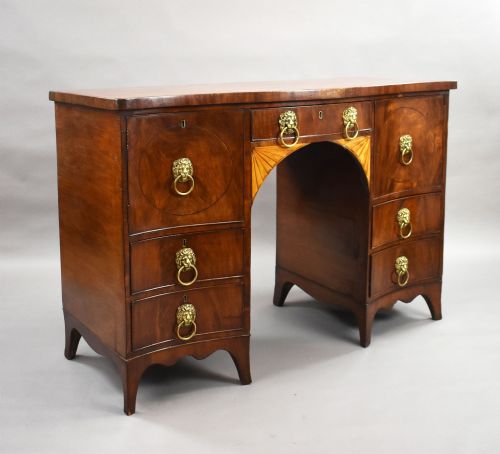
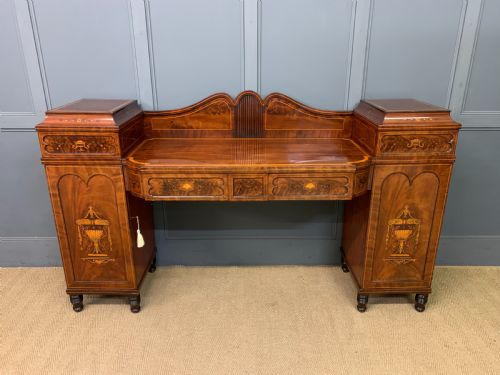
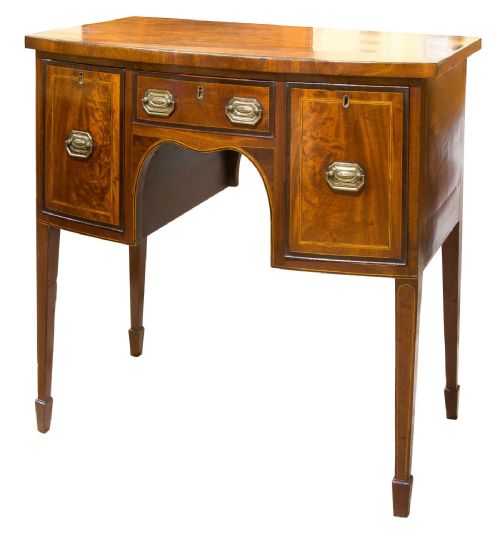
A classic mahogany sideboard is a substantial dining room furnishing designed for serving food and storing tableware, appearing across Georgian, Regency, and Victorian periods on this page. These pieces range from early geometric serving tables and bowfront cupboards to pedestal designs and later revival iterations.
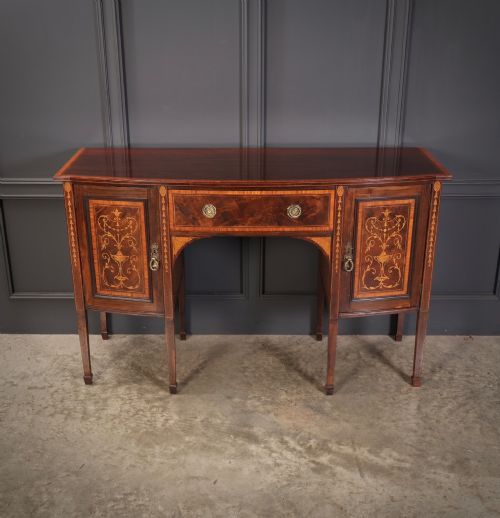
Buyers will most frequently encounter Georgian and Regency examples featuring mahogany construction, often enhanced with boxwood or satinwood inlay and fitted with brass hardware. Forms vary from straight and serpentine fronts to twin pedestal arrangements and cabinets on legs.
Materials and construction methods
Makers utilised solid mahogany and flame mahogany veneer applied to secondary timbers such as pine, building robust carcases designed to support heavy dining silver and porcelain. Surfaces were frequently polished to a deep lustre that accentuates the natural grain patterns of the wood.
Decorative detailing relies on contrasting stringing and banding in boxwood and satinwood, alongside subtle marquetry work. Drawer linings and secondary elements often employ pine, while brass handles, knobs, and feet provide functional and visual contrast.
Listings feature 18th century, 19th century, Georgian, and Regency periods, constructed from mahogany, boxwood, satinwood, and brass.
Assessing quality and craftsmanship
Quality separates pieces through the selection of timber, where tightly figured flame mahogany veneer and crisp, hand-cut inlay distinguish finer workshops from simpler production. The crispness of the mouldings and the symmetry of the timber grain across drawer fronts show the maker's discipline.
Structural integrity and the retention of original brass hardware, drawer linings, and backboards heavily influence the standing of a piece. Finer examples maintain precise drawer joints and smooth operating mechanisms without heavy structural replacement.
Wilkinson London
The Classic Mahogany Sideboard Glossary
- Bowfront
- A curved front facade where the central portion projects outward in a convex arc. This shape softens the room's geometry while adding internal depth for storage.
- Pedestal sideboard
- A form comprising two distinct pedestals flanking a central section or serving surface, often associated with George III and Regency designs. These configurations provide substantial cupboard space beneath the main top.
- Flame mahogany veneer
- A sliced layer of timber displaying a distinctive flame-like grain pattern derived from the fork of the mahogany tree. It was prized for creating decorative, symmetrical patterns across drawer fronts and cabinet doors.
- Stringing
- Narrow inlay lines of contrasting light wood, such as boxwood, set flush into the darker mahogany surface. This technique outlines drawers, borders, and panel edges to define the form.
- Serpentine front
- A front contour characterised by a convex centre flanked by concave curves, creating an undulating silhouette. This complex joinery demonstrates high skill in timber shaping.
Classic Mahogany Sideboard: Frequently Asked Questions
How do I date a mahogany sideboard?
Dating relies on examining construction methods, timber thickness, drawer dovetails, and stylistic markers such as inlay motifs and leg shapes. Georgian pieces often display hand-cut dovetails and simpler carcase assembly compared to later Victorian or revival pieces.
Hardware and secondary timbers like pine also offer clues, as backboards and drawer linings changed in manufacturing approach through the nineteenth century.
What is the difference between a sideboard and a serving table?
A serving table is generally an open-frame console or side table intended primarily for laying out dishes during meals, featuring fewer or no enclosed cupboards. Sideboards developed integrated storage, drawers, and lower cabinets for holding cutlery, linens, and dining accessories.
Many transitional pieces blur these lines, especially in earlier Georgian dining rooms where side tables were flanked by separate pedestals.
How do I care for mahogany furniture?
Maintain mahogany surfaces by keeping them away from direct sunlight and steady heat sources to prevent timber splitting and fading. Regular dusting with a soft, dry cloth preserves the polished finish without requiring heavy chemical polishes.
Apply a traditional beeswax occasionally to nourish the timber and maintain the soft lustre of the antique polish.
Where should I place a sideboard in a modern home?
A sideboard fits naturally in a dining room, kitchen, or living space against a substantial wall where its depth and length can be appreciated. The top surface provides an ideal area for lamps, decorative ceramics, or serving food during gatherings.
Ensure there is adequate clearance in front of the piece for cabinet doors and drawers to open fully.